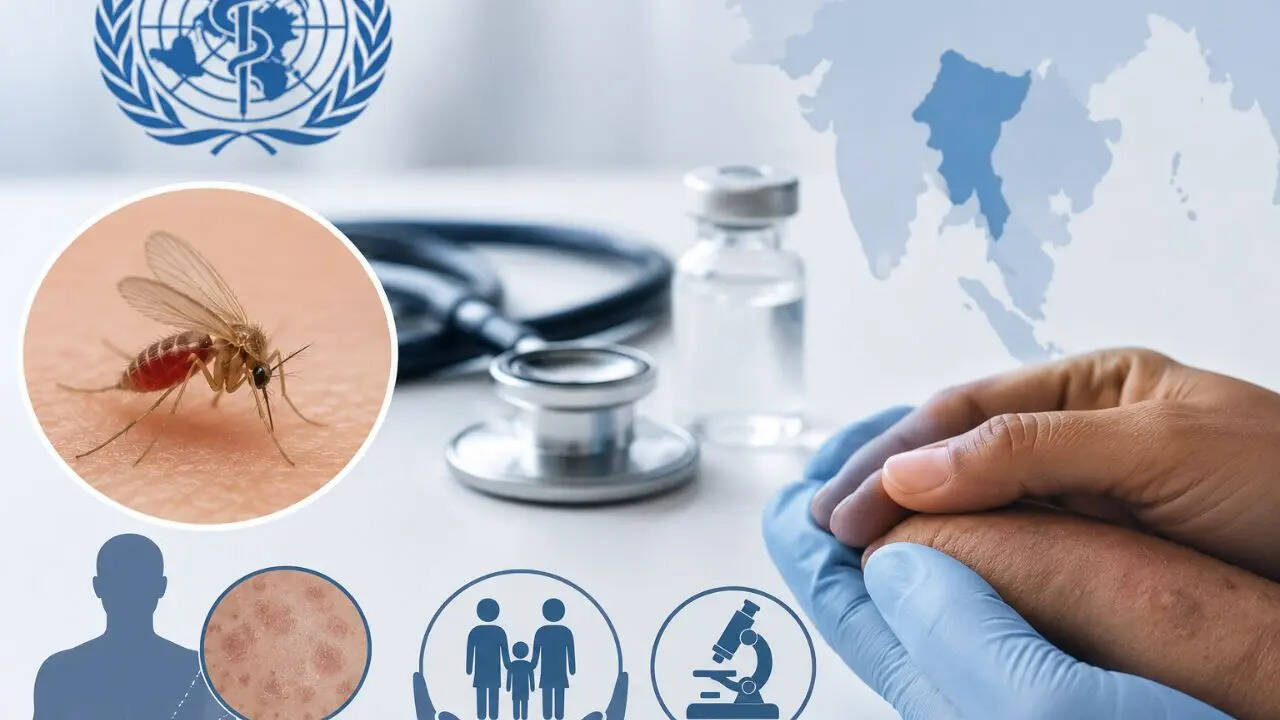
The World Health Organization (WHO) has updated its treatment guidelines for visceral leishmaniasis (VL), commonly known as kala-azar, and post-kala-azar dermal leishmaniasis (PKDL). Through this update, WHO is recommending shorter, safer and more patient-friendly treatments that could improve outcomes for thousands of patients across eastern Africa and South-East Asia. The revised guidance marks the first major update in nearly two decades for these forms of leishmaniasis. It introduces new treatment options, including the use of oral miltefosine in combination therapies, reducing the need for long courses of painful daily injections. What Is PKDL? Post-kala-azar dermal leishmaniasis (PKDL) is a skin condition that appears months or years after a patient recovers from visceral leishmaniasis. Visceral leishmaniasis, also known as kala-azar or black fever, is a life-threatening parasitic disease caused by Leishmania. It is spread by infected female sandflies. It attacks internal organs like the spleen and liver and is almost always fatal if left untreated. In post-kala-azar, while patients usually feel well, they develop patches, papules or nodules on the skin that harbour the parasite. This allows sandflies to transmit the infection to others. Early diagnosis and effective treatment of PKDL are therefore considered essential for interrupting transmission and elimination of kala-azar.Also read: Uganda Declared Ebola-Free As Congo Outbreak Grows To 3,262 Cases, 1,437 Deaths About The New Treatment Guidelines WHO now recommends a 14-day regimen combining oral miltefosine with once-daily paromomycin injections for patients with primary visceral leishmaniasis in eastern Africa. The new approach replaces older sodium stibogluconate-based regimens that required 17 days of treatment, 34 injections, which were often associated with toxicity. The guidelines also introduce shorter treatment options for PKDL. For patients in eastern Africa and South-East Asia, WHO recommends new combination treatments that substantially shorten duration. It also allows part of the therapy to be completed at home. Dr Daniel Ngamije Madandi, WHO Director of Malaria and Neglected Tropical Diseases, "For too long, patients suffering from leishmaniasis have endured treatments nearly as punishing as the disease itself. By recommending safer, shorter and more patient-friendly regimens, we are not just improving care; we are accelerating our fight to eliminate this devastating disease and offering renewed hope to communities across Africa and Asia."Also read: Ebola Scare In The UK After Humanitarian Worker Monitored In London Hospital; Here's what Happened Milestone In PKDL Treatment The updated recommendations also revise the safety guidance for miltefosine in line with advice from the WHO Advisory Committee on the Safety of Medicinal Products and introduce allometric dosing to help optimise treatment across different body weights. Kala-azar is one of the world's deadliest parasitic diseases after malaria. According to WHO, eastern Africa accounted for nearly 79% of global visceral leishmaniasis cases in 2024, with around half of patients being children under the age of 15. Transmitted through the bite of infected female sandflies, it causes prolonged fever, weight loss, anaemia and enlargement of the spleen and liver. If left untreated, the disease is fatal in up to 95% of cases.