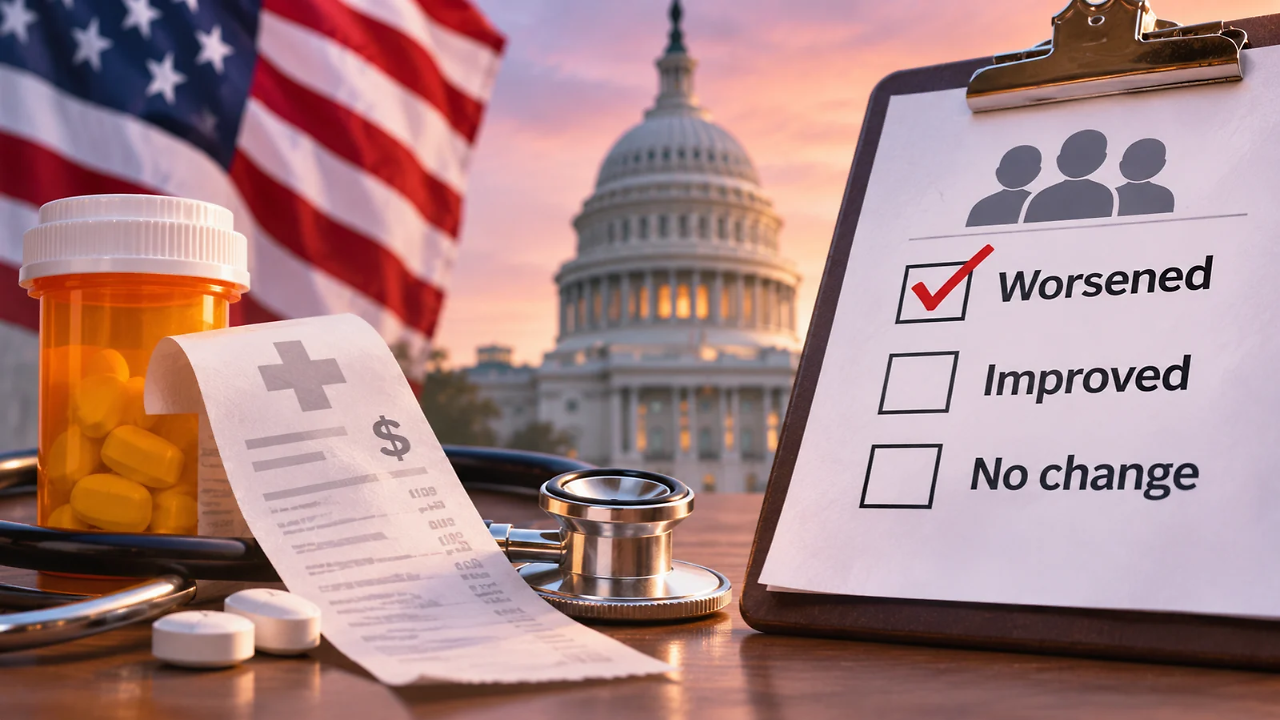
Healthcare affordability was one of the major influencers of US midterm election outcomes. A recent poll revealed that more than half of US voters believe their healthcare costs have worsened under President Donald Trump's administration.The analysis by health policy research organisation KFF was published a day after the 2026 midterm elections' results were announced. It found that 54% of midterm voters said the administration's policies had made their personal healthcare costs worse. Only 10% said their costs had improved.Voters who said their healthcare costs had increased were more likely to support Democratic candidates. Among this group, 82% voted for Democratic candidates, compared to 16% who voted Republican.The findings come as Democrats made significant gains in the November 3 midterms, winning control of both the House of Representatives as well as the Senate.Democrats Have An Advantage On HealthcareAlso read: 2026 US Election Results: What Democrats’ Wins Mean For RFK Jr’s MAHA Movement And Vaccine PolicyKFF's analysis of the 2026 Voter Poll found that Democrats had a 19-percentage-point advantage over Republicans on healthcare.When asked which party was better equipped to handle healthcare, 49% of voters chose Democrats, compared to 30% who chose GOP.This shows a bigger jump from the 2024 presidential election, when Democratic presidential candidate Kamala Harris had a seven-point lead over Donald Trump on the same issue.Democrats also held a narrow advantage on the economy as 43% of voters said that they trusted the party to handle it better, compared to 37% who chose Republicans. This marked a sharp reversal from 2024, when Trump had a 10-point advantage over Harris on the economy.The healthcare advantage was also visible among independent voters. Among independents who said Trump's policies had made their healthcare costs worse, 69% voted for Democratic candidates for Congress.Healthcare Affordability: A Major Election ConcernAlso read: US Midterms: Where Did Voters Support Abortion Rights And Where Did They Reject Them?Healthcare costs had emerged as a significant concern even before voters went to the polls. A separate KFF Health Tracking Poll conducted between September 16 and 21 found that six in 10 voters were worried about affording healthcare. This included 25% who were very worried and 35% who were somewhat worried.The poll also found that 47% of voters considered healthcare costs an extremely significant issue for candidates to discuss during the midterm campaign.Democratic candidates repeatedly highlighted healthcare affordability, criticising Republicans over the expiration of enhanced Affordable Care Act (ACA) premium tax credits and reductions in Medicaid spending included in the 2025 reconciliation law.The enhanced ACA tax credits had helped lower insurance premiums for people purchasing coverage through the marketplaces. Their expiration raised concerns about higher insurance costs for many enrollees.Medicaid spending reductions also became a key point of debate because of their implications for people relying on the government-funded health insurance programme.Democrats' victory gives the party control of both chambers of Congress, creating opportunities to analyse Trump administration's healthcare policies and push for changes in insurance affordability and Medicaid. It also gives them room to bring reforms in reproductive healthcare, vaccine policies, and gender-affirming care.However, implementing major policy changes may be difficult while Trump remains president, especially if legislation faces a presidential veto.