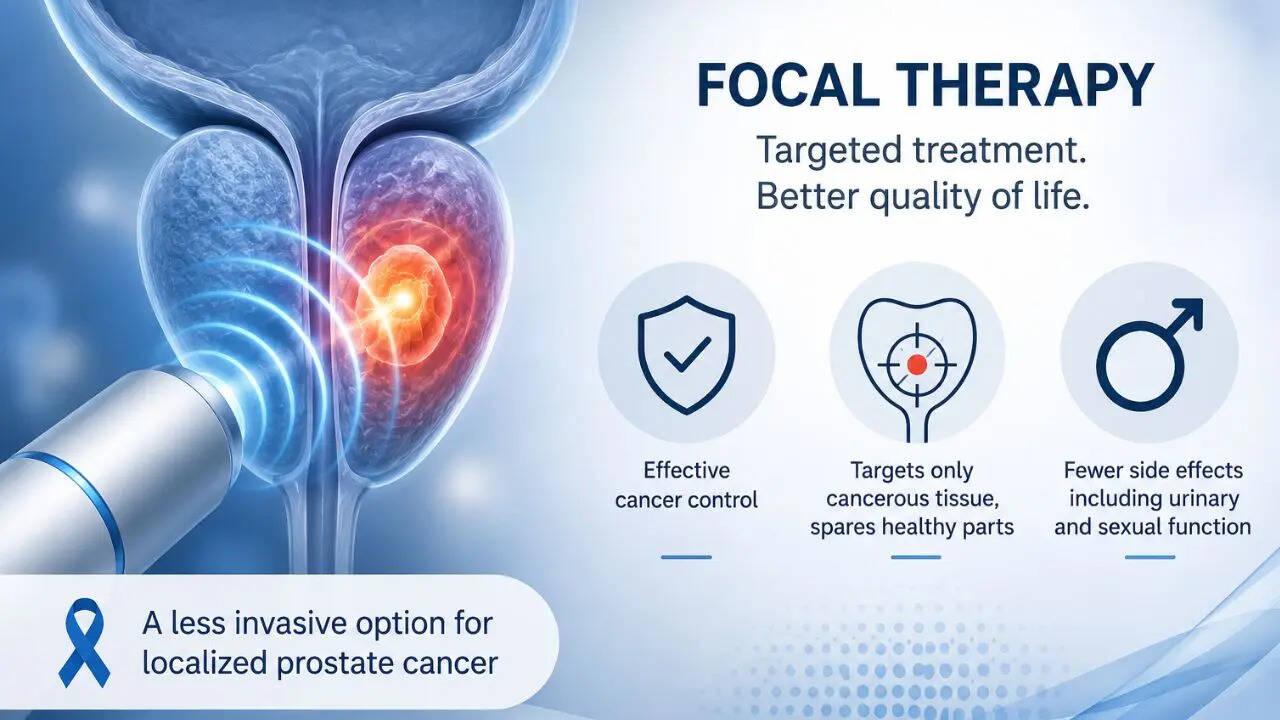
A minimally invasive treatment that targets only cancerous tissue in the prostate may offer the same chance of treating localized prostate cancer as surgery or radiotherapy while causing significantly fewer side effects, according to a major UK study. The findings suggest that focal therapy, which destroys only the tumor while preserving the healthy parts of the prostate, could become a viable treatment option for carefully selected patients. It could help reduce common risks like urinary incontinence and erectile dysfunction that follow conventional treatment. Prostate Cancer Treatment With Fewer Side Effects The study, presented by University College London (UCL) and collaborating institutions, compared long-term outcomes of men treated with focal therapy against those receiving radical prostatectomy or radiotherapy. Researchers found that cancer control was comparable across the treatment groups, while men undergoing focal therapy experienced substantially better functional outcomes. "This study shows that men with localized prostate cancer do not necessarily have to choose between effective cancer treatment and preserving their quality of life," said Professor Caroline Moore, Professor of Urology at University College London. "Our results demonstrate that focal therapy can control cancer effectively in appropriately selected men while significantly reducing the side effects associated with whole-gland treatments."Also read: KRAS-Targeted Vaccine Shows Promise In Fighting Pancreatic Cancer, Triggers Strong Immune Response In Early Trial Unlike surgery, which removes the entire prostate, or radiotherapy, which treats the whole gland, focal therapy targets only the cancer with the help of high-intensity focused ultrasound (HIFU). By sparing healthy tissue and surrounding nerves, the treatment aims to preserve urinary and sexual function. According to the researchers, the study provides strong evidence that focal therapy can offer outcomes similar to standard treatments in men whose cancer is confined to a specific area of the prostate. Not Appropriate For Every Patient Professor Moore cautioned that focal therapy for prostate cancer may not be suitable for every patient. "It is important that men undergo careful assessment with high-quality imaging and biopsy so that we can identify those who are most likely to benefit from this treatment," she said. The researchers also emphasized that patients receiving focal therapy require ongoing follow-up, including prostate-specific antigen (PSA) testing and imaging, to monitor any recurrence or progression of disease.Also read: Broadcaster Lauren Laverne Shares 'Smoldering Myeloma' Diagnosis After Cancer Recovery Jeremy Clarkson's Revelation The findings have drawn renewed public attention after television presenter Jeremy Clarkson recently disclosed that he underwent treatment for prostate cancer. Clarkson revealed that he chose a treatment that reduced long-term side effects, raising awareness about prostate cancer, and the importance of early diagnosis. Prostate cancer is among the most commonly diagnosed cancers in men worldwide. While surgery and radiotherapy remain the standard treatments for localized disease, both can result in complications like urinary leakage, bowel problems and erectile dysfunction that can affect the quality of life. Experts say the new findings support a growing shift toward more personalized treatment strategies that balance cancer treatment with quality of life.