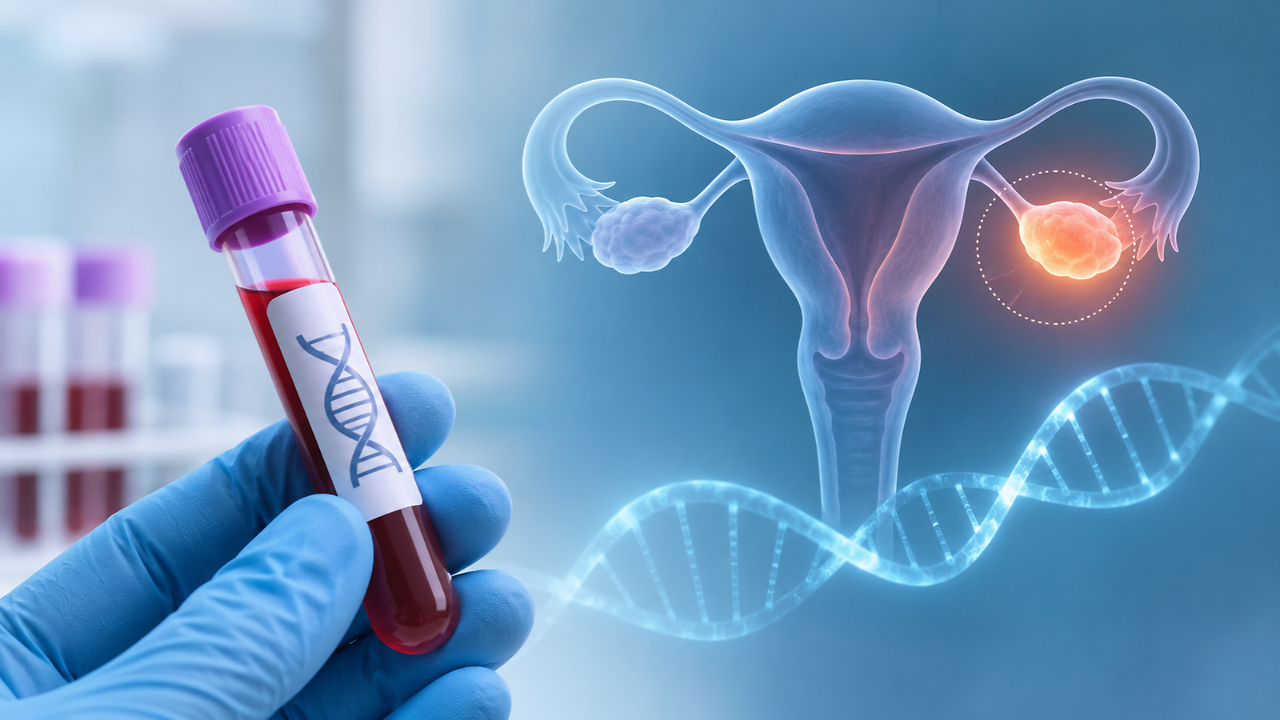
A new blood test may help identify microscopic precancerous changes linked to ovarian cancer before a tumour develops, according to a study published in Nature Medicine. Researchers found that the test could detect a molecular signal associated with an early precursor of high-grade serous ovarian cancer, one of the most common and aggressive forms of the disease.The study, led by researchers at the Hoag Family Cancer Institute in California, identified elevated levels of an RNA molecule called Tu-Stroma in blood samples from women with a condition known as serous tubal intraepithelial carcinoma (STIC).The findings could eventually help identify women at increased risk of developing ovarian cancer, especially those with inherited genetic mutations. What Is STIC And How Is It Linked To Ovarian Cancer?High-grade serous ovarian cancer mostly originates in the fallopian tubes rather than directly in the ovaries. It may begin with microscopic changes in the cells lining the fallopian tubes, known as serous tubal intraepithelial carcinoma or STIC.These lesions are precancerous, which means they are not invasive cancer but can lead to the development of high-grade serous ovarian cancer.STIC is difficult to detect because the abnormal cells are microscopic and cannot be identified through routine imaging. They are often discovered incidentally when women undergo surgery to remove their fallopian tubes or ovaries.Also read: Can AI End Cancer And Alzheimer’s? Anthropic CEO Dario Amodei Predicts ‘Age Of Miracles’ Within A DecadeHow Does The New Blood Test Work?The researchers found that women with STIC had elevated levels of Tu-Stroma, an RNA molecule related to interactions between abnormal cells and surrounding healthy tissue.The molecule is linked to a process in which cancer cells weaken neighbouring healthy cells, creating an environment that allows abnormal cells to thrive.By measuring Tu-Stroma in blood samples, researchers investigated whether this molecular signal could identify STIC before invasive cancer develops.In a separate validation group, the test detected STIC in 92.3% of women who had the precancerous condition and correctly identified 98.2% of healthy women.Researchers also modelled how the test might perform in a population of women with inherited risk factors for ovarian cancer. They estimated that approximately 72% of positive results would be accurate, while a negative result would be correct nearly 100% of the time.Also read: Why Lobular Breast Cancer Can Be Difficult To Detect On A Mammogram?Could The Test Help Women With BRCA1 And BRCA2 Mutations?The findings may be relevant to women carrying inherited mutations in the BRCA1 and BRCA2 genes, which increase the risk of ovarian and breast cancers significantly.Women with these mutations may be advised to consider surgery to remove of their fallopian tubes and ovaries. While this can reduce ovarian cancer risk, it also has consequences like including the loss of fertility and the possibility of early menopause.Dr Esha Madan, co-author of the study and a researcher at Hoag Family Cancer Institute, said, “For women at high risk, this could transform how we approach prevention.”She added, “Today, decisions about preventive surgery are largely guided by inherited risk, without knowing whether precancerous lesions are actually present. Our discovery could eventually provide that missing biological information.”Also read: National Cancer Awareness Day: Diagnosed With Cancer In Your 20s Or 30s? What To Know About FertilityCan This Blood Test Be Used For Ovarian Cancer Screening?The study analysed previously collected blood samples from women whose diagnoses were already known. It did not test the blood marker prospectively in a large population of women undergoing routine screening.The test performed well in samples from people with confirmed conditions and may not achieve the same accuracy in the general population.Researchers are now planning prospective studies involving women with and without inherited risk factors. These studies will assess whether Tu-Stroma can identify precancerous changes before they progress and whether the results can shape clinical decisions.Dr Rajan Gogna, who led the research, said, “We asked a fundamentally different question: What if we could identify the earliest molecular warning signs before invasive cancer even develops?”The discovery offers a new direction for ovarian cancer detection, shifting the focus from finding an existing tumour to identifying biological changes that may precede it.