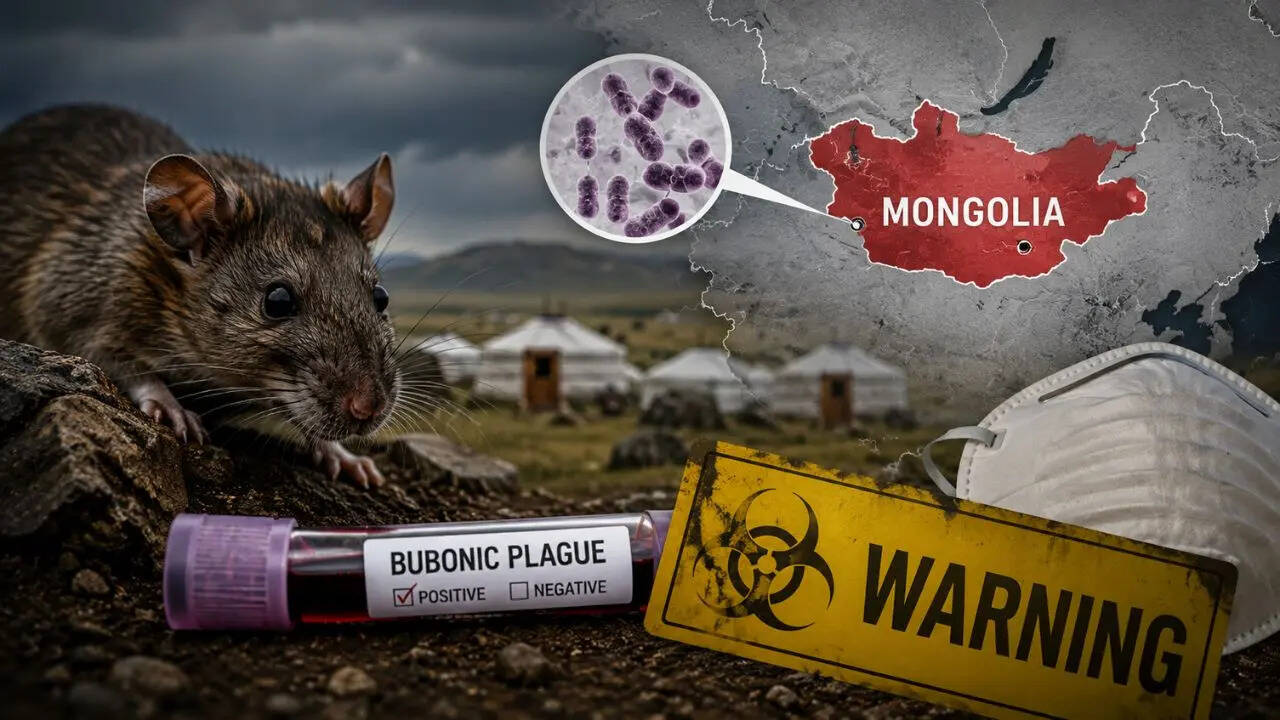
Mongolia recently confirmed a suspected case of bubonic plague after a bacteriological laboratory delivered positive results. The National Center for Zoonotic Diseases confirmed on Friday that the case belongs to Mongolia's western Khovd province. Mongolia Confirms First Human Case Of Bubonic Plague According to reports, the patient contracted the infection after eating marmot meat during a visit to Ulaankhus soum in neighbouring Bayan-Ulgii province. Mongolia's first confirmed case of bubonic plague has prompted officials to issue warnings against hunting and eating marmots, a known source of the deadly disease which is also considered a delicacy in the country. The warnings also stated that individuals must avoid all forms of contact with the rodent, including handling their meat or internal organs. It also said avoid contact with sick or dead rodents as it could significantly increase the risk of infection. The National Center for Zoonotic Diseases says 17 of Mongolia's 21 provinces are considered high risk regions for plague as the bacterium persists in wildlife. Also read: What Was The Pseudo-Tuberculosis Like 'Syndrome K' Saved Thousand Lives During World War II? Why Bubonic Plague Still Lurks In Mongolia? The Black Death devastated Europe in the 14th century. Even today, a few countries still see cases of plague from time to time. Mongolia remains one of these natural plague foci, where the disease continues to survive among marmots, ground squirrels, and fleas. The risk of bubonic plague increases drastically in summer in Mongolia. The bacterium Yersinia pestis survives in wild rodent populations. Humans typically get infected through flea bites from infected rodents, handling and close contact with infected animals and eating undercooked or raw marmot meat, which has been linked to several cases in Mongolia.Mongolia has reported human plague cases to the World Health Organization since the 1980s. Sporadic infections continue to occur almost every year, particularly in the country's western and northern provinces. The disease still lives centuries after it was eradicated because it is entrenched in wildlife rather than spreading continuously between people. Humans are usually infected after being bitten by infected fleas or through hunting, skinning, or eating infected marmots.Studies show that nearly 60% of Mongolia's reported plague cases since 1998 have been linked to close contact with infected marmots, highlighting why authorities repeatedly warn against hunting and consuming the animals.Also read: How To Get Rid Of Fleas In Your House And Stop Them From Infecting Your Pets Several infamous incidents related to the disease have sparked headlines in the last few years. In 2019, a married couple died after eating raw marmot meat. In 2020, a teenager also died after eating marmot meat, prompting temporary travel restrictions and heightened surveillance. The latest confirmed human case in July 2026 follows the same familiar pattern. Mongolia's challenge is not a new outbreak but an enduring zoonotic disease that resurfaces whenever humans come into contact with infected wildlife. Where Else Does The Plague Still Exist? Plague remains endemic in several parts of the world. According to the World Health Organization, the Democratic Republic of Congo, Madagascar, and Peru report the highest number of human cases globally. Since the 1990s, most reported cases have occurred in Africa. Madagascar experiences seasonal plague almost every year, typically between September and April. The country drew international attention during a major 2017 outbreak, which caused more than 2,500 suspected, probable, and confirmed cases and over 200 deaths. In the United States, plague is rare but has never disappeared. An average of about seven human cases are reported annually, mostly in rural parts of New Mexico, Arizona, Colorado, California, Oregon, and Nevada. In 2026, Arizona reported its first human plague case in Apache County in more than a decade. China has also reported occasional isolated human infections, particularly in Inner Mongolia.