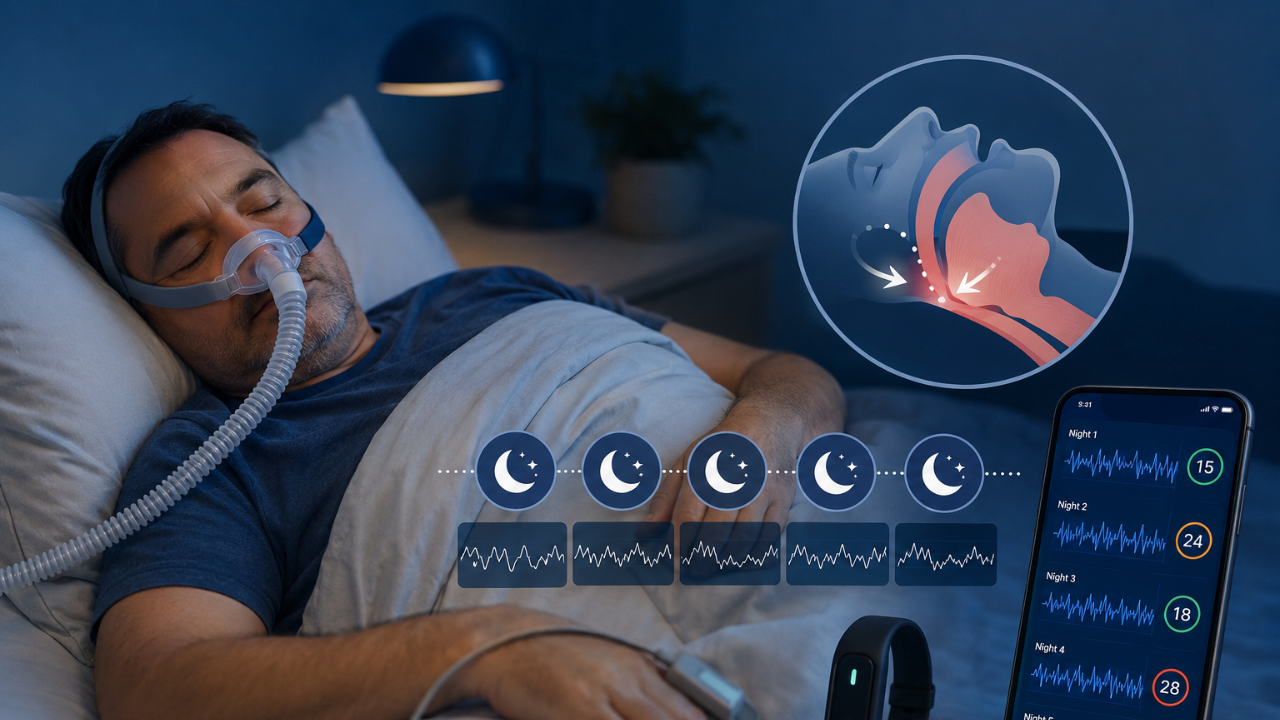
The single overnight sleep study, usually conducted to diagnose obstructive sleep apnea (OSA) may not be accurate enough, according to a recent study. Sleep patterns change significantly from one night to the next, meaning current one-night testing could underdiagnose or overestimate the condition in some patients. The study, published in the journal npj Digital Medicine, challenges the long-standing practice of relying on a single overnight sleep study, also known as polysomnography, to diagnose OSA. How Was The Study Conducted? Obstructive sleep apnea is a common sleep disorder in which breathing repeatedly stops and starts during sleep due to blockage of the upper airway. If left untreated, it has been linked to serious health problems, including high blood pressure, cardiovascular disease, type 2 diabetes, stroke, and reduced quality of life. To investigate whether a single sleep study accurately reflects a person's condition, researchers studied about 100 adults for suspected sleep apnea. Participants underwent standard overnight polysomnography, a gold-standard diagnostic test. Simultaneously, they also had their sleep monitored repeatedly over several weeks in their home environment. The researchers then compared the results from the one-night test with the average findings collected across multiple nights. Read more: Bryan Johnson Battles Autoimmune Gastritis: Which Parts Of His Longevity Guide Are Actually Worth Copying? Is The Single-Night Sleep Apnea Test Reliable? The analysis revealed significant night-to-night variation in sleep apnea severity. In many cases, the severity measured during one laboratory night did not match the average severity recorded over multiple nights. As a result, some patients could get classified into the wrong severity category due to the one-night test, particularly those whose sleep apnea naturally fluctuates or whose sleep is easily affected by the unfamiliar environment. Lead author Dr Bastien Lechat, a sleep expert at FHMRI Sleep Health, said, “Our findings show that sleep apnea can vary considerably from one night to the next, so if you only measure it once, you may not capture the true severity of the condition. In some participants, we saw clear differences between the single-night result and the average across multiple nights, which suggests current diagnostic approaches may under- or overestimate disease severity in some individuals.” The researchers also found that patients whose classifications changed between the types of tests often experienced poorer sleep during laboratory testing. This indicated that an unfamiliar sleep environment may alter sleep quality and influence results. Senior author Professor Sutapa Mukherjee, Professor of Respiratory and Sleep Medicine at Flinders University and Senior Consultant at Southern Adelaide Local Health Network (SALHN), said, “Our findings show that sleep apnea is a dynamic disorder, and by capturing how it changes over time, we can build a much more accurate and clinically meaningful picture of a patient's condition.”The researchers also believe that monitoring sleep on multiple nights can help doctors assess a patient's future health risks and course of treatment in a better way. While further research is needed before multi-night monitoring becomes routine clinical practice, the authors believe the study marks an important step toward modernizing sleep apnea diagnosis.