
- Health Conditions A-Z
- Health & Wellness
- Nutrition
- Fitness
- Health News
- Ayurveda
- Videos
- Medicine A-Z
- Parenting
New York Reports A Record Breaking Rate Of Flu Cases And Hospitalizations
Credits: iStock
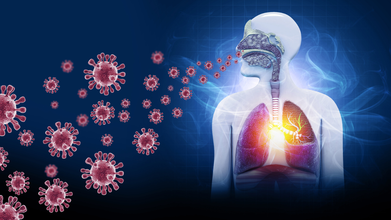
Flu cases are surging in the US, and New York has reported the highest number of cases, including hospitalizations recorded in a single week. The state's health department said on Friday. During the week ending December 27, 4,546 people were hospitalized with flu, a 24% increase from the 3,666 who were hospitalized the previous week, as per the data from the New York State Department of Health (NYSDOH). This report has come after the State reported a record-breaking number of flu cases in a single week with 72,133 infections during the week ending December 20.
"We are having a more severe flu season than prior years, almost 1,000 more people were admitted to a hospital during this most recent seven-day period compared to the prior week," Dr. James McDonald, the state's health commissioner, said in a statement on Friday.
NYSDOG also issued a declaration last month and stated the influenza is prevalent in New York. This requires health care facilities and agencies to ensure any staff who has not yet received this year's flu vaccine, must wear masks whenever they are in the area with patients.
Will The Old Vaccine Work Against This New Strain?
"The vaccine remains the most effective means to prevent disease. We still want to encourage people to get the vaccine," said Professor Antonia Ho, Professor and Honorary Consultant in Infectious Diseases at the University of Glasgow. Experts have stressed enough on the immunity that one can receive from the vaccine that that these flu jab remain the best defense against the flu, even though the current strain circulated may have drifted away from the strain included in this year's jab.
The flu vaccine is currently also available to New Yorkers who are aged 2 years and older at a health care provider's office or participating pharmacies while children aged 6 months and older can receive the flu vaccine at a health care provider's office, according to the state health department.
Can You Die From Flu?
As per the infectious physician at the Johns Hopkins University Center for Health Security, as reported in Scientific American, "Dying from the flu is not like dying from a bullet or a black widow spider bite. The presence of the virus itself isn't going to be what kills you. An infectious disease always has a complex interaction with its host.”
More Updates On Flu Cases
Meanwhile, flu cases are surging across the country. The US Centers for Disease Control and Prevention estimates at least 7.5 million illnesses, 81,000 hospitalizations and 3,100 flu-related deaths so far this season.
New York is among 20 states reporting “very high” respiratory illness activity, the latest CDC data shows.
Public health experts say a significant share of infections is being driven by a new flu strain known as subclade K, a variant of the H3N2 virus under influenza A. The strain has been circulating internationally since summer and previously fuelled spikes in Canada, Japan and the UK.
CDC testing found that around 92% of flu samples were H3N2, with nearly 90% classified as subclade K.
Punjab Leptospirosis Outbreak: 36 Test Positive, 19 Children Hospitalized
Credit Canva
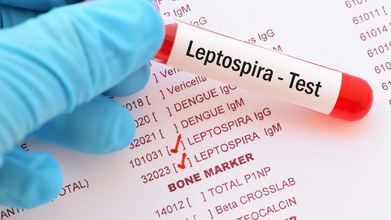
Punjab is grappling with an outbreak of leptospirosis, a rare bacterial disease, with 36 confirmed cases, including 19 children who have been hospitalized.
The outbreak is part of a larger water‑borne infection that has affected 110 people so far in Hazara Singh Wala, a border village in Ferozepur district. The hospitalized children are receiving care at Ferozepur Civil Hospital and are reported to be stable, according to media reports.
Leptospirosis spreads to humans through contact with the urine of infected animals such as dogs and rats. The disease previously made headlines in 2024 when Punjab Chief Minister Bhagwant Mann was hospitalized after contracting it.
The state health department reports that the outbreak is affecting mainly children and young people aged 3-25, with nearly 90 of the 110 symptomatic patients being minors, most of whom are school-going children, the Indian Express reported. Commonly reported symptoms include fever, abdominal pain, and jaundice.
Alarm was heightened in the district following the death of 12-year-old Sehaj Kaur from suspected Hepatitis E on February 24.
Investigations revealed that contaminated water, including rodent droppings and dead pigeons, contributed to the outbreak, causing widespread concern among villagers.
Media reports stated that health officials in the states are taking steps to prevent further spread of the outbreak. They are conducting house-to-house screenings, distributing chlorine tablets and oral rehydration solutions, as well as repairing water supply lines to contain the outbreak.
What Is Leptospirosis
Leptospirosis is usually a disease of animals like dogs, mostly rats, and some farm animals. It has also been reported in pigs, zebras, and horses.
It mainly spreads via contamination or through direct contact with loosely available food items or water infected with rat urine.
Common symptoms include:
- very high temperature
- headache
- muscular pains
- vomiting
- diarrhea
- yellow or brown patches in the eye,
- abdomen pain
While the disease is usually self-limiting and treatable with antibiotics, in severe cases it can spread to the kidney, brain, spinal cord, and liver and lead to death. It can also cause pulmonary haemorrhage, leading to respiratory failure and death.
Leptospirosis In India:
The neglected zoonotic disease is endemic to India due to a tropical climate that complements the transmission of infection.
The first disease outbreak was reported in the 1920s in the Andaman Islands.
As per the National Centre for Disease Control (NCDC), India is expected to report 0.1-1.0 million cases per year, but less than 10,000 cases are reported.
Only four states, i.e., Kerala, Gujarat, Tamil Nadu, and Maharashtra, report more than 500 cases per year as per IDSP Disease Alert.
Andaman, Andhra Pradesh, Assam, Goa, Delhi, Karnataka, Odisha, Puducherry, and Uttar Pradesh also report cases.
Due to a lack of awareness of the disease and a lack of suitable laboratory diagnostic capabilities in most regions of the country, leptospirosis has been under-reported and under-diagnosed in India.
This AI Tool Predicts Women’s Breast Cancer Risk Up to Four Years

Credit: Canva
An international group of scientists has created an artificial intelligence tool that can estimate a woman’s likelihood of developing breast cancer within the next four years.
The AI tool, known as the BRAIx risk score, analyzes mammogram images to generate an individualized risk assessment and flag women who may face a higher chance of developing the disease.
It may not only show the current risk but also predict the future risk, enabling early detection and treatments for a better outcome.
According to the findings published in The Lancet Digital Health journal, nearly one in 10 women ranked in the top 2 percent of risk by the AI tool were diagnosed with breast cancer within four years. This was despite previously receiving a clear screening result.
“These risk scores enable future development of personalized screening pathways to transform population breast cancer screening and save lives,” said corresponding author Helen M. L. Frazer of the University of Melbourne.
Frazer noted that identifying women who appear cancer-free but carry very high risk -- comparable to those with inherited BRCA1 or BRCA2 mutations -- will unravel both hereditary and non-hereditary causes of breast cancer.
From one-size-fits-all screening to personalization
Breast cancer screening programs have significantly lowered mortality rates -- by roughly 40-50 percent among women aged 50 to 74. However, most screening systems still apply the same approach to all women, regardless of individual risk.
Traditional screening tools use genetics, breast density, and questionnaires to estimate breast cancer risk. On the other hand, new AI-based screening tools, such as BRAIx personalizes screening by gathering information already present in breast scan images to better identify who is at higher risk.
“Our results show that conventional mammographic density is a far weaker predictor of breast cancer risk than the BRAIx risk score, even for interval cancers,” the researchers said in the paper. Interval cancers are aggressive tumors diagnosed after a negative mammogram.
The BRAIx Tool
The BRAIx risk score was developed using mammograms from nearly 400,000 women. To prove its efficacy, the AI tool was tested on data from almost 96,000 women from Australia and then confirmed in an independent Swedish population of over 4,500 women.
The findings showed that:
- The BRAIx risk score estimated breast cancer risk more accurately than the traditional risk factors, such as breast density, country of birth, and even family history.
- For the top 2 percent of women with the highest BRAIx risk score, the probability of a cancer diagnosis within 4 years was 9.7 percent -- a risk level exceeding that typically seen in women with inherited BRCA1 or BRCA2 mutations.
The BRAIx risk score can:
- Make breast screening more personalised,
- Improve early cancer detection,
- Reduce false alarms,
- Save lives without increasing costs
Global Breast Cancer Burden
Breast cancer continues to be the most common cancer among women worldwide.
A recent study published in The Lancet Oncology journal predicted that the number of new cases of the deadly disease will reach more than 3.5 million globally in 2050 -- rising by a third from 2.3 million in 2023.
Annual deaths from the disease will also rise by 44 percent -- from around 764,000 to 1.4 million.
However, not smoking, getting sufficient physical activity, lowering red meat consumption, and having a healthy weight can help prevent over a quarter of healthy years lost to illness and premature death from breast cancer.
Childhood Obesity In India To Surge To 56 Million By 2040, Says Global Report

Credit: Canva
Childhood obesity in India is expected to surge to a whopping 56 million by 2040 -- nearly a 20 percent rise from 2025, according to an alarming new global report released today by the World Obesity Federation.
The World Obesity Atlas 2026, released on World Obesity Day -- observed globally on March 4 -- revealed that of the 56 million, about 20 million children in the country will be obese, while the remaining will be overweight.
Globally, the number of children aged 5-19 years living with obesity or overweight is predicted to increase to 507 million by 2040 -- from 419 million in 2025.
Overweight Children: India Second-Highest Globally In 2025
Among children aged 5-9 years, 14.921 million were overweight or obese in 2025
In children aged 10-19 years, more than 26.402 million were overweight or obese.
India was among the top 10 countries -- second after China -- that accounted for over 200 million school-age children, aged 5-19 years, with high Body Mass Index (BMI).
Between 2010 and 2025, India had a 4.8 percent increase in the prevalence of high BMI and obesity among children aged 5-19 years.
"The increase in childhood obesity worldwide shows we have failed to take seriously a disease that affects one in five children," said Johanna Ralston, chief executive at the World Obesity Federation.
"Governments urgently need to step up prevention and management efforts for children living with overweight and obesity, and ensure that they receive the care they need," Ralston added.
High BMI To Surge Chronic Disease By 2040 In India
By 2040, the report also projected a substantial increase in the risk of diseases among children aged 5-19 years due to a high BMI in India. This includes:
- Hypertension (high blood pressure) expected to spike by 4.21 million from 2.99 million
- hyperglycemia (high blood sugar) to 1.91 million from 1.39 million
- high triglycerides (excess fats in the blood) to 6.07 million from 4.39 million
- metabolic dysfunction-associated steatotic liver disease (MASLD) to 11.88 million from 8.39 million
The key preventable risk factors in the country include:
- 74 percent of adolescents aged 11-17 fail to meet recommended physical activity levels
- Only 35.5 percent of school-age children (primary and secondary) receive school meals
- 32.6 percent of infants aged 1-5 months experience sub-optimal breastfeeding
- 13.4 percent of women aged 15-49 are exposed to high BMI
- 4.2 percent of women aged 15-49 live with Type 2 diabetes
- Children aged 6-10 consume an average of 0-50 ml of sugary drinks per day
Obesity: A Global Health Concern
Globally, the number of school-age children living with obesity now exceeds those living underweight.
Currently, more than one in five (20.7 per cent) 5-19 year-olds worldwide are living with obesity and overweight -- an increase from 14.6 per cent in 2010.
In 2025, about 177 million children aged 5-19 years were living with obesity. The number is expected to jump to 228 million in 2040.
By 2040, the Atlas also predicts that 227 million children aged 5-19 years will be living with obesity compared to 142 million living with underweight.
Notably, most of the world’s school-age children aged 5-19 living with obesity reside in the middle-income countries. By 2040, this is estimated to be as many as 169 million children.
Call To Action
The World Obesity Federation called for strong action to reverse current trends. These include imposing:
- taxes on sugar-sweetened beverages,
- restrictions on marketing to children (including digital platforms), implementation of global physical activity recommendations for children, protection of breastfeeding,
- healthier school food standards,
- integration of prevention and care into primary health systems.
- Follow Us :


© 2024 Bennett, Coleman & Company Limited