
- Health Conditions A-Z
- Health & Wellness
- Nutrition
- Fitness
- Health News
- Ayurveda
- Videos
- Medicine A-Z
- Parenting
NHS England Lowers Threshold Of Bowel Cancer Screening

Credits: iStock
Cancer screening for UK's second deadliest cancer is undergoing some changes, as NHS UK lowers the threshold of bowel cancer test. What it means is that NHS England is lowering the threshold of the amount of blood detected through a Fit or Fecal immunochemical test, needed to trigger the patient being sent for further investigation.
What Is the Fit Test?
The fecal immunochemical test is used to detect bowel cancer by spotting blood in the patient's stool. As per the new NHS guidelines, the sensitivity of the Fit test will be increase as part of an overhaul of cancer diagnosis as well as treatment.
As of now, it stands at 120 micrograms of blood a gram of stool, however, it will be reduced to 80 microgram by 2028. This will bring England into line with threshold that are already followed in Scotland and Wales.
“This is a major step forward in bowel cancer detection and will help save hundreds more lives from this devastating disease,” said Prof Peter Johnson, NHS England’s national clinical director for cancer. “Testing at a lower level threshold will now provide a better early warning system for bowel cancer, helping us to spot and treat cancers earlier, often picking up problems before symptoms occur," as reported by The Guardian.
Bowel Cancer In The UK
Around 44,100 people in the UK are diagnosed with bowel cancer each year, and about 17,400 die from the disease, making it the second leading cause of cancer deaths. Risk factors include processed meat consumption, excess weight and alcohol use. Cancer Research UK estimates that 54 percent of cases could be prevented. “Once fully implemented testing at the lower level threshold is expected to reduce late stage diagnoses and deaths from bowel cancer by around 6%,” NHS England said.
Read: Colorectal Cancer Is The Leading Cause Of Cancer Death In American Men Under 50
The estimate suggests that improving prevention and earlier detection could save the health service £32 million each year. The change is expected to result in around 600 additional bowel cancer diagnoses annually in England, an 11 percent rise on top of the 5,320 cases currently identified each year through the existing test.
Under the changes, the NHS is expected to carry out 35 percent more colonoscopies for patients flagged as high risk by the Fit test. Introduced in 2019, the Fit test is a home screening programme in which eligible people receive a kit by post, return a small stool sample, and have it analyzed in a laboratory.
The expansion will be detailed in the government’s new national cancer plan, set to be launched on 4 February, which cancer groups observe as World Cancer Day. In England, eligibility was widened in 2024 to include people aged 50 to 53, down from the earlier range of 54 to 74. During 2023–24, nearly seven million kits were sent out, with 68 percent returned, leading to the detection of 5,320 cancers. With the broader age criteria, an additional 1.2 million people are now being offered the test.
What Is Bowel Cancer?
The Cancer Council notes that bowel cancer is also called the colorectal cancer, colon cancer or rectal cancer, which develops in the inner lining of the bowel. It is preceded by growths called polyps, which could become invasive cancer if undetected.
UK Loses Measles Elimination Status: Why Is This Disease Making A Comeback?
Credits: iStock
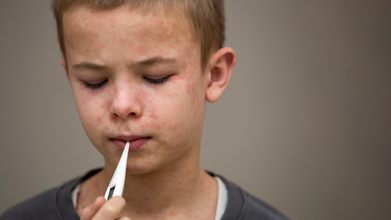
Measles, a disease once eliminated is making a come back. In the US, the disease has made a full-fledged come back and now the UK has also lost its measles elimination status. The World Health Organization (WHO) announced this news based on the spread of cases in 2024, when there were 3,600 suspected cases. Elimination status means that there is no sustained transmission, this is why this decision was expected given the scale of outbreaks in 2024.
Measles In UK: Cases Have Gone Up
Even in last year, 2025, there were more than 1,000 cases. Moreover, like the US, in the UK too the rate of vaccination fell. It was reported by the BBC that vaccination rates were below 95% threshold required to achieve herd immunity. This is when enough people in a community have been vaccinated against the disease, so it is harder for the pathogen to spread.
Measles Free UK
It was in 2017, when UK, for the first time, was declared measles free. However, it lost its status two years later. However, measles spread was halted completely in 2021, gaining its measles free status back. The key to elimination was social distancing during the pandemic.
Also Read: Measles Elimination Status In The US Is ‘Not Really’ At Risk, CDC Says As Cases Surge
Measles In UK: How Did It Lose Its Status?
In late 2023, measles outbreaks were reported in the UK, which led to a surge in cases in 2024. Vaccination uptake at the end of 2024 was 92% for the first dose, however, for the second dose, it was below 82%.
Dr Vanessa Saliba, consultant epidemiologist at UKHSA said, "Infections can return quickly when childhood vaccine uptake falls - measles elimination is only possible if all eligible children receive two MMRV doses before school. The NHS is making vaccination easier, including offering the second MMRV dose earlier at a new 18-month appointment to boost uptake and support elimination goals."
She also noted that children and adults must get vaccinated as NHS also offers catch-up jabs.
Dr Baharat Pankhania, from the University of Exeter, as reported by the BBC said, "Measles is an infection that can be prevented by vaccine - and it's extremely concerning that in the UK we now have pockets of low or no vaccine uptake. We urgently need to remedy this situation." Pankhania also noted that there is a need to make the access to GPs easier, and for an effort that could immunize babies in their homes and counter wrong information around vaccine safety.
What Is Measles?
Measles, also known as rubeola, is an extremely contagious viral illness that typically causes high fever, cough, runny nose, red and watery eyes, and a characteristic rash that begins on the face and spreads downward across the body. It spreads through respiratory droplets and can lead to severe and sometimes fatal complications, including pneumonia and inflammation of the brain known as encephalitis.
Although it is preventable through the safe and effective MMR vaccine, measles remains a serious threat in many regions. There is no specific cure, and treatment focuses on managing symptoms, according to the Cleveland Clinic.
Cancer Postcode Lottery: What Is It And Why Is UK Govt Putting An End To It?
Credits: Canva
Cancer Postcode Lottery will soon be put to an end by the UK Government. Reports say that it will enable the rural population access to cancer specialists and treatments. Before getting into how it will help the rural population and people living in coastal areas to find it easier to see a cancer doctor, let us first understand what postcode lottery means.
What Is Cancer Postcode Lottery?
The term cancer postcode lottery refers to a situation where a cancer patient’s access to the latest and most effective treatments depends on where they live or which hospital they are treated at, rather than purely on medical need.
Based on the information you shared, senior cancer doctors in England are warning that this is happening because of bureaucratic hurdles within the NHS. Even though cancer care is supposed to be equitable across the country, in practice, not all hospitals can easily offer the same treatments.
How Does This Postcode Lotter Work?
Doctors say that some cutting-edge cancer treatments such as advanced radiotherapy techniques and newer immunotherapy drugs require separate funding approvals. Individual cancer centers often have to apply to NHS England for permission and money to use these treatments.
Larger, better-funded hospitals with more administrative resources are often able to navigate this complex system more easily. Smaller or less well-resourced units may struggle, meaning patients treated there may not get access to the same options.
For instance, Stereotactic Ablative Body Radiotherapy (SABR). SABR is a highly precise form of radiotherapy that delivers strong radiation doses directly to small tumors in areas such as the lungs, liver, brain and lymph nodes. Although SABR is a well-established treatment and can be life-saving for certain patients, the Royal College of Radiologists (RCR) says some cancer units still have to apply for special funding to use it. This leads to situations where a patient in one area can receive SABR, while another patient with the same cancer elsewhere cannot.
What Is The Government Planning To Do With Postcode Lottery?
As per the official website of UK Government, this will allow people "living in rural and coastal communities will find it easier to see a cancer specialist as part of plans to tackle the current postcode lottery."
The website notes that most deprived parts of the country have fewer cancer consultants, which leaves patients waiting longer for essential care. These same areas also face highest economic inactivity, with long waits for diagnosis and treatment keeping people out of work and holding back local economies. This is why the government is now introducing "new training places targeted at trusts with biggest workforce gaps, prioritising rural and coastal areas".
Working with the Royal Colleges, the government will encourage more doctors to train in clinical and medical oncology to increase the number of cancer specialists in underserved areas.
These steps will be outlined in the upcoming National Cancer Plan, which aims to speed up diagnosis and treatment, reduce inequalities, and support the goal of making England a global leader in cancer survival, while building a future-ready NHS.
Could Red Light Therapy Help Protect Football Players From CTE

Credits: Canva
A treatment already popular in the US for skin care, pain relief, and faster healing may soon be known for something far more serious. A new study suggests red light therapy could help protect football players’ brains from chronic inflammation caused by repeated hits to the head.
Experts say the findings are early but promising, especially in the ongoing search for ways to reduce long term brain damage in contact sports.
What Is CTE?
Chronic traumatic encephalopathy, or CTE, is a degenerative brain disease linked to repeated head injuries. It is commonly found in former football players, boxers, and military personnel exposed to blast injuries. Over time, the condition can cause memory loss, confusion, mood changes, aggression, and eventually problems with movement, speech, swallowing, and breathing. There is currently no cure, and doctors still do not know how to slow its progression.
Why inflammation matters in CTE
For now, the only proven way to lower CTE risk is to reduce repeated brain trauma through better helmets, rule changes, and fewer hits to the head. But with more than 100 former NFL players diagnosed with CTE after death and many more suspected cases, experts agree that prevention tools alone are not enough.
Researchers believe chronic inflammation in the brain plays a major role in how CTE develops and worsens over time. If that inflammation can be reduced early, it could potentially limit long term damage.
Red light therapy, also known as photobiomodulation, has already been shown to reduce inflammation in other parts of the body. It works by stimulating energy production inside cells and improving blood flow, which helps tissues repair and recover.
Inside the football study
To see whether the therapy could help the brain, researchers at the University of Utah Health studied 26 collegiate football players during a full season. Half received active red light therapy using a light emitting headset and a small device placed inside the nose. The other half used an identical looking device that did not emit light.
Players completed three 20 minute sessions each week over 16 weeks. Brain scans were taken before and after the season.
Read: 21-year-old Billy Vigar Of Chichester City Dies Of Sustaining Brain Injury
The results were striking. MRI scans showed that players in the placebo group experienced a significant increase in brain inflammation by the end of the season. In contrast, those using red light therapy showed little to no increase, with protection seen across most brain regions.
Why experts are paying attention
Specialists who reviewed the findings say the results align with what scientists already understand about inflammation and brain injury. Reducing the inflammatory response after repeated impacts could help limit the damage that builds up over time.
Another advantage is that the therapy is non invasive and does not involve medication. Most users report no major side effects, which makes it especially appealing for athletes.
That said, experts caution against buying over the counter red light devices. The therapy requires very specific wavelengths that can penetrate skin and tissue effectively. Many consumer products do not meet those standards.
Researchers stress that more studies are needed to confirm long term safety and effectiveness. A large Department of Defense funded trial is already planned, involving 300 people with persistent concussion or traumatic brain injury symptoms, including veterans and first responders.
If future research continues to show benefits without harm, red light therapy could one day become part of how teams protect athletes’ brains, not just in football, but across many sports.
- Follow Us :


© 2024 Bennett, Coleman & Company Limited