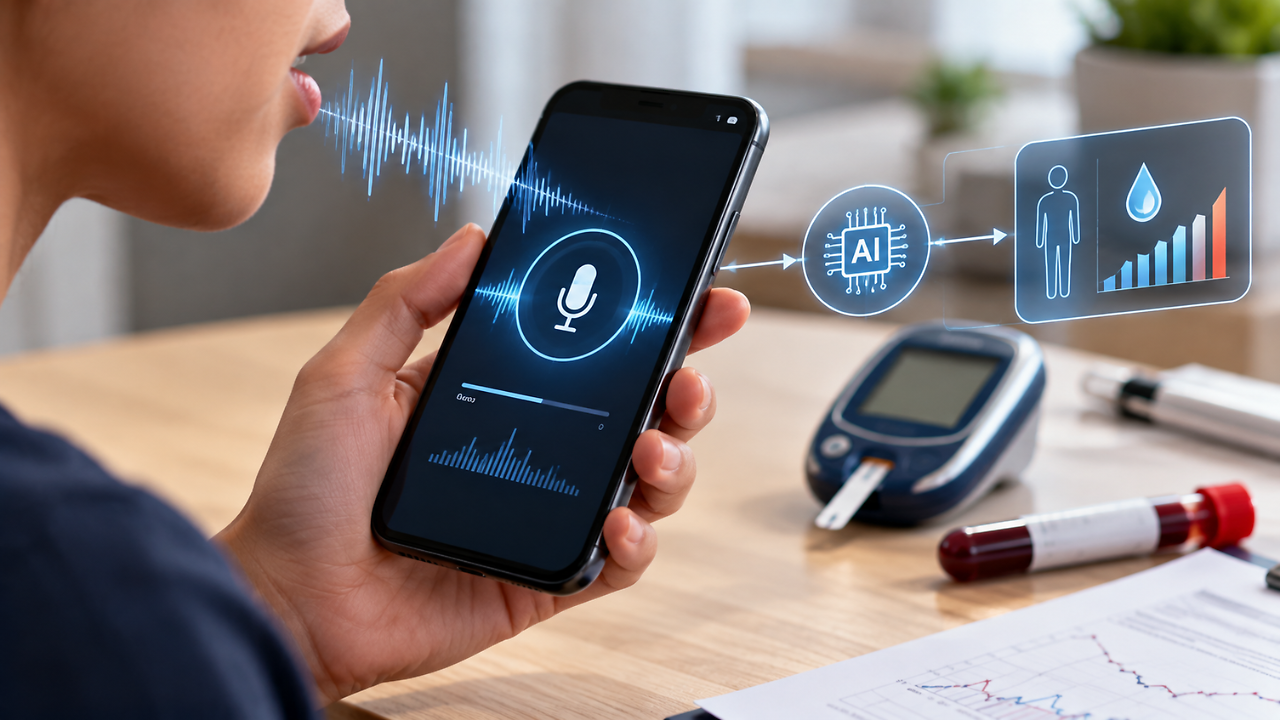
A new artificial intelligence-based screening tool may be able to analyse just 20 seconds of speech to identify clues linked with type 2 diabetes. A recent large-scale study found that the AI model could detect type 2 diabetes from short voice recordings, including when its predictions were checked against HbA1c blood-test results. The researchers say the technology could eventually offer a quick, non-invasive way to triage patients and identify people who may need routine diabetes testing. The researchers stress upon the fact that this is a just screening tool, not a replacement for conventional blood test for type 2 diabetes. Can Someone’s Voice Reveal If They Have Type 2 Diabetes? The very idea of diagnosing a disorder from voice seems strange but researchers have been studying changes in speech as key biomarkers that could give reliable clues about a particular disease. Type 2 diabetes affect multiple physiological systems, including nerves, muscles and blood vessels. These changes could have a subtle influence on various aspects of speech, like pitch, timing and other acoustic characteristics that are not prominent enough for the human ear. The AI does not ‘listen’ for someone saying they have diabetes. Instead, it analyses patterns in the voice recording and looks for combinations linked with type 2 diabetes.Also read: Gut Microbiome May Reveal Diabetes Risk Before Blood Sugar Changes: StudyWhat Did The Researchers Find From Voice Recordings? Researchers developed the model using 63,000 voice recordings from more than 21,000 people in the US and UK and then tested it in a separate group of 7,319 adults. Participants provided short recordings involving reading aloud from Aesop’s fables. The model showed an area under the curve (AUC) of 0.80 when tested against self-reported type 2 diabetes. It means that the speech tool accurately assigned higher risk scores to individuals who had type 2 diabetes in 80% of the instances. A secondary analysis of 801 participants also underwent HbA1c testing within three months of voice testing, providing an objective measure of blood sugar control. When the AI tool’s predictions were compared with those results, it achieved an AUC of 0.75 for diabetes and 0.73 for prediabetes.Also read: Diabetes Linked To 55% Risk Of Kidney Disease, Heart Failure Or Death Within 10 Years: StudyAI Tool’s Implications In Diabetes Testing Type 2 diabetes can remain undiagnosed for years, allowing complications to develop before treatment begins. Blood tests like fasting glucose and HbA1c are the conventional ways to diagnose diabetes. One has to go to the clinic, get their blood drawn and wait for some time to get their diabetes diagnosis. Giedre Cepukaityte, research scientist at thymia, who will be presenting the findings at the European Association for the Study of Diabetes (EASD) in Milan, said, "This is the largest real-world study of speech-based screening for type 2 diabetes to date which also checks the model’s predictions against blood test results as well as against what people reported about their own diagnosis. Those flagged up as higher risk by the model had blood results to match.” The advantage of voice screening could make a difference in diabetes testing. As someone can do this test without visiting a clinic, this could be the first step people undergo before proper testing. Someone flagged as being at higher risk would need a conventional blood test. Cepukaityte added, "This has the potential to change what screening looks like. A speech sample can be taken over the phone or through an app, so we can reach far more of the people who need a blood test than current pathways do, particularly those who never get to a health check.” A voice-based tool could make screening easier for people who do not routinely visit doctors or have difficulty accessing healthcare services. The researchers found that the voice model identified about three-quarters of type 2 diabetes cases, although it also produced false-positive results. "Our model opens a new route to screening for diabetes. It is not a replacement for a blood test, and it should never stop anyone who thinks they need one from getting one. Our next step is to test the model in clinical settings and to understand how well it works for every group of people, because a screening tool has to work for everyone." Dr Lucy Chambers, head of research impact and communications at Diabetes UK, said, "More than a million people in the UK are living with undiagnosed type 2 diabetes and are missing out on the support and treatment they need to help them stay well and reduce their risk of developing devastating complications.” She added, “AI-based technologies could help identify more people who may benefit from diagnostic blood tests, but it’s crucial that they are rigorously designed and tested to make sure no-one slips through the net.Anyone concerned about their risk of type 2 diabetes can use Diabetes UK’s free Know Your Risk tool and should speak to their healthcare team if they have concerns.”