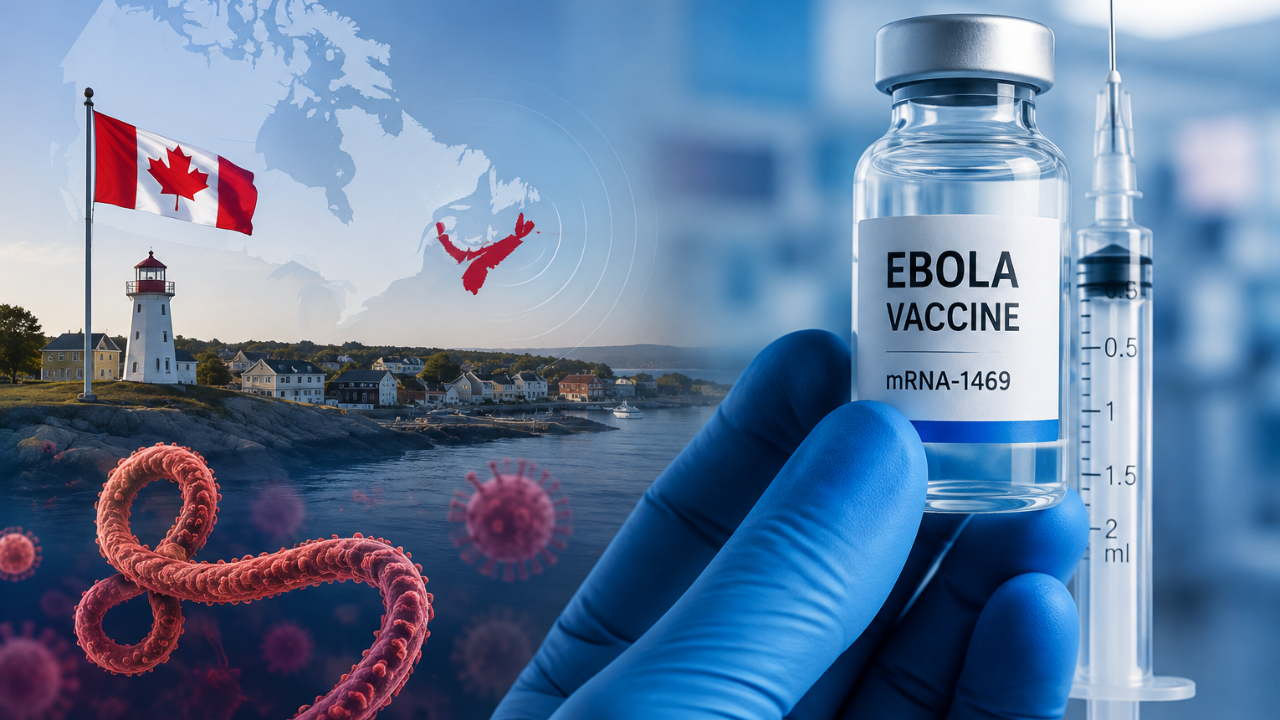
Canada has never reported a case of Ebola, yet Nova Scotia has become one of the first places in the world where humans are receiving an experimental vaccine against the deadly virus.The first participant received Moderna’s experimental mRNA-1469 vaccine in Truro, Nova Scotia, on August 3. The Phase 1 trial is being conducted at three Canadian sites in Truro, Halifax and Toronto and aims to enrol around 80 healthy adults.Why Is Canada Testing An Ebola Vaccine?Also read: Ebola Outbreak in Congo Surpasses 4,000 Cases; Officials To Probe Whether Bundibugyo Virus Is MutatingThe current outbreak in the Democratic Republic of Congo (DRC) is being caused by Bundibugyo ebolavirus, a relatively rare Ebola species for which there is currently no approved vaccine or treatment. More than 3,800 infections and over 1,700 deaths have been reported in the outbreak, making it the second-largest Ebola outbreak on record. Existing Ebola vaccines are largely designed to protect against the Zaire species, which caused previous major outbreaks. They cannot simply protect the masses against Bundibugyo.This has created a dangerous situation: an outbreak is already underway, but scientists do not yet have a licensed vaccine specifically targeting the strain driving it.Why Nova Scotia Is Chosen For Testing Ebola Vaccine?Also read: Ebola Outbreak: Moderna Begins First Human Trial Of Bundibugyo Vaccine As Cases Rise to 3,748Nova Scotia was not selected because Ebola is circulating there. In fact, Health Canada says there have been no cases of Ebola disease in Canada. But, the province has something far more useful for an early vaccine trial: years of experience conducting vaccine research.The Canadian Center for Vaccinology, a collaboration involving Dalhousie University, IWK Health and Nova Scotia Health, has extensive experience in vaccine development and clinical trials. Moderna said Canada was selected because of its experience with early-stage clinical trials, Health Canada's regulations and the country's long history of contribution to research on filoviruses, the family of viruses that includes Ebola.“Canadian researchers and participants are contributing an important first step in a broader international effort to develop a vaccine against a form of Ebola for which no approved protection is currently available,” Hamilton Bennett, Moderna's executive director of global health security and R&D partnerships, said. About The Ebola Trial In Nova Scotia Phase 1 trials primarily examine whether a vaccine is safe, what dose should be used and whether it produces an immune response. Participants are given the vaccine, not the Ebola virus, and they cannot get Ebola from the vaccine trial itself. The mRNA-1469 vaccine uses the same mRNA technology that Moderna used for its COVID-19 vaccine. It is designed to teach the immune system to recognise Bundibugyo virus and produce an immune response without exposing volunteers to the live virus. The Coalition for Epidemic Preparedness Innovations (CEPI) has committed up to US$50 million to support Moderna's vaccine development. If the vaccine eventually proves successful, Moderna has committed to making at least 500,000 doses available to low- and middle-income countries. Dalhousie researchers are studying the Bundibugyo virus itself. Recent work helped identify a genetically distinct variant circulating in the DRC and investigate possible treatment options. Phase 1 of the trial can establish safety and immune responses, but larger Phase 2 and Phase 3 studies will be needed to determine whether the vaccine actually prevents Ebola disease.