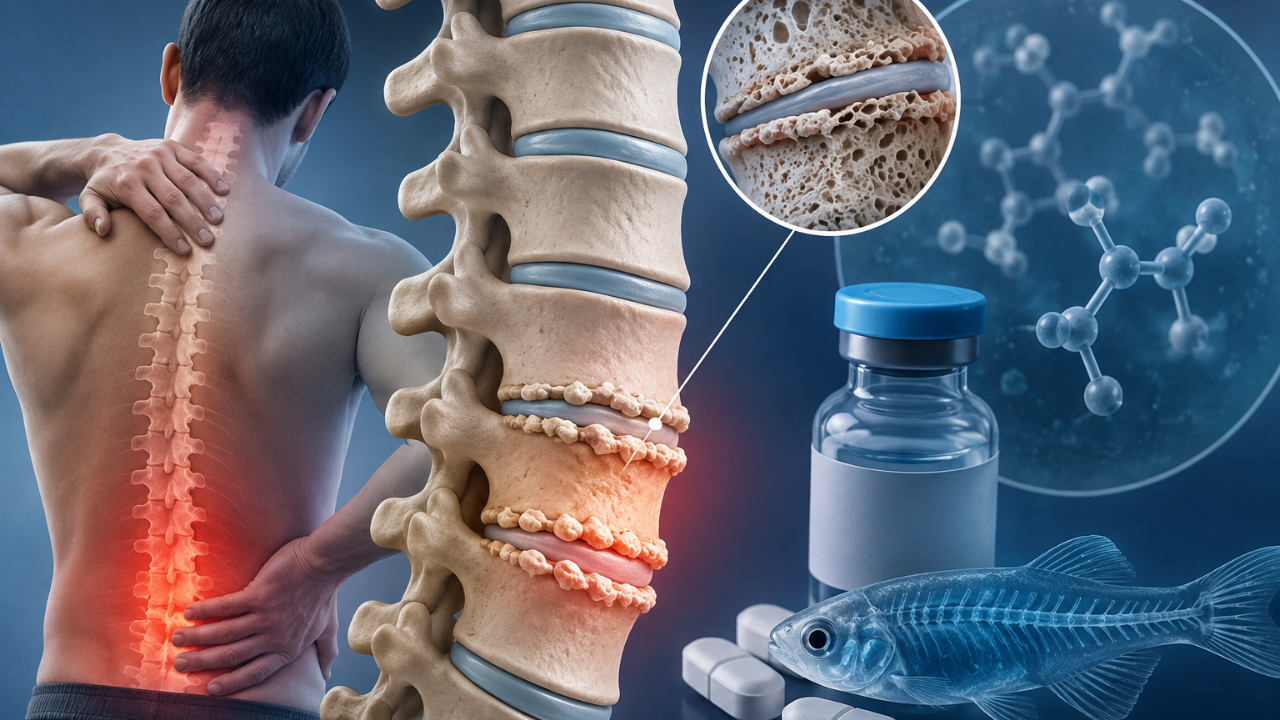
Back pain is often treated as a problem that comes with ageing, but new research suggests that some forms of spinal degeneration may have specific biological trigger, and an existing osteoporosis drug could help treat it. A study published in Communications Biology found that a class of osteoporosis drugs called bisphosphonates reduced abnormal mineralisation in the spinal tissues of genetically modified zebrafish. The findings show promise in treating intervertebral disc degeneration, a major cause of chronic back and neck pain. What Did The Study Find? Researchers from the University of Edinburgh and University of Bristol studied zebrafish lacking a functioning copy of the col9a1b gene. This gene is linked to collagen IX, an important structural component of spinal discs. As the fish aged, they developed changes resembling human disc degeneration. Their vertebrae began to fuse and mineral deposits accumulated in the ligaments between the vertebrae, making the normally flexible spinal structures increasingly hard. The researchers found that the mineralisation was preceded by deterioration of the structural tissue supporting that supported the developing spine. They also identified changes in lipid metabolism, mTOR signalling, phosphate regulation and vitamin A-related pathways. Most importantly, when researchers treated the animals with etidronate, a bisphosphonate, mineral accumulation was reduced. Other interventions targeting fat metabolism also reduced spinal fusion. Also read: Olympian Lolo Jones Says She Was At Risk Of Paralysis After Team USA Allegedly Neglected Her Spine InjuryWhy Is Disc Mineralisation A Problem? Intervertebral discs act as cushions between the bones of the spine. They allow the back to bend and move while absorbing daily physiological stress. With disc degeneration, the disc's structure can wear off. Abnormal mineralisation can make these tissues stiffer and contribute to vertebral fusion, making movement challenging and contributing to pain. Currently, there are no medications that can reliably stop or reverse intervertebral disc degeneration. Treatment generally focuses on pain management, physiotherapy and lifestyle measures, while severe cases may eventually require surgery.Also read: Yoga Poses That Can Fix Your Kid's 'Slouched' PostureMore About The Osteoporosis Drugs Bisphosphonates are already widely used to protect bones in people with osteoporosis. They work by slowing the activity of cells that break down bone. In this study, however, their potential benefit appeared to involve something different: preventing minerals from accumulating where they should not. Study lead Dr Erika Kague said the research could help with alternatives to surgery. “For decades, surgery has been the only real answer for disc disease,” Kague said. She added that the findings suggest several ways of slowing the process, including a drug already used in patients. Dr Caroline Aylott of Arthritis UK said the findings offer “fresh hope” for the millions of people living with back pain and could help scientists move closer to new treatments.Researchers caution that the findings are promising but still early and that larger trials will be needed to validate the study. Also, this was an animal study, not a clinical trial in people with back pain. Researchers will need to establish whether the same biological process occurs in humans and whether bisphosphonates can safely and effectively prevent or slow disc degeneration in patients.