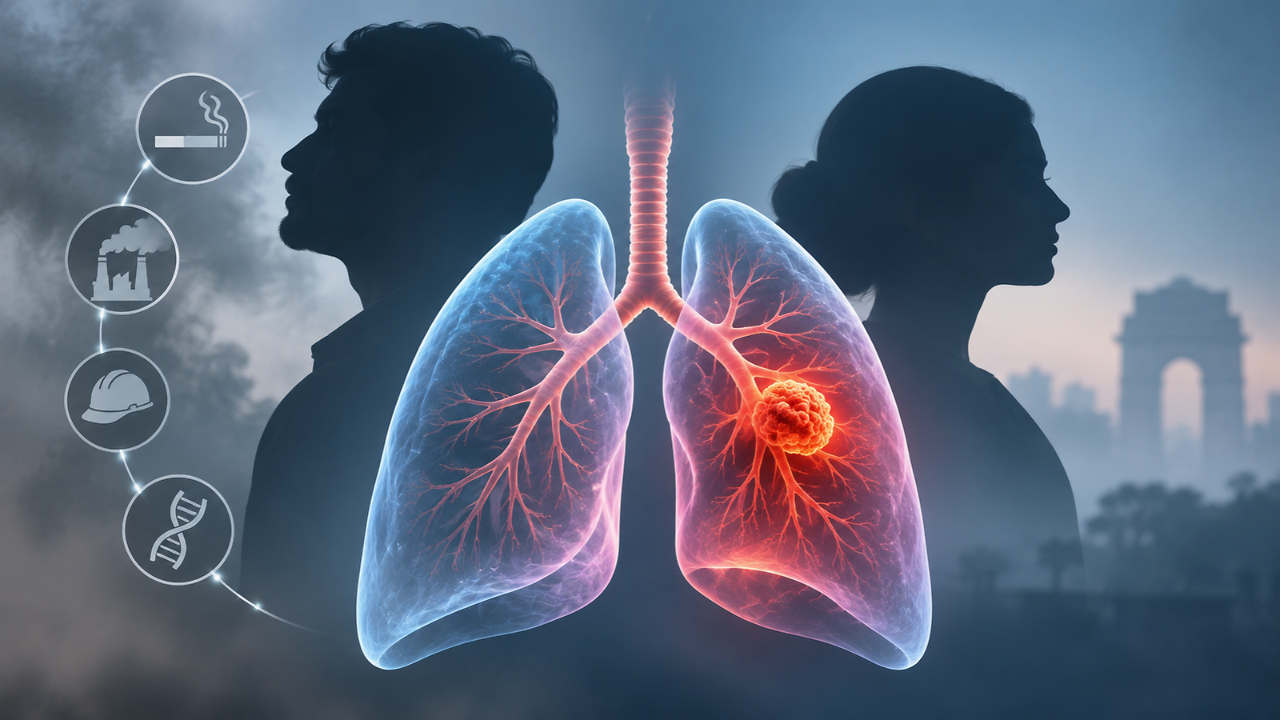
Lung cancer is usually linked to smoking yet there is more to the tale behind who gets the disease in India. More men suffer from lung cancer than women. This does not happen by coincidence because of the differences in the number of smokers. According to the Global Cancer Observatory (GLOBOCAN 2022), lung cancer is one of the most common cancers among Indian males. There is a substantial difference in the prevalence rate of cancer between men and women, and the former group bears a higher burden of the disease. One needs to go deeper into the problem to find an explanation. Difference in tobacco consumption patterns Tobacco consumption is one of the most important factors influencing the likelihood of suffering from cancer. Traditionally, smoking was a practice more common among men in India. According to the results of the Global Adult Tobacco Survey (GATS-2, 2016-17), about 24 per cent of Indian men had ever consumed tobacco, compared to just 14 per cent of women.Cigarette smoke and bidis contain harmful chemicals that cause gradual damage to the tissues lining the airways. Such repeated exposure makes changes in genes more probable, which ultimately results in the occurrence of cancer. Moreover, the risk becomes higher depending on the length and severity of smoking.Also read: World COPD Day: Even As Delhi's Air Pollution Declines, These Overlooked Factors Can Raise Your COPD Risk Occupational and environmental exposure are additional sources of risk factors Gender differences in the workforce in India may contribute to additional exposure to cancer-causing substances as well. Male employees in such occupations as construction, mining, manufacturing, transportation and some industries may be exposed to asbestos, silica dust, diesel engine exhausts and other hazardous agents. As a result, they become at greater risk of developing lung cancer due to long-term exposure. Air pollution may contribute to an increase in the risk of lung cancer as well. Inhalation of fine particulates, especially PM2.5, is able to penetrate deeply into the lungs and cause cancer. According to IARC, outdoor air pollution and particulate matter are carcinogenic to humans. Nevertheless, women may suffer from environmental risk factors too. Inhalation of smoke caused by solid fuel combustion in kitchens with poor ventilation and passive exposure to cigarette smoke pose additional risks for female patients.Also read: Lung Cancer Survival Improves By 71% In US: But 1 In 5 Patients Still Gets No TreatmentWhy do women who have never smoked develop lung cancer? One common myth is that lung cancer only affects smokers. Some women develop lung cancer without any history of smoking. Some lung cancers, especially some kinds of adenocarcinomas, occur in people with no past of smoking. These cancers could have unique features and genetic mutations that could assist in identifying targeted therapy for this condition. This is why an individual assessment of each case of lung cancer is necessary rather than jumping to conclusions about what caused the cancer based on whether one smokes or not. How late diagnosis can be dangerous While men might disregard cough, shortness of breath, or chest pains as being results of smoking, pollution, or age, women might struggle with the same problem due to the fact that they do not smoke.A persistent cough for weeks, bloody sputum, unintentional weight loss, constant chest pain, or an increasing level of breathlessness is never to be dismissed. Symptoms like these do not always mean cancer, yet they need a proper medical evaluation. Gender differences in the incidence of lung cancer depend on behavioral, environmental, occupational, and biological factors. It is essential to stop smoking, create safe workplaces, reduce pollution of the air, and have an early diagnosis for both men and women. Lung cancer cannot be viewed as a man's disease or the outcome of smoking. The chances might differ, but it needs to be universally recognized and treated.