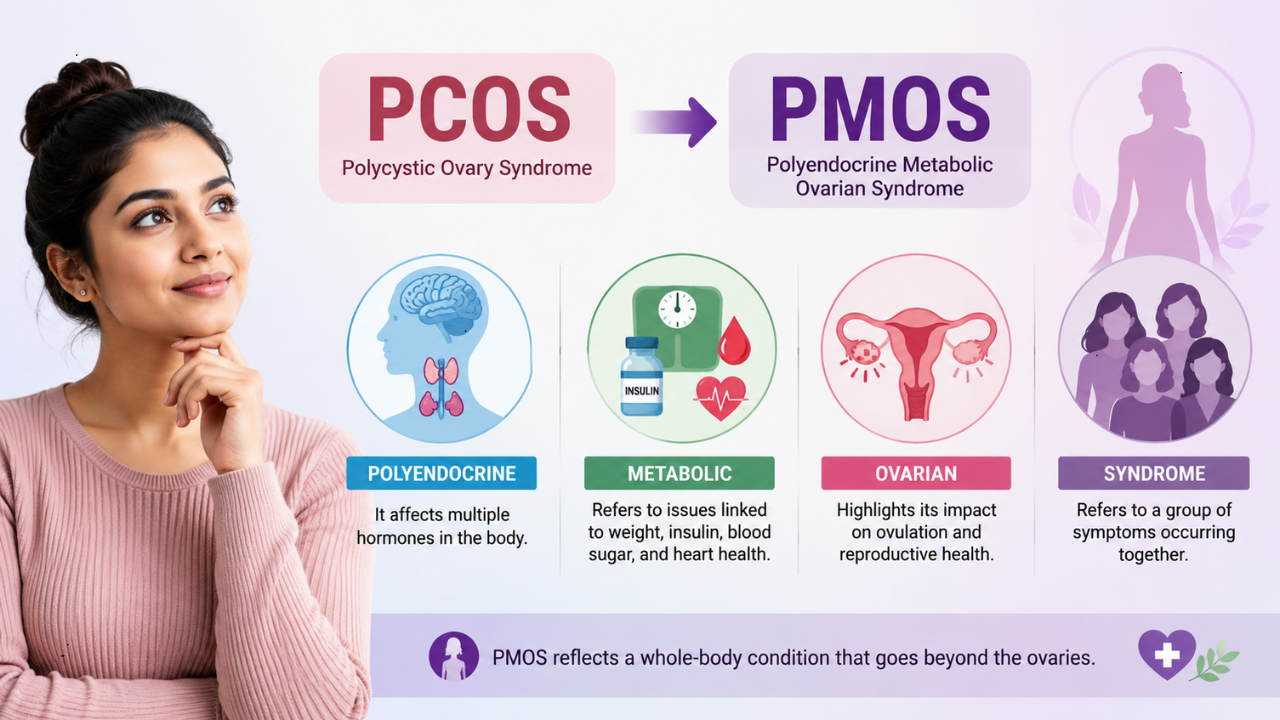
Polycystic Ovary Syndrome (PCOS), a condition affecting more than 170 million women worldwide, has now been officially renamed Polyendocrine Metabolic Ovarian Syndrome (PMOS), according to a global study published today in The Lancet.The new name reflects a major shift in understanding the condition — from being viewed primarily as a gynecological disorder to being recognized as a complex, multisystem condition affecting several aspects of health.The new term PMOS acknowledges that the condition involves:Endocrine healthMetabolic healthReproductive healthDermatological healthPsychological health“Renaming this condition is more than semantics; it’s about finally recognizing the full reality of what patients experience,” said Melanie Cree, pediatric endocrinologist at the University of Colorado Anschutz and part of the global study.“For too long, the narrow definition of PCOS has overlooked its metabolic and hormonal complexity, leaving many patients undiagnosed or misunderstood,” Cree added.Why Was PCOS Renamed To PMOS?Calls to rename PCOS date back to the 1990s and early 2000s. In 2012, the U.S. National Institutes of Health (NIH) recommended a name change after experts concluded that the term PCOS was misleading and confusing for both patients and healthcare providers.“The name focuses on a criterion — polycystic ovarian morphology — which is neither necessary nor sufficient to diagnose the syndrome,” NIH experts wrote in the report.Although PCOS has long been understood as a metabolic condition, experts said the name inaccurately narrowed its scope and overemphasized ovarian cysts and fertility issues.This often led to:Delayed diagnosesFragmented careStigmaMissed opportunities for early intervention“It was very clear that the name was inaccurate,” said Dr. Helena Teede, endocrinologist and professor of women’s health at Monash University in Australia, who chaired the steering group behind the renaming initiative.How Was The Name Change Decided?The renaming process involved consultations with thousands of patients and healthcare professionals across the world.The effort was supported by 56 academic, clinical, and patient organizations.Experts said the transition from PCOS to PMOS will occur over the next three years through a phased global implementation strategy.What Does PMOS Mean?The new name aims to explain the condition more accurately and comprehensively.Polyendocrine means it affects multiple hormones in the body.Metabolic refers to issues linked to weight, insulin, blood sugar, and heart health.Ovarian highlights its impact on ovulation and reproductive health.Syndrome refers to a group of symptoms occurring together.In simple terms, PMOS is a hormonal and metabolic condition that can affect periods, fertility, skin, mood, weight, and long-term health.Experts said the new terminology intends to:Reflect the condition’s hormonal complexityAcknowledge its strong metabolic and cardiometabolic effectsContinue emphasizing ovarian involvement without over-focusing on fertilityThe experts added that the name change “is expected to reshape how the condition is diagnosed, treated, and researched globally.”According to the study, PMOS could also:Promote earlier and more accurate diagnosisSupport more holistic, patient-centered careReduce stigma associated with fertility-focused terminologyExpand research into metabolic and systemic impacts“Overall goals include greater awareness, enhanced diagnosis, improved care quality and patient satisfaction, and optimized outcomes across the broad features of the condition,” the experts said.