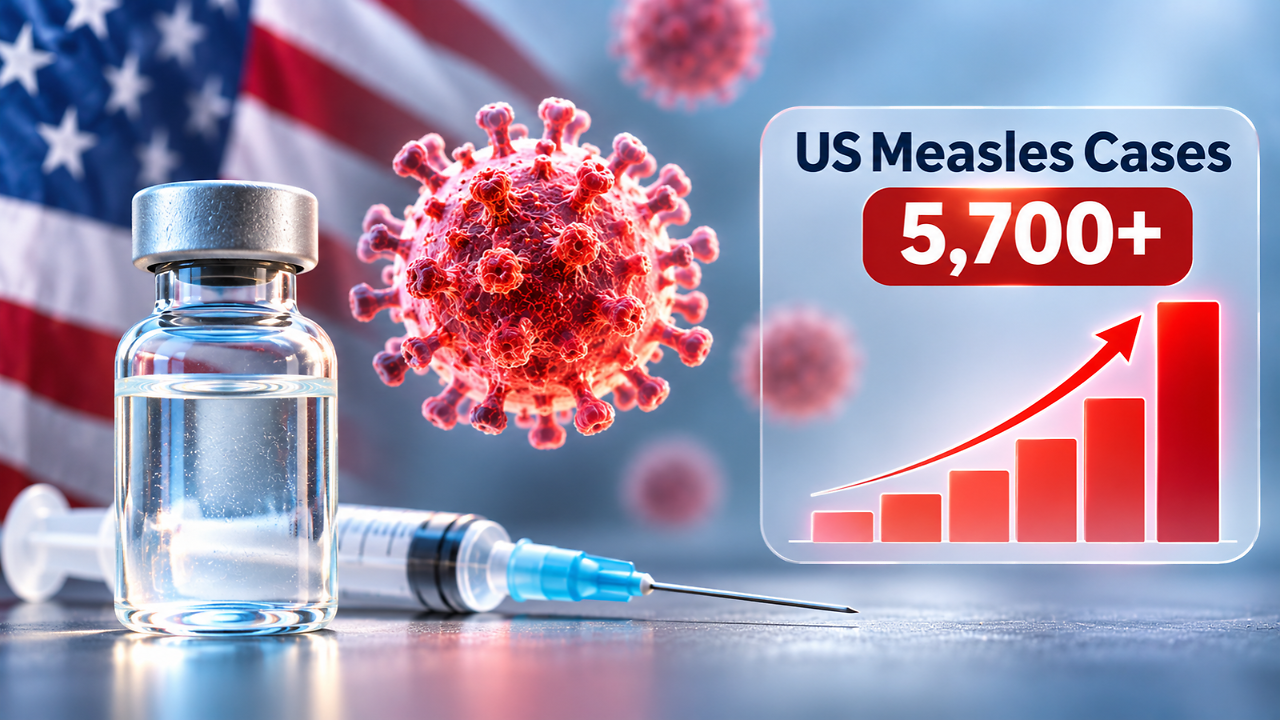
Pennsylvania has reported its eighth measles-associated death of 2026 as the US battles a major outbreak that cost it its measles elimination status. The news came a day after the Pan American Health Organization (PAHO) announced that the US, Mexico, and Bolivia had lost their measles elimination status. The US had maintained their measles-free status since 2000.Pennsylvania has recorded around 1,589 confirmed cases across 46 counties, prompting authorities to urge people to check their vaccination status and ensure they are adequately protected. The total number of cases in the US has crossed more than 5,700.The latest death, confirmed on November 18, involved an unvaccinated resident of Clinton County who had tested positive for measles. Health authorities have not disclosed the individual's age or other relevant details. According to the Pennsylvania Department of Health, the state has also reported 315 hospitalisations linked to the outbreak. With measles cases spreading everyday, questions about whether adults who received measles vaccines during childhood need another dose have emerged. Health experts believe that most people who have received the recommended two doses of the measles, mumps and rubella (MMR) vaccine do not need a booster.Who Needs A Booster Measles Vaccine Dose?Also read: EXCLUSIVE: Ex-CDC Vaccine Advisor Says Measles Outbreak Bigger Than Reported, Slams RFK Jr’s ‘No-See Evil’ ApproachAccording to the US Centers for Disease Control and Prevention (CDC), adults born in 1957 or later who do not have evidence of immunity should receive at least one dose of the MMR vaccine. But certain groups are recommended to receive two doses, separated by at least 28 days. These include:Healthcare workers: Those who are exposed to infected patients and could transmit the virus to vulnerable individuals.International travellers: People travelling to countries where measles transmission is occurring.College and university students: Students who may be exposed in crowded environments.People living with immunocompromised individuals: Close contacts of people with weakened immune systems who may be unable to receive live vaccines themselves.People living with HIV: Those who do not have severe immunosuppression and lack of measles immunity.People in outbreak-affected areas: Adults advised to receive a second dose because of increased exposure.People who have received two documented doses of the MMR vaccine, with the first administered at or after 12 months of age and the doses appropriately spaced, are considered protected for life. Adults Born Before 1957 Are Considered ImmuneAlso read: Not Just US, Mexico & Bolivia Also Lose Measles-Free Status: RFK Jr & CDC Chief RespondAccording to the CDC, adults born before 1957 are presumed to have immunity against measles because the virus circulated widely before the vaccine became available in 1963.However, healthcare workers born before 1957 who do not have a history of previous measles infection should consider receiving two doses of the MMR vaccine.People vaccinated between 1963 and 1967 with the older inactivated (killed) measles vaccine may also need another dose. This version was later found to be ineffective.Who Should Avoid The MMR Vaccine?The MMR vaccine is a live attenuated vaccine, which means it contains weakened forms of the viruses.Pregnant women and people with severe immune suppression should generally not receive it. Individuals with a history of severe allergic reactions to a previous dose or vaccine component should also seek medical advice.People who are unsure about their vaccination history, immune status or need for another dose should consult their healthcare provider. Measles Resurgence In The USMeasles is one of the most contagious infectious diseases. The virus spreads through respiratory droplets and airborne particles. They can remain active in the air for up to two hours after an infected person leaves an area.Symptoms typically start with fever, cough, runny nose and red, watery eyes, followed by a rash that usually starts on the face and spreads across the body.Complications can include pneumonia, brain inflammation (encephalitis), permanent disability and death. Infants, young children and people with weakened immune systems are vulnerable. The resurgence has been attributed to declining vaccination coverage.