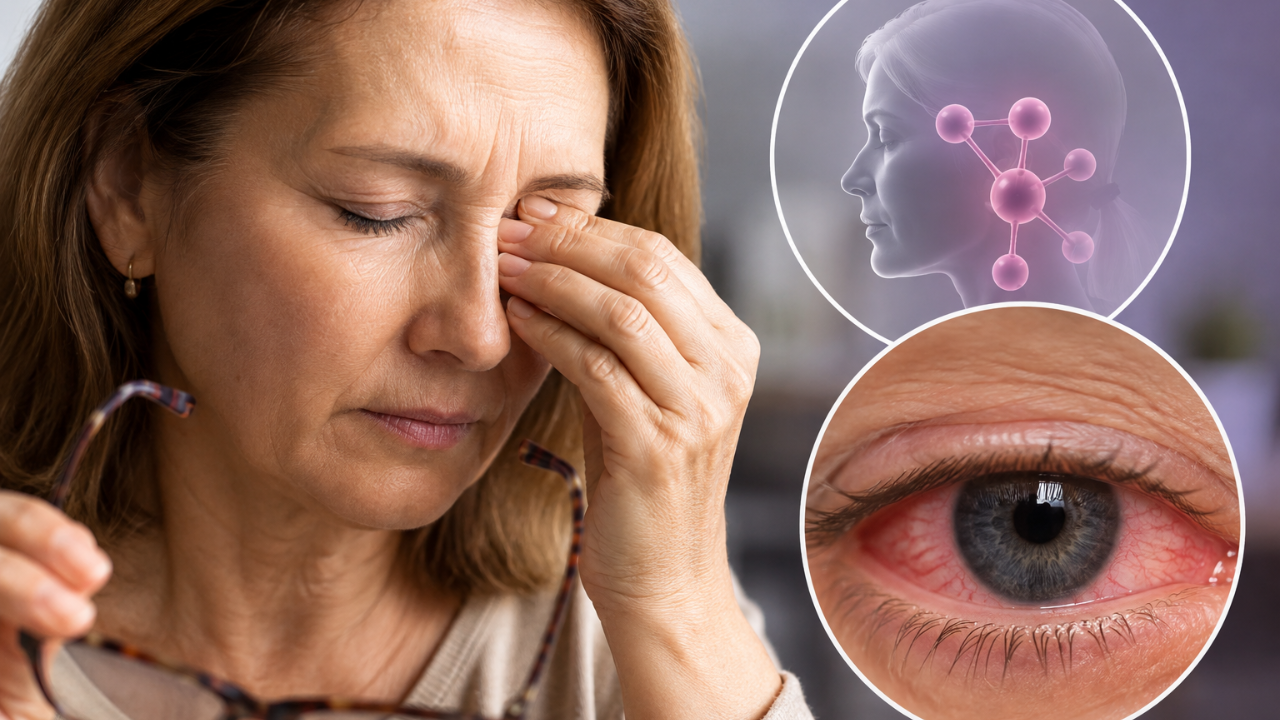
Dry or burning eyes are often brushed aside as side effect of ageing. But new research suggests that for postmenopausal women, the problem may be more than just eye irritation.A recent study in Post Reproductive Health found that postmenopausal women had more severe signs of dry eye disease (DED) than both younger women and men in the same age range. Researchers say the condition is caused largely by tear-film instability and dysfunction of the meibomian glands, the tiny glands in the eyelids that produce the oily layer of tears.The study included 319 participants: 102 postmenopausal women, 105 age-matched men and 112 younger healthy women. Researchers assessed symptoms, tear production, tear-film stability, damage to the eye surface and meibomian gland function.Postmenopausal women had the highest rate of severe dry eye, affecting 24.5%, compared with 16.2% of age-matched men and 18.8% of younger women.They also had higher scores for dry-eye symptoms, more straining of the of the ocular-surface, shorter tear-break-up time and greater meibomian gland dysfunction. 20.6% of postmenopausal women reported burning.Effect Of Menopause On Eye Health Also read: Experimental Menopause Drug Shows Promise Mid-Stage Trial, Reduces Hot Flashes By 83%The connection between eyes and menopause lies in the significant hormonal changes women face as they enter menopause.The ocular surface, lacrimal glands and meibomian glands are affected by sex hormones, including oestrogen and androgens. When hormone levels change during and after menopause, these tissues may also function differently.One of the important consequences of menopausal hormonal shifts is the disruption of the tear film. The tear film is like a thin protective coating over the eye. It contains an oily outer layer that slows evaporation. The meibomian glands produce this oil.When these glands do not work properly, tears can evaporate too quickly. Doctors call this condition evaporative dry eye.Dry Eye Does Not Mean The Eyes Have Stopped Producing TearsAlso read: Post-Menopausal Women Face A Higher Risk Of Fatty Liver Disease: How Falling Oestrogen Levels Impact Liver HealthDry eye does not necessarily mean the eyes have stopped producing tears. In many postmenopausal women, the tears may not remain stable on the eye for a long time.As the oily layer becomes impaired, tears evaporate faster. This can increase tear concentration, trigger inflammation and damage the ocular surface, creating a cycle of dryness and irritation.Hormonal changes during menopause may contribute to this process, although researchers are still working to understand exactly how individual hormones influence dry eye.A 2026 review also highlights increasing evidence that hormonal changes may interact with immune and inflammatory pathways on the ocular surface, rather than simply reducing tear production.What Symptoms Should Postmenopausal Women Watch For? Persistent burning, itching, grittiness, redness, light sensitivity, watery eyes or fluctuating vision can all occur with dry eye disease.The latest study also found that clinical signs of disease were more severe in postmenopausal women even though symptom scores did not always differ significantly from other groups. This finding makes eye examinations particularly important during and after menopause.The researchers concluded that recognising these differences could improve diagnosis and help doctors better understand the hormonal contribution to dry eye disease.