
- Health Conditions A-Z
- Health & Wellness
- Nutrition
- Fitness
- Health News
- Ayurveda
- Videos
- Medicine A-Z
- Parenting
Rare Diseases Crisis in India: The Urgent Need for Locally Developed Drugs

Credits: Unsplash
Rare diseases, or what is popularly known as orphan diseases usually affect a small portion of the total population, but it has a significant impact on those who are affected and their families.
As per the Indian Council of Medical Research’s (ICMR) rare diseases registry, there are a total of 4,001 rare diseases which were identified in India as of October 2021. The government has also launched the National Policy for Rare Disease, 2021 (NRPD’21) to understand the difficulties faced by people with rare diseases. The policy focuses on prevention; however, the success rates have not been great as the policy was unable to provide timely treatment or access to the necessary medicines.
What Are Rare Diseases?
NRPD’21 has categorised rare diseases into three groups:Disorders that can be cured with a one-time treatment
Diseases that require long-term or lifelong treatment but at a relatively lower cost
Diseases that need high-cost, lifelong therapy
While the government is to take responsibility for treating diseases under groups 1 and 3, the policy does not cover all the rare diseases within the categories. NPRD’21 only provides a one-time payment of Rs. 50 lakh and has set up a crowdfunding platform for additional support.
Financial Assistance
Though the initial amount of Rs. 50 lakh offered to the families and affected persons under Group 1 is helpful, but this is far from the actual need and does not help the treatments needed for the Group 3 diseases. Under the crowdfunding initiative, only Rs. 3,08,775 have been raised so far, for the 1,897 patients who were registered for the funding.The Centre and Ministry of Health have launched India-made drugs for at least 14 rare diseases. This has significantly reduced the cost of the medicines; however, they only treat four conditions. These are Tyrosinemia Type 1, Gaucher’s Disease, Wilson’s Disease, and seizures linked to Dravet/Lennox Gastaut Syndrome. As per the reports, some of the registered patients are still awaiting approval for the medicines.
A major challenge is the government’s difficulty in addressing the control that pharmaceutical companies have over patients for rare disease medications. These companies often focus on patenting and monopolising their drugs rather than making them accessible to people.
Call For Local Medicines
The government has also recently announced a plan to globally procure 120 patented medicines for 17 rare diseases. While this is a positive step for addressing public health needs, it is not enough to solve the inaccessibility that the patients face. The high cost and the limited availability of these patent drugs are the reasons why the treatment is not fair for everyone.NPRD’21 has suggested promoting local development and manufacturing of drugs for rare diseases by public and private pharmaceutical companies at affordable prices. This has also led to a call for locally produced medicine to cut down the cost of importing.
This will solve the issue of high-priced patent drugs. The NRPD policy also calls for legal measures that can create a conducive environment for producing drugs in India.
For instance, under Section 100 of the Patents Act, government use licenses are promoted to safeguard public health. The section states: Government, or any person authorized by it, is empowered to use the patented invention 'for purposes of Government.
With these measures, public health can be made accessible, and fair treatment can be ensured for the patients and their families.
Indian Organisation for Rare Diseases (IORD) since its inception in 2005 has been working towards bridging the gap between treatment and its accessibility for the patients and their families. IORD also highlights the gap that exists due to a lack of trained professionals and diagnostic facilities. With the government's initiatives and IORD's efforts to remove the social stigma around rare diseases, patients and families affected by rare diseases can avail the required treatment.
US FDA Vaccines Chief Vinay Prasad Exits Again After Criticism Over Drug Application Handling
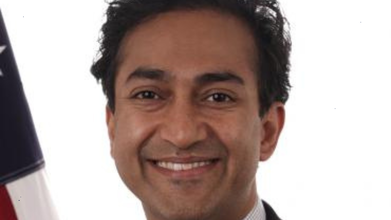
Credit: USFDA
The US Food and Drug Administration (FDA)’s Vinay Prasad has once again — for the second time in less than a year — stepped down from his post as director of the agency’s Center for Biologics Evaluation and Research, amid controversies over the review of vaccines and specialty drugs for rare diseases.
Announcing the news to FDA staff in an email late Friday, FDA Commissioner Marty Makary said Prasad would depart at the end of April. Makary added that Prasad would return to his academic position at the University of California, San Francisco (UCSF).
Taking to social media platform X, Makary said that under Prasad’s leadership, his center recorded a record number of approvals in December.
“A year ago, Dr. Prasad came to the FDA to implement four major long-lasting reforms: a 2-to-1 pivotal trial requirement, national priority reviews, a risk-stratified COVID vaccine framework, and the new plausible mechanism framework for ultra-rare diseases, which we launched last week,” Makary said.
The FDA commissioner noted that Prasad “got a tremendous amount accomplished within his one-year sabbatical from UCSF and will be returning to his academic home later next month,” and thanked him “for his service and personal sacrifice in taking time away from his family.”
The FDA is expected to announce Prasad’s successor before his departure.
Who Is Vinay Prasad?
Vinay Prasad is an Indian-origin American hematologist-oncologist and author. He was first appointed as the FDA’s vaccines chief in May 2025.
Prasad, known as a longtime critic of the FDA’s standards for drug reviews, drew controversy for raising the bar for new drug approvals. The move did not sit well with pharmaceutical companies and reportedly dashed the hopes of some patients with rare diseases.
In July, he was removed from his position following disputes with biotechnology executives, patient organisations, and conservative allies of US President Donald Trump. He was later reinstated after Makary and US Health Secretary Robert F. Kennedy Jr. pushed for reconsideration.
What Is The Controversy?
While Prasad, along with Makary, announced several measures to make FDA drug reviews faster and easier for companies, he also imposed new warnings and study requirements for some biotech drugs and vaccines.
This was particularly evident in the case of COVID-19 vaccines, which have been a target of criticism from Kennedy, who was a longtime anti-vaccine activist before joining the Trump administration.
The latest controversy involves the FDA’s interactions with Dutch biopharma company uniQure, which developed an experimental gene therapy for Huntington’s disease that is injected directly into the brain during a surgical procedure.
Huntington’s is a deadly neurological condition affecting about 40,000 Americans, and currently has no cure.
UniQure faced a setback after Prasad’s centre said its earlier studies were insufficient to support a biologics licence application.
During an earnings call earlier this week, the company said the FDA was demanding a new trial involving sham surgery for some patients.
Executives said the request for a sham-controlled trial contradicted earlier FDA guidance. They also questioned whether such an approach would be ethical for patients with Huntington’s disease, which is progressive and ultimately fatal, typically in middle age.
Earlier, Prasad also refused to allow the FDA to review a highly anticipated flu vaccine from Moderna made using mRNA technology.
The rejection of the application -- highly unusual for the FDA -- prompted Moderna to go public with Prasad’s decision and vow to formally challenge it.
A week after the rejection became public, the FDA reversed course and said it would accept the vaccine for review, pending an additional study from the company.
Prasad’s handling of rare-disease therapy applications also drew criticism after the FDA asked Sarepta Therapeutics, a drugmaker developing treatments for Duchenne muscular dystrophy, to pause shipments following reports of patient deaths.
The company initially resisted, wanting to continue distributing treatments for patients who could still walk, but later agreed. The agency, however, reversed the pause just days later.
Duchenne muscular dystrophy affects a small number of boys and young men who typically lose their ability to walk before puberty and often die by around age 30.
Health Minister JP Nadda Announces Cervical Cancer Screenings At Ayushman Arogya Mandirs
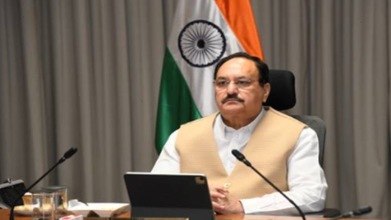
Credit: PIB
Union Health Minister JP Nadda has announced that cervical cancer screenings using Visual Inspection with Acetic Acid (VIA) will now be available at Ayushman Arogya Mandirs and other health facilities for women between 30 and 65 years of age.
"Screening for cervical cancer is now available at 1,81,000 Ayushman Arogya Mandirs, also known as Health and Wellness Centers, across the country as a part of population based screening for early detection and treatment," said Nadda, while addressing a press briefing at the World Health Organization virtually.
Using VIA, a low-cost, point-of-care method, trained health workers will screen women for cervical cancer. Those who test positive will then be referred to higher centers for diagnostic confirmation and further evaluation.
Nadda also shared that the cervical cancer screening in the country has been expanded as part of comprehensive primary healthcare under the National Program for Prevention and Control of Non-Communicable Diseases (NP-NCD).
"Over 86 million women have already been screened for cervical cancer under the program, reflecting India’s sustained commitment to early detection and prevention," Nadda informed.
Despite being highly preventable as well as treatable, cervical cancer is a public health concern in India.
The country loses one women every eight minutes to cervical cancer.
As per the World Health Organization (WHO) Director-General Tedros Adhanom Ghebreyesus, about 42,000 new cases of cervical cancer is reported annually in India. This underscores the need for preventive measures such as vaccination and early screening.
The WHO Global Strategy to eliminate cervical cancer includes the 90-70-90 targets by 2030 -- vaccinating 90 per cent of girls against HPV, screening 70 percent of women, and ensuring treatment for 90 percent of those diagnosed with cervical disease.
In line with the global strategy to fight cervical cancer, Prime Minister Narendra Modi recently also launched a free HPV vaccination drive that will target health and well being of adolescent girls in the country.
What Is Cervical Cancer?
Cervical cancer develops in a women's cervix (uterus opening) due to abnormal cell growth, primarily caused by persistent HPV infection, a common infection that's passed through sexual contact.
When exposed to HPV, the body's immune system typically prevents the virus from causing damage however, in a small percentage of people, the virus can survive for years and pave the way for some cervical cells to become cancerous.
Treatment involves surgery, radiation, and chemotherapy, with early detection significantly improving outcomes, though it remains a major cancer in low-income countries Cervical cancer can also be prevented through vaccination and regular screening (Pap/HPV tests).
Symptoms Of Cervical Cancer
Cervical cancer has no symptoms in the early days and therefore, is hard to detect until it has spread. However, the early-stage symptoms include:
- Vaginal bleeding after sex
- Vaginal bleeding post-menopause
- Vaginal bleeding between periods or unusually heavy/long periods
- Watery vaginal discharge with a strong odour or containing blood
- Pelvic pain or pain during intercourse
- Advanced Cervical Cancer Symptoms (when cancer has spread beyond the cervix)
- Painful or difficult bowel movements or rectal bleeding
- Painful or difficult urination or blood in the urine
- Persistent dull backache
- Swelling of the legs
- Pain in the pelvis or lower abdomen
How Can Cervical Cancer Be Prevented?
Cervical cancer is largely preventable and, when detected early, it is highly treatable. The WHO recommends HPV vaccination for girls aged 9 to 14, before they become sexually active, along with regular cervical screening from age 30, or 25 for women living with HIV.
Despite this, unequal access to vaccination, screening and treatment continues to drive higher rates of illness and deaths in regions such as sub-Saharan Africa, Central America and Southeast Asia.
Japan Confirms New Highly Pathogenic Bird Flu Outbreak: Report
Japan has confirmed an outbreak of HPAI (Highly Pathogenic Avian Influenza) at a poultry farm, media reports said.
The avian flu, confirmed in Hokkaido in the northern prefecture, marks the fourth case and the country's 21st outbreak this season, Xinhua news agency reported.
The Ministry of Agriculture, Forestry and Fisheries, in a statement, said that the affected farm is located in the town of Abira, and keeps about 190,000 chickens.
The farm notified local health officials earlier this week, who rapidly followed up with a rapid avian influenza test.
The positive result was confirmed by genetic testing the following day.
“All chickens at the farm will be culled, incinerated, and buried to prevent further spread of the virus,” the authorities said.
Previously, the HPAI outbreak at a poultry farm in Iwate prefecture was reported in February.
Jiji Press reported that the outbreak in the town of Kanegasaki led to the culling of about 560,000 egg-laying hens at the affected farm.
The bird flu season in Japan typically runs from autumn until the following spring.
What Is HPAI? Global HPAI situation
HPAI is a classification for bird-flu viruses that cause severe disease and high mortality in poultry, and also spreads rapidly.
The influenza A H5N1 virus is one of the most common viruses that cause HPAI.
Others include
- Influenza A H5N8 virus
- Influenza A H5N6 virus
- Influenza A H7N9 virus
Outbreaks of HPAI, especially H5N1, continue in wild birds and poultry worldwide, with active disease zones being reported.
- India
While authorities are culling birds, no human cases have been reported.
- South Korea
- United States
Recent detections include the first confirmed HPAI infections in marine mammals (northern elephant seals) in California -- the first such reported cases in 2026.
- Other regions
Suspected HPAI cases have triggered poultry culls and control measures in the UK and Northern Ireland.
Europe reported multiple outbreaks on commercial poultry farms.
Human Cases
According to the World Health Organization, there have been about 994 confirmed human infections reported worldwide since 2003.
This virus does not appear to transmit easily from person to person, and sustained human-to-human transmission has not been reported.
- Follow Us :


© 2024 Bennett, Coleman & Company Limited