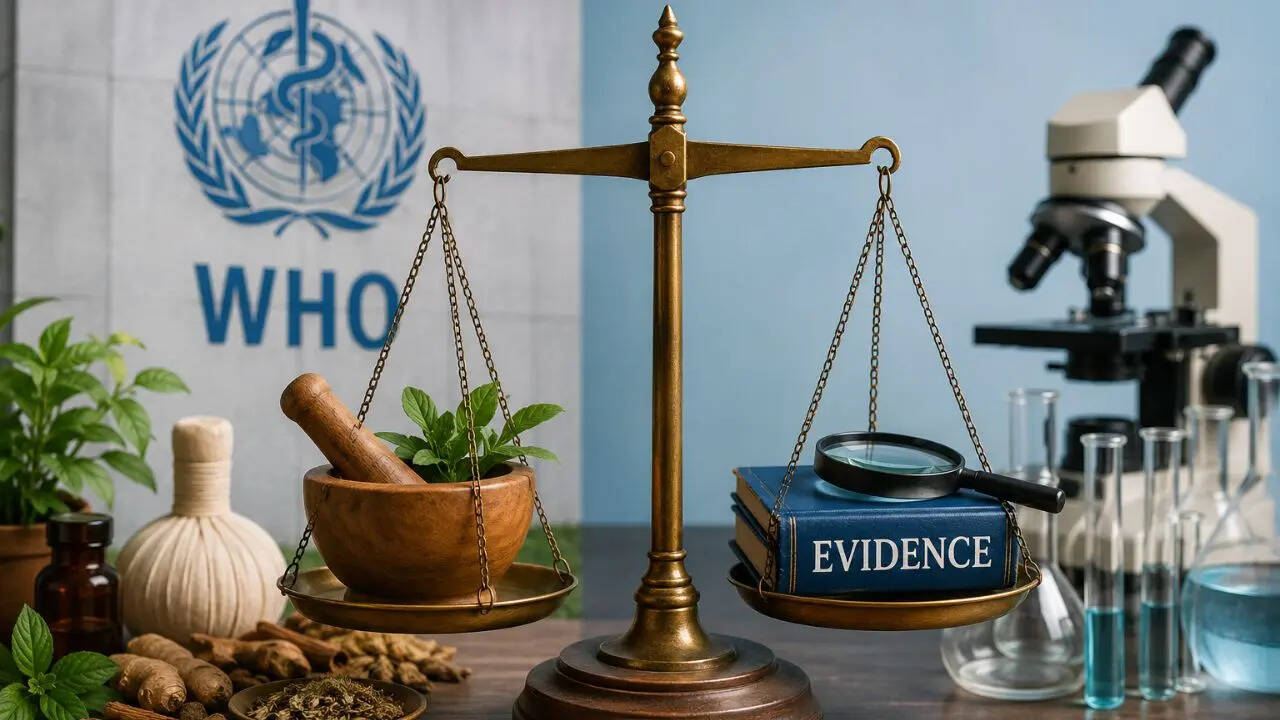
Researchers from India, China, Netherlands, and Canada recently published an editorial, criticising the World Health Organization's (WHO) Global Traditional Medicine Strategy, saying it promotes treatments that haven't been proven to work or lacks adequate scientific evidence. In the editorial, the authors argue that traditional, complementary, and alternative medicine (CAM) should be held to the same scientific standards as any other medical intervention. They warn that lowering the evidentiary bar could undermine and reduce people's confidence in evidence-based healthcare. They also say that it could expose patients to ineffective or potentially harmful treatments and divert resources from therapies with proven clinical benefits. Researchers Criticise WHO's Push For Traditional MedicineThe criticism focuses on WHO's Global Traditional Medicine Strategy 2025 to 2034, which aims to help countries strengthen regulation, grow research, improve safety, and integrate evidence-based traditional medicine into global health systems. According to the authors, while these goals appear reasonable, the strategy risks lending credibility to therapies before sufficient evidence of their safety and effectiveness has been established. The authors say, "In a WHO survey, 95% of responding member states cited lack of research data as the key barrier to integrating CAM. Robust evidence supporting complementary and alternative medicineis lacking despite increased research funding and thousands of studies. After millennia of using traditional Chinese medicine, for example, major evidence gaps on efficacy and safety remain, and patients experience unpredictable effects."They argue that the same rigorous standards used to evaluate pharmaceuticals, medical devices, and other healthcare interventions should also apply to traditional medicine. The researchers say, "The ethical response is not uncritical endorsement of CAM but to expand access only to interventions that withstand standard scientific scrutiny as effective and safe." The editorial also raises concerns about the potential for patients to delay or replace proven medical treatments with unverified alternatives, as well as risks linked to herb-drug interactions, contamination, and inadequate regulation. They added, " WHO contradicts its promise of universal scientific rigour by lowering evidentiary standards: the strategy endorses observational and “real world data” designs “appropriate to the unique characteristics” of CAM instead of the standard randomised controlled trials."Also read: World Homeopathy Day 2025: Can Homeopathy Relieve Seasonal Allergies? Here’s What Experts Say Rebuttal By Central Council for Research in Ayurvedic Sciences The editorial has already received counter responses from researchers who say the criticism overlooks the strategy's emphasis on scientific evaluation. In rapid responses published by The BMJ, experts acknowledged that unproven therapies should not be incorporated into routine care without solid evidence but argued that traditional medicine deserves rigorous investigation rather than straightforward dismissal. Rabinarayan Acharya, Director General, Central Council for Research in Ayurvedic Sciences said, "We appreciate Philips and colleagues for raising concerns about patient safety, scientific rigour and evidence integrity, all of which matter for responsible integration of any healthcare intervention. However, the editorial predominantly examines one end of a complex scientific and public health continuum." "A balanced view also recognize substantial advances in research methodology, regulation, pharmacovigilance, and evidence generation now shape the evaluation of TCIM, within the WHO Global Traditional Medicine Strategy 2025–2034." He said that the editorial incorrectly grouped all forms of alternative medicines. He added, "The editorial groups Ayurveda, Yoga, Unani, Siddha, homoeopathy, Traditional Chinese Medicine and anthroposophic medicine as though they belong to one category. They do not. Each has its own philosophical basis, regulatory standing, biological plausibility, and depth of evidence and deserves judgment on its own record." They note that many modern medicines originated from natural products and traditional knowledge before being validated through laboratory research and clinical trials.Also read: Govt To Include Ayurveda Treatments in Ayushman Bharat Scheme: Read Everything About It Delhi Declaration Outlines Global Roadmap For Traditional Medicine The debate comes after the adoption of the Delhi Declaration on Traditional Medicine, issued at the conclusion of the Second WHO Global Summit held in New Delhi last year. The declaration stresses the fact that policy decisions should be guided by scientific evidence while respecting countries' diverse medical traditions. The declaration calls on countries to: Increase investment and support to strengthen the evidence base for traditional medicine, enriching WHO Global Traditional Medicine Digital Library.Develop regulatory practices for safe and effective drugs.Take necessary steps to responsibly integrate traditional medicine into standard health systems.The declaration emphasizes that key policy decisions should be guided by scientific evidence while respecting countries' diverse medical traditions.Also read: Why More Patients Are Turning To Alternative Medicine For Chronic Illness Management?India's Dominance In Traditional Medicine India has positioned established itself as a global leader in traditional medicine through the establishment of the WHO Global Traditional Medicine Centre (GTMC) in Jamnagar, Gujarat, a collaboration between WHO and the government of India. During the summit, Prime Minister Narendra Modi said traditional medicine has the potential to contribute to universal health coverage and called for greater international collaboration, research, and innovation to discover its benefits while ensuring quality and safety. India's Ministry of AYUSH also reaffirmed its commitment to building scientific evidence, promoting research, strengthening regulation, and expanding international partnerships in traditional medicine through initiatives led by the Jamnagar-based WHO centre. Last year, India also launched My Ayush Integrated Services Portal, a national digital platform that connects medicine services, institutions and stakeholders in the sector. AYUSH Mark was also launched. Ensuring public trust, AYUSH Mark is a global standard for the quality and safety of AYUSH products and services.