
- Health Conditions A-Z
- Health & Wellness
- Nutrition
- Fitness
- Health News
- Ayurveda
- Videos
- Medicine A-Z
- Parenting
Ruth Codd Reveals She Is Recovering From Second Leg Amputation
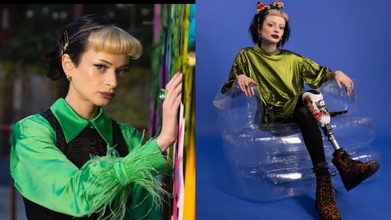
Credits: Instagram
Ruth Codd, Irish actor and The Celebrity Traitors star revealed that she is now recovering from her second below-knee amputation. Codd, 29, was first shot to fame on TikTok during pandemic, and shared the news in a candid video on Wednesday.
What Happened To Codd's Leg?
She had her first leg amputated six years ago after a football injury in her teens, which led to repeated surgeries, chronic pain, and long-term mobility issues. Posting another video again from her parents’ home, she joked that her return to filming there felt like a “full circle moment,” but added that she could no longer record videos in her favorite room because it is upstairs.
"Just Had My Second Amputation"
In her TikTok update, Codd with a bit of humor revealed the news. “Good news, I’m back making TikTok content in my parents’ house. Bad news, I can’t do it in front of that lovely blue floral wallpaper any more, because I’ve just had my second below-knee amputation,” she said, adding, “So, a lot to unpack there for everyone involved.”
She also introduced her followers to her new wheelchair, affectionately named “Fat Tony,” joking that it has “the top speed of f*** all per hour, especially if there’s a step involved.” Her caption read: “No legs who dis? #paralympics2026.”
Codd’s latest surgery follows years of complications linked to her original injury. In a recent interview on FFTV’s YouTube channel, she revealed she had all her toes amputated in 2021. She had spent eight years relying heavily on crutches, which she said forced her to walk on her “tippy toes,” eventually destroying the joints in her foot.
Doctors had told her the foot would “never get any better,” and that worsening pain was making it increasingly difficult to work. “It’s gone past the point where they can do anything about it,” she told FFTV.
The Road To Recovery
The actor has spoken openly about the recovery process, explaining that she will have to wait at least a month for her limb to heal before she can begin using a prosthetic. Despite the challenges, her tone online remains upbeat and self-aware, reflecting the personality that first gained her a loyal audience during the Covid pandemic.
Codd’s TikTok content—often comedic sketches and videos promoting disability awareness, helped her amass more than 20 million likes in a year after she lost her job as a make-up artist and barber. Her success on the platform led her to acting roles in Netflix series The Midnight Club and The Fall of the House of Usher.
Earlier this year, Codd appeared in the first series of The Celebrity Traitors, where she impressed viewers with her sharp observations. She correctly identified Jonathan Ross as a “traitor,” but was ultimately eliminated in episode four. Reflecting on her time on the show, she described the experience as “surreal,” saying it still feels like she could “wake up from a very weird dream.” Despite the difficulties of her recent surgery, Codd continues to bring humor and openness to her situation, qualities that have defined her rise from TikTok creator to Netflix actor.
Shigella Cases Rise To 12 In Kerala: Doctor Explains Why The Bacterial Infection Is Fatal For Young Kids
Credit: iStock
Kerala is yet again in the grip of a deadly and highly contagious disease. This time, a fresh outbreak of Shigella (caused by the bacteria shigellosis) has been reported in the southern state’s Kozhikode district.
Shigella is a fast-spreading bacterium that causes diarrhea, which in some cases can lead to complications including arthritis, kidney damage , and death.
In the Kozhikode, Kerala outbreak, at this time, 51 people are under observation, 12 have developed the illness, and one child of three and a half years has died.
The child, who had been undergoing treatment at Kozhikode Medical College Hospital, passed away on Sunday after suffering from high fever and seizures.
Health officials in the state have identified at least 11 more children who had come into contact with the girl and were subsequently infected.
Around five more children are currently under close observation in various hospitals, with doctors monitoring symptoms and preventing further complications, Onmanorama reported. The health authorities are also investigating whether adults in the area may have contracted the infection, raising concerns about a broader community spread.
As a precautionary measure, the Anganwadi center has been temporarily shut down to prevent further spread of the fatal infection.
Shigella: Why Are Young Children At High Risk?
Speaking to HealthandMe, Dr. Rajeev Jayadevan, Ex-President of IMA Cochin and Convener of the Research Cell, Kerala, explained that even a small number of bacteria—as few as 10 —is enough to cause infection.
It is because the Shigellosis bacteria “is able to withstand the hostile acidic environment of the human stomach. Outside the human body, it can stay alive in water for weeks together,” he said.
Shigella is most severe in children below the age of five, as their immune systems are less efficient at clearing the infection early.
“Adults also become ill, but acquired immunity from childhood keeps the infection mild in many instances,” the expert said.
Shigella Outbreak: How Does It Spread? What Are The Symptoms?
Shigella spreads through:
- touching contaminated surfaces or objects
- physical contact with an infected individual
- drinking contaminated water or ice made from unclean water
The expert noted that houseflies can also spread the bacteria.
Flies transmit the bacteria from human feces to food, water, and surfaces, contributing to up to 37 percent of cases in some regions, according to a study published in the PLoS Neglected Tropical Diseases.
The disease onset occurs typically within 1 to 3 days of ingestion of the bacteria, with fever, diarrhea, body aches, and headache.
Once it involves the large intestine, bloody diarrhea occurs, with severe abdominal cramps.
Shigella: How To Prevent
Dr. Jayadevan said. stressed the need for early recognition and treatment with appropriate antibiotics.
ORS can help prevent dehydration, while Zinc tablets can enhance recovery.
Other measures to prevent the risk of spread include:
- Washing hands with soap and water, especially before touching food and also after toilet use
- Food handlers must maintain hygiene
- Control flies
“A multipronged approach is required, involving sustained sanitation measures and strict attention to clean drinking water supplies, to prevent such outbreaks,” the expert said.
Royal Gwent Hospital Treated 21 People With Unsterilized Surgical Instruments, Patients May Be Infected
Credits: Google Photos
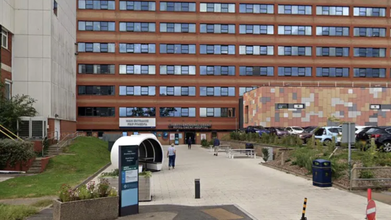
Royal Gwent Hospital in Newport, Wales treated 21 patients with unsterilized surgical instruments. The patients were not informed of the error for three weeks. As per a BBC report, the instruments were disinfected but not medically sterilized, which is a typical medical protocol. On February 24, the outlet carried out a breach of protocol, and then on February 25 and 26, the same instruments were used in operations and examinations.
While the error was discovered by hospital staff on February 27, the patients were not informed till March 16.
Also Read: Indian Drug Regulator Flagged 90 Combination Medicines Sold Without Approval
What Happens When Unsterilized Hospital Instruments Are Used?
Surgical tools that are improperly sterilized could spread bloodborne diseases like HIV and hepatitis. In a statement obtained by the BBC from Aneurin Bevan University Health Board, the organization that manages Royal Gwent Hospital, a spokesperson said the situation is being investigated. The spokesperson also said that they have arranged for "precautionary testing" for all affected patients, and that "the clinical risk of bloodborne virus exposure is extremely low".
"We fully recognize the concern and distress this may cause, and we are truly sorry. The well-being of our patients is our highest priority, and we are taking all necessary actions to understand how this happened and to prevent it from occurring again,” the board's statement continued.
Also Read: Company Sends Legal Notice To Doctor After Her Campaign Questions Fake ORS-Labelled Hydration Drinks
They additionally stated that “this was a very limited incident” and that “there is no wider cause for concern.”
Family Speaks Out After Teen Patient Affected
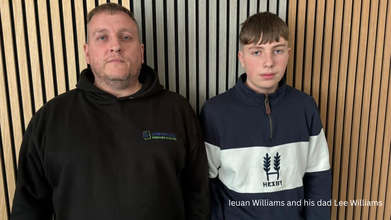
One of the patients affected is 15-year-old Ieuan, who underwent an orthodontic procedure at Royal Gwent Hospital. His parents said the call from the hospital informing them about the sterilization error came as a shock.
According to the family, the news was difficult to process, especially because their son will now have to undergo a series of medical tests over the next six months. Ieuan later said he initially felt frightened after learning about the possible exposure and is hoping the tests confirm he is safe.
The teenager has already undergone his first blood test at the hospital and is scheduled for additional tests in the coming months before doctors can give him a final all clear.
What Went Wrong During The Procedure
Ieuan had braces fitted on February 25 during a routine orthodontic appointment to address gaps in his teeth following an earlier dental operation.
During the procedure, staff used instruments including pliers used to trim brace wires and a dental mirror. The hospital later confirmed that while the tools had been disinfected, they were not placed in an autoclave, the specialized machine that sterilizes medical equipment using high heat and steam.
Standard protocol requires staff to confirm that sterilization indicators on instrument trays have changed color after the process and to check the sterilization date before use. According to the health board, this verification step was missed due to what it described as human error.
Health officials say investigations are ongoing, and monitoring of affected patients will continue over the coming months.
Indian Drug Regulator Flagged 90 Combination Medicines Sold Without Approval
Credits: Canva, iStock and cdsco.gov.in
Indian drug regulator - Central Drugs Standard Control Organisation (CDSCO) found 90 combination medicines that are sold without mandatory central approval. This has raised concerns on regulatory compliance in the country's pharmaceutical supply chain.
CDSCO is the apex drug regulatory body in the country. The authority wrote a letter to all states and union territory drug controllers and asked them to investigate manufacturers and marketers of these fixed-dose combinations (FDCs).
What are FDCS? These are drugs that contain two or more active ingredients in a single formulation. The CDSCO asked them to investigate and submit reports on the action taken at the earliest.
What Made To The Unapproved List Of FDCs?
The annexure attached to the letter showed 90 combination medicines had made it to the market. These contain cough syrups, vitamins, and anti-diabetic pills.
Cough And Cold Medicines
Cough and cold combination medicines have formed the single largest group. At least 14 to 16 entries show combination of ingredients found in everyday pharmacy shelves: dextromethorphan, ambroxol, guaiphenesin, chlorpheniramine, phenylephrine, terbutaline, and menthol in various permutations. Several of these are sold as flavoured syrups for children. Budesonide-levosalbutamol inhalation suspension that is used for asthma and chronic obstructive pulmonary disease, too features in the list.
Nutritional Supplements
The next group is of the vitamins, minerals and other nutritional supplement which has roughly 18 to 20 entries. They include:
- Multivitamin capsules
- Iron-folic acid syrups
- Calcium-vitamin D3-K2 combinations
- Abapentin-methylcobalamin preparation
Antifungal and Dermatological Combinations
This group has accounted for at least 10 entries, which include antifungal creams that could lead to potential misuse and skin damage when sold without prescriptions.
Anti-diabetic Medicines
This has accounted for six entries, and the combination includes:
- Glimepiride paired with metformin or pioglitazone
What Did CDSCO Write To Drug Controllers?
The letter dated 18 March was signed with Drugs Controller General of India (DCGI), Dr Rajeev Singh Raghuvanshi. He described the matter as being "top priority in the interest of public health". The unapproved drugs were detected during a scrutiny of laboratory testing data submitted through SUGAM, which is CDSCO's online portal for drug sample testing, for the year 2025.
“This is to inform you that upon scrutiny of the SUGAM lab testing data for the year 2025, a large no. of drug samples (FDCs) are detected as unapproved and fall under the category of ‘New Drug. No new drug shall be manufactured for sale unless it is approved by the licensing authority."
What Is India's Rule For FDCs?
Under India's New Drugs and Clinical Trial Rules of 2019, any FDC is treated as a new drug and must have the central government's approval before it could be manufactured and sold. The regulator's letter noted that there were presence of unapproved drugs in the supply chain that could pose risks to public health. This also amounts to a violation of the Drugs and Cosmetics Act, 1940.
“The presence of unapproved drugs in the supply chain is a matter of serious concern, posing potential risks to public health and safety. It also indicates non- compliance with the provisions of the Drugs and Cosmetics Act, 1940, and Rules made thereunder," it said.
DCGI urged states and UTs "to examine the unapproved FDCs in generic name as mentioned in the attached annexure". This is done to check whether any approval has been granted by the local office. "Accordingly, please initiate appropriate investigation and regulatory action against the concerned manufacturers, marketers, and other stakeholders, as deemed fit. Kindly ensure strict monitoring and enforcement to prevent the manufacture, sale, and distribution of such unapproved drugs," the letter noted.
- Follow Us :


© 2024 Bennett, Coleman & Company Limited