
- Health Conditions A-Z
- Health & Wellness
- Nutrition
- Fitness
- Health News
- Ayurveda
- Videos
- Medicine A-Z
- Parenting
Sewage Found In Greater Noida Water Supply, Over 30 Residents Report Illness After Indore Crisis
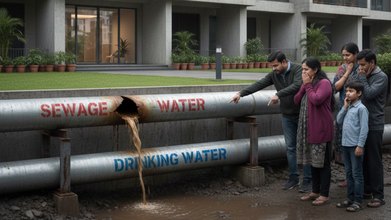
Dozens of Greater Noida residents, including children and teenagers aged 12 to 15, have been found suffering from vomiting, stomach pain, diarrhea, headaches and fever after allegedly consuming water mixed with sewage for the last three days.
Dr Narayan Kishore, CMS, CHC Kasna, told Times of India that over 30 residents of Sector Delta 1 received treatment for the condition at a medical camp. "Around 30 people visited the doctors, of them five to six were given medicines, while others were advised ORS. The situation is under control, and if required, we will organize another camp," he said.
According to Manoj Choudhary, Greater Noida Industrial Development Authority (GNIDA) Assistant Manager (water department), a dilapidated section of a water pipeline in Block C was found leaking and was repaired immediately by January 7 afternoon. He said inspections were also carried out in other parts of the sector, where two additional leaking pipelines were identified and replaced.
"We checked the quality of water supply post repairs in the evening and found it to be normal," he told TOI.
Despite claims of repairs, affected residents have revealed that the damaged water pipeline has instead been diverted into a drain and sewage is being mixed into a leaking water supply pipeline that runs through the same channel.
Deepak Kumar Bhati, convenor of the sector's RWA said, "Instead of repairing the blocked sewer line, it was diverted into a drain. The uncovered manhole allowed dirty water to seep into an old leaking water pipeline, contaminating the drinking supply. How would anyone feel knowing the water they drink and bathe in is mixed with feces?
Also Read: New Food Pyramid 2026 Reshapes Dietary Guidelines For Americans Under RFK Jr
"We pay our bills yet are forced to use contaminated water."
Pramod Bhati, RWA President of Sector Delta 1, added that this was not the first time residents in the area had fallen ill due to contaminated water. According to the official, the recent incident marks the third time such damage has been reported within a week in the sector that houses around 20,000 people across its six blocks, A to F.
What Officials Are Doing To Deal With The Issue?
Officials from the GNIDA and the local health department has begun inspections in the area and sent water samples to nearby laboratories for testing. Choudhary has also urged residents to immediately report any water or sewer leakages, assuring that such complaints would be addressed on priority.He added that GNIDA teams are working continuously to maintain water supply lines and that proposals are being prepared to replace pipelines in older sectors facing persistent problems.
Moreover, Ravi Kumar, GNIDA CEO NG has ordered random water testing across Greater Noida to prevent similar incidents and ensure the safety of the water supply, according to News18.
The Indore Crisis?
Even though residents are being assured by local officials that appropriate steps are being taken to maintain their wellbeing, many remain fearful due to the recent Indore sewage water controversy which has claimed the lives 10 people and left over 1,400 people hospitalized, according to Indore Mayor Pushyamitra Bhargava.However, locals claim that the outbreak has instead caused the death of 17 residents, including a six-month-child. The situation has also left Parvati Bai, 67, with kidney failure, a brain stroke and symptoms of Guillain-Barré Syndrome, or GBS.
GBS is a rare condition where your immune system attacks the nervous system and can cause paralysis as well as death, in certain cases.
The outbreak occurred due to lapses in civic infrastructure. Investigation revealed that a toilet constructed directly above a main drinking pipeline near a police outpost, without a mandatory safety tank resulted in the sewage mixing with drinking water.
Warning Issued In Plymouth Over Drug Overdose; NAP Shares Antidote That Could Save Lives

Representational Image (Canva)
Warning has been issued in Plymouth due to an increase in drug overdose which have been linked to substances like heroin or pregabalin. Naloxone Advocates Plymouth, also known as NAP issued the warning for people to take "extra care". NAP is a community interest company or a CIC, which is made of volunteers who work to reduce drug-related deaths in Plymouth.
Warning On Drug Overdose: What Is It?
On March 2, NAP shared a Facebook post, where the NAP spokesperson said: "A quick heads up for people in Plymouth/ We have recently seen more overdoses than usual linked to substances that slow breathing (such as heroin or pregabalin). We want people to be aware so they can take extra care."
Signs Of Someone Who Is Overdosing
- Being unconscious
- Slow breathing or not breathing
- Loud snoring
- Choking or gurgling sounds
- Blue lips
NAP also said if someone becomes unwell, one must immediately call 999, and place the person in the recovery position if they are breathing.
What To Do If Someone Has Overdosed On Drugs?
NAP also noted emergency antidote, as reported by Plymouth Herald too, in the event of an overdose of heroin or other opiated or opioids. NAP noted that even if you are unaware of what the unwell person has takes, the antidote "will not harm them, and sometimes drugs contain opioids even when they are not sold as such". NAP said one can administer naloxone as an antidote.
NAP also asked the person to stay with the unwell person for 20 minutes or until help arrives as the person could go back into overdose once naloxone wears off.
If the person is not breathing, one should immediately call 999 and start CPR, noted NAP.
What Is Naloxone? The Antidote That Works On Drug Overdose
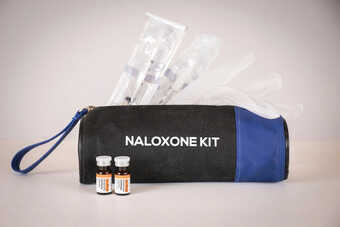
As per the National Institute on Drug Abuse, NIH, US, naloxone is a medicine that rapidly reverses an opioid overdose. It is an opioid antagonist. This means that it attaches to opioid receptors and reverses and blocks the effects of other opioids. Naloxone can quickly restore normal breathing to a person if their breathing has slowed or stopped because of an opioid overdose. But, naloxone has no effect on someone who does not have opioids in their system, and it is not a treatment for opioid use disorder.
It should be given to any person who shows signs of an opioid overdose or when an overdose is suspected. It could be administered through nasal spray or injected through the muscle, under the skin or into the veins.
The National Institute on Drug Abuse notes that families and loved ones could carry naloxone with them if they know someone in their family struggles with drug abuse. However, they can ask pharmacists or health care provider on how to administer the antidote.
However one must not that it works in the body for only 30 to 90 minutes, whereas some opioids could stay longer than that. This is why it is important to call for help. Furthermore, people given naloxone must be observed and monitored even after the last dose of naloxone to make sure their breathing do not slow down.
Unvaccinated Traveler Triggers Measles Outbreak in US, 17 Infected: CDC
Credit: Canva
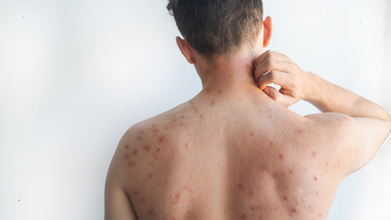
The US Centers for Disease Control and Prevention (CDC) has stated that an unvaccinated person who traveled to the US from Europe spread measles to 17 others in the country last year.
In a paper published in The Journal of Infectious Diseases, the CDC highlighted the case of an unvaccinated traveler who arrived at the Denver International Airport in Colorado in May 2025.
The person traveled with a fever, persistent cough, cold-like symptoms, and conjunctivitis (“pink eye”). He stayed overnight in a hotel and then boarded another flight to North Dakota. A day later, the person developed a rash.
“The index case was in an unvaccinated adult. Aircraft contact investigations identified 135 exposed domestic travelers. Fifteen secondary cases were identified among people exposed during the international (5) and domestic (3) flights, and at the airport (7),” the CDC said in the paper.
“Two tertiary case-patients were also identified. Five of the secondary case-patients had at least one documented prior measles vaccination,” it added.
The 2025 US Measles Outbreak
While measles was declared eliminated in the US in 2000, and sporadic outbreaks were controlled quickly, falling vaccination rates, especially during the COVID-19 pandemic, raise the risk of larger, harder-to-contain outbreaks.
This was further compounded by the anti-vaccine stance of President Donald Trump and his Health Secretary Robert F Kennedy Jr.
As per the CDC, a total of 2,281 confirmed measles cases were reported in the US in 2025. In 2026, the agency reported 10 new outbreaks, with more than 1,000 measles cases confirmed to date. More than 90 percent cases each year occurred in the unvaccinated.
Air Travel Increases Measles Spread
Recently, two passengers from India infected with measles landed in Auckland, New Zealand, via Singapore Airlines.
The Straits Times quoted Associate Professor Lim Poh Lian, group director of the Communicable Disease Agency’s (CDA) Communicable Disease Program, who noted that the individuals developed symptoms only while onboard the flight from Singapore to Auckland.
“Measles transmission may occur during travel. Travelers with fever and other overt signs of transmissible illness, such as coughing or malaise, should be strongly encouraged to delay travel while symptomatic,” the US CDC said.
Vaccination Key To Tackling Measles
Measles is a highly infectious disease characterized by the three Cs:
- Cough
- Coryza or runny nose
- Conjunctivitis or red and watery eyes
It easily spreads from one infected person to another through breaths, coughs, or sneezes and could cause severe disease, complications, and even death.
Even though a safe and cost-effective vaccine is available, in 2024, there were an estimated 95,000 measles deaths globally, mostly among unvaccinated or under-vaccinated children under the age of 5 years, according to the World Health Organization (WHO).
The CDC recommends that all travelers aged 6 months or older get vaccinated before international travel.
Rajshri Deshpande’s Breast Cancer Diagnosis Highlights Importance of Routine Screening

Credit: Instagram
Sacred Games actress Rajshri Deshpande today informed of being diagnosed with grade 1 breast cancer and shared her journey of recovery.
In an Instagram post, the 43-year-old actress announced being diagnosed with the Infiltrating ductal carcinoma (NOS) -- the most common breast cancer type, accounting for roughly 80 percent of cases.
Importantly, the actress known for her work in Trial by Fire and Manto said that the deadly disease was detected during routine screening, initiating the road to early recovery.
“As you’re reading this, it means I’ve finally found the courage to tell my parents that I have been diagnosed with Infiltrating ductal carcinoma (NOS), a grade 1 Breast cancer. Now it’s time you all know,” the Instagram post read.
“We fortunately caught this early in a routine checkup, which gave us a fighting chance,” she added.
Rajshri called her treatment with ‘tons of tests and surgery” “a rollercoaster ride”.
“Trust me, it was everyone’s love and warmth that carried me through,” she said, while thanking her fans and her parents whose “faces after surgery melted my fears into unbreakable strength”.
“With everyone’s support, I feel am ready to take on the world,” Rajshri said, adding that she “is recovering beautifully and soon heading home from the hospital”.
What Is Infiltrating Ductal Carcinoma (IDC)
Also known as Invasive ductal carcinoma, the cancer occurs when abnormal cells growing in the lining of the milk ducts change and invade breast tissue beyond the walls of the duct.
Breast ducts are the passageways where milk from the milk glands (lobules) flows to the nipple.
Common symptoms of IDC include
- A lump or thickening in the breast or armpit area
- Changes in the size, shape, or appearance of the breast
- Nipple changes, such as inversion, discharge, or scaling
- Breast pain or discomfort
- Skin changes on the breast, like redness or dimpling
Key risk factors of IDC include
- Genetic mutations such as BRCA1 and BRCA2 gene mutations, and a family history of breast cancer
- Higher levels of estrogen
- Prolonged exposure to ionising radiation
- smoking
- excessive alcohol consumption
- obesity
- a sedentary lifestyle
Rising Early-Onset Cancers in women
The recent The Lancet Oncology study mentioned a rise in new cases in women aged 20-54 years (up 29 percent) since 1990.
Recently, American actress Christy Carlson Romano announced a positive cancer screening test.
Cancer is everywhere, said Romano, 41, in a tearful video on social media platform Instagram.
A 2025 study by Duke Cancer Institute in the US revealed that for women younger than 50, the risk of developing cancer is 82 percent higher than that of men, up from 51 percent in 2022.
The 2025 annual report from the American Cancer Society (ACS) also showed that cancer rates in young and middle-aged women are rising past those of men in the same age group, but especially among women under age 50.
Importance of Early Screening
As with Rajshri, catching cancer in its early stages can help individuals experience less severe symptoms, minimize discomfort, and improve overall quality of life.
Detection of cancer at an early stage can boost survival rates. It can increase the chances of successful treatment.
Common screening methods include
- Physical examination of your breasts by your doctor
- Mammography
- Breast ultrasound
- Breast magnetic resonance imaging (MRI)
- Follow Us :


© 2024 Bennett, Coleman & Company Limited