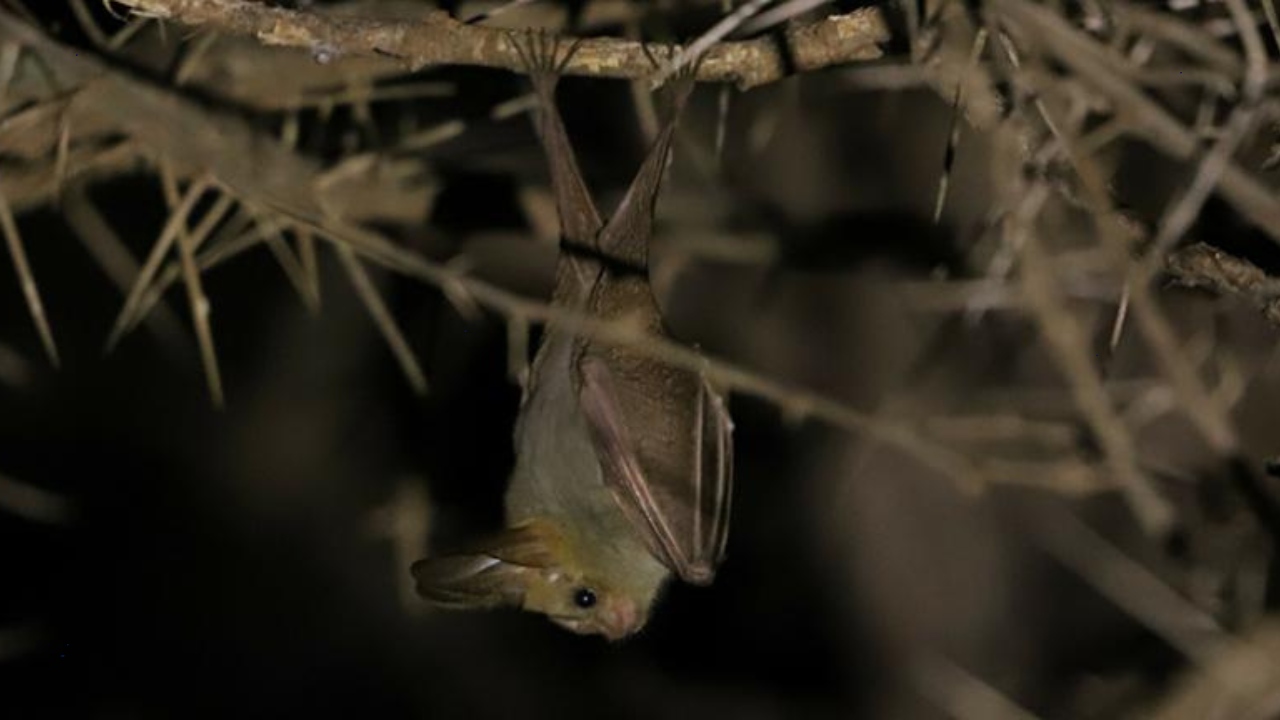
An international team of researchers has identified a new way by which coronaviruses carried by bats can enter human cells. Their study, published in the journal Nature, targeted the spike proteins of coronaviruses carried by heart-nosed bats in Kenya. The team, including those from the universities of Cambridge and York, along with those from the National Museums of Kenya, found that a coronavirus, dubbed CcCoV-KY43, has evolved a new way of binding to human cells. It is different from the mechanism used by SARS-COV-2, the coronavirus responsible for the COVID-19 pandemic. The virus - Cardioderma cor coronavirus (CcCoV) KY43, or CcCoV-KY43 - can bind to a receptor cell found in the human lung, but testing in Kenya suggests it has not spilled over into the local human population. “Viral spike proteins are keys that fit into locks (host receptors) to open the door and enter a cell. So far, we have identified one alphaCov receptor. The challenge now is to find the others,” said Professor Stephen Graham in the Department of Pathology at the University of Cambridge, joint senior author of the paper. CcCoV-KY43 is found in heart-nosed bats, Cardioderma cor, an ecologically important species found mainly in eastern Africa, including in eastern Sudan and northern Tanzania. The researchers say the zoonotic (animal-to-human) and pandemic potential of alphaCoVs has remained relatively uncharted - to date, only two cellular receptors have been characterized for alphaCoVs. Read: US CDC Study Showcasing COVID Vaccine Benefits Blocked From PublicationHow Did The Researchers Identify The New Mechanism Rather than work on ‘live’ viruses, the scientists used a public database of known genetic sequences, Genbank, to select and synthesise alphacoronavirus ‘spike’ proteins, including 27 viruses originally isolated in bats, and screened these against a library of coronavirus receptors found in human cells. Spike proteins protrude from the surface of coronaviruses, including SARS-CoV-2, and bind to specific receptors on human cells, triggering infection. They showed that CcCoV-KY43 binds to the human glycoprotein CEACAM6. “Before our study, it was assumed all alphacoronaviruses used just one of two possible receptors to enter their host, and the only difference was which species they could enter. We now know alphaCovs might use a whole variety of different receptors to open cells,” said Dr Dalan Bailey, Group Leader at the Pirbright Institute and joint senior author of the paper. “Not only did we find the new coronavirus receptor in human cells ahead of any virus spillover into the human population, but the study was performed using just a piece of the virus (the spike) rather than the whole pathogen, negating the need to import a live virus into the UK," added Dr Giulia Gallo, lead author of the paper. Also read: Bangladesh Measles Outbreak: Meghalaya, Tripura To Ramp Up Vaccination, Boost SurveillanceThe study stressed the need for further study in East Africa to better understand the risk from the family of viruses that can use this receptor to enter human cells. This will help scientists to be better prepared for any spillover of the virus into humans in the future, and potentially begin to develop human vaccines and antivirals. “We hope our findings will help better understand the risk from the family of viruses we identified that can use the human receptor: for example, by mapping the prevalence of the virus in bats and looking to see if it has already spilled over in at-risk populations,” Graham said.