
- Health Conditions A-Z
- Health & Wellness
- Nutrition
- Fitness
- Health News
- Ayurveda
- Videos
- Medicine A-Z
- Parenting
Super Flu Virus Update: 91 Flu Outbreaks In Canada, What Makes Subclade K Spread Rapidly, Explain Doctors

Credits: iStock
Super flu virus, or the new strain of H3N2 influenza is spreading and has affected a growing number of Canadians, reported the Global News. It is "increasing rapidly" around the country, warn experts. Health Canada confirmed that all regions of the country is affected by the growing influenza activity.
In the first week of December, Canada saw 6,799 cases of the flu with 91 outbreaks across the country. The number of positive tests also rose by 20.2 per cent as compared to the week before. Hospitalization numbers too have gone up with 3.6 hospitalization per 100,000 population, reported the Global News.
The strain causing a havoc in public health in Canada is the influenza A (H3N2) strain, which includes a subvariant A (H3N2) subclade K, noted the World Health Organization (WHO).
Who are hit the hardest? According to Health Canada's report, children are among those being hit hard, and most infections are detected in people under 19.
What Is The Super flu doing in Canada?
After the death of three children in Ottawa, between age five and nine, the health officials have urged anyone over the age of six months to get vaccinated. This means, the parents must step in now. In November, the Children's Hospital of Eastern Ontario, colloquially known as CHEO, also witnessed eight times more children tested positive for influenza as compared to the data of the same month from previous year. Hospitalized too doubled with children affected by flu.
Also Read: Is 2025 The Year Of Flu?
CHEO in a statement said, "The flu is more than a bad cold."
“Children under five are at a higher risk of severe illness from influenza because they have smaller airways, and their immune systems are still developing. Even healthy kids can become seriously ill, and flu spreads quickly in schools and child-care settings.”
Hospitals in Alberta too are seeing a flood of flu patients, this has jumped up to 70 per cent in a week. Dr Fahad Razak, internal medicine physician and professor at the University of Toronto told the Global News that 1 in 5 of all tests are being done are positive. "So that suggests we are right in the midst of that surge. The numbers could go higher."
Thanks to the holiday season and with increased travel, this will impact the surge in numbers, Dr Isaac Bogoch, Infectious disease specialist at Toronto General Hospital told the outlet, "It’s probably going to end up being a more severe and a more significant flu season compared to the average flu season."
Why Is This New Strain Hitting Hard?
Doctors explain that subclade K enhances the ability of the virus to slip through our immune protection. However, it does not mean that vaccination offers no protection against the flu. In fact, experts and doctors have been emphasizing the need to get yourself vaccinated to help you protect from the worst effects of the virus.
“If you look at deaths and severe illness with flu, the vast majority both in adults and in children are unvaccinated,” Razak said.
“Yes, you may get sick, even if you are vaccinated, it’s that the severity, the chance that you’re going to end up in hospital and worst-case scenario in the ICU or die does seem to be significantly protected against by being vaccinated.”
Health Canada too noted that vaccination can prevent anyone infected with influenza from developing any further complications.
Are Other Countries Impacted?
Apart from Canada, the UK and the US are also impacted by the superflu or the subclade K. In the UK the National Health Service (NHS) declared that the country is currently facing "worst case scenario" for December as flu hospitalization has surged by more than half in just one week. NHS in a statement last week said, on an average 2,660 patients were being hospitalized per day with flu last week. This is the higher ever for this time of the year with the surge being up by 55 per cent compared with the week before.
In the US, the Centers for Disease Control and Prevention (CDC) noted that infections are growing in 43 states.
India Soon To Launch Nationwide Free HPV Vaccine For Adolescent Girls - Why Should Every Woman Consider It?
Credits: iStock
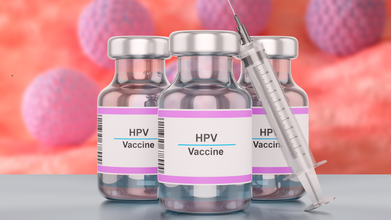
HPV Vaccine: India is planning to launch a free nationwide HPV or the Human Papillomavirus vaccination program to strengthen women's health and eliminate preventable cervical cancers in the country. Health and Me has also reported on the same. Government has also urged parents and guardians to come forward and ensure that their 14-year-old daughters are vaccinated against HPV.
Read: India to Soon Launch Free HPV Vaccine For Young Girls To Prevent Cervical Cancer
India Soon To Launch Nationwide Free HPV Vaccine: Why Should Every Girl Consider It?
Dr Asmita Dongare, a Pune-based consultant obstetrician and gynecologist writes on her website that cervical cancer is still one of the top causes of cancer-related deaths among Indian women. This is why every young woman must consider to get the vaccine, especially when the drive allows them to avail it for free.
HPV vaccination also provides up to 90 per cent protection against cervical cancer when administer before exposure. Studies have also shown that the vaccine is 97 per cent effective in preventing cervical cancer and related cell changes if given before the virus exposure.
Furthermore, the vaccine could prevent more than one type of cancer, notes the doctor, which includes:
- Vaginal and vulvar cancer
- Anal cancer
- Threat and head or neck cancer
- Genital warts
The vaccines have also shown to provide long-term protection with individuals monitored for at least 12 years who showed no evidence of weakened immunity. The vaccine creates antibodies and provide lasting protection against the virus.
India Soon To Launch Nationwide Free HPV Vaccine: Who Can Avail It?
The vaccine is most effective when it is administered before exposure to HPV and before becoming sexually active. Young women aged 9 to 14 years show vaccine effectiveness of 74 to 93 per cent and this decreases with age.
- Girls aged 9 to 14 should get two doses of the vaccine in 6 to 12 months apart
- Women aged 15 to 26 years can get three doses in 0, 2, and 6 months apart
- Adults aged 27 to 45 must get it after consultation with their healthcare provider
India Soon To Launch Nationwide Free HPV Vaccine: Where To Get The Free Vaccine From?
The nationwide program, based on expert recommendations of the National Technical Advisory Group on Immunization (NTAGI), will target girls aged 14 years.
At 14, the HPV vaccine offers maximum preventive benefit, well before potential exposure to the virus.
"By prioritising prevention at the right age, the program is expected to provide lifelong protection and significantly reduce the future burden of cervical cancer in the country," the sources said.
Vaccination under the national program will be voluntary and free of cost.
The HPV vaccination will be conducted exclusively at designated government health facilities, including Ayushman Arogya Mandirs (Primary Health Centres), Community Health Centres, Sub-District and District Hospitals, and Government Medical Colleges.
The vaccine to be used is non-live and does not cause HPV infection. It is supported by more than 500 million doses administered globally since its introduction in 2006.
"India’s national program will use Gardasil, a quadrivalent HPV vaccine that protects against HPV types 16 and 18, which cause cervical cancer, as well as types 6 and 11. Strong global and Indian scientific evidence confirms that a single dose provides robust and durable protection when administered to girls in the recommended age group," the sources said.
Measles In US Closes 1000 Cases In The First Two Months Of 2026
Credits: Canva
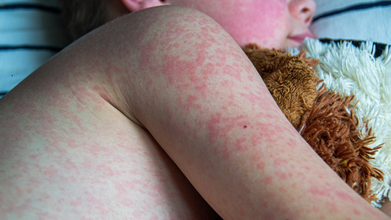
Measles in US have already logged up to 982 cases in 2026, revealed the data by the Centers for Disease Control and Prevention (CDC) on Friday. It is more than four times the number of cases as this time last year when a large outbreak was just beginning in West Texas.
As of now, 26 states have reported measles cases so far. Large outbreaks continue to grow in Utah, Arizona and South Carolina.
Measles In US: How Many Are Hospitalized?
This is the largest measles outbreak US has seen in a generation. According to a South Carolina epidemiologist Dr Linda Bell, reported by NBC, at least 20 people have been hospitalized. These hospitalizations involve both adults and children. Additional cases required medical care for measles but were not hospitalized,” Bell said.
As per the CDC data, 1 in 10 measles cases in 2025 resulted in hospitalization and most of them were children and teenager.
Florida too is seeing a rise in cases. At the beginning of this year, the state's health department reported 92 cases since the beginning of the year. 66 of the cases were in Collier County and largely clustered at Ave Maria University, near Naples.
Measles In US: Symptoms That Stay
While some people recover, some also stay with the symptoms way beyond the illness. Long term health problems develop even after the rash clears up. This is because the virus targets cells that play roles in a person's immune system and makes them vulnerable to subsequent illnesses.
In some rare cases, people could develop dangerous brain inflammation seven to 10 years after a measles infection. This condition is called sclerosing panencephalitis, or SSPE, is almost always fatal.
Measles In US: Rarest Of Rare Case Study
Doctors at Children's Hospital of Orange County in California described a case in the New England Journal of Medicine. It was a 7-year-old boy who went to the hospital following several months of seizures and cognitive problems that had gotten worse. The boy had lived in Afghanistan in his infancy where he had gotten measles.
Doctors said that when he arrived in the hospital he could not speak and his body's muscle reflexes were not working. These were signs of neurological problems and he was diagnosed with SPPE. Unfortunately, within a year of his first symptoms, he died.
Measles In US: What Is It And What Are The Common Symptoms?
Measles has a high transmissibility, and high measles immunity levels are required to prevent sustained measles virus transmission.
This is why herd immunity for measles could be easily breached.
It easily spreads from one infected person to another through breathes, coughs or sneezes and could cause severe disease, complications, and even death.
Symptoms include:
- High fever
- Cough
- Runny Nose
- Rash all over the body
The most unique symptom or the early sign of measles in the Koplik spots. These are tiny white dots that look like grains of salt on red gums inside the cheeks that appear before the red rash starts to appear on a person's face and then the body.
Furthermore, the symptoms of measles are also characterized by the three Cs:
- Cough
- Coryza or runny nose
- Conjunctivitis or red and water eyes
Rising Temperatures May Lead To Fewer Male Births: Study
Credit: Canva
A warming climate may not only reshape the planet, weather patterns, and ecosystems, but may also influence who is born and cause gender imbalance, according to an alarming study.
The large study published in the journal Proceedings of the National Academy of Sciences provides new evidence that higher temperatures can influence the sex ratio at birth -- the number of boys born relative to girls.
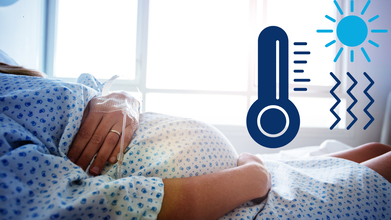
The findings, based on an analysis of more than five million births across 33 sub-Saharan African countries and India, showed that temperatures above 20 degrees Celsius have consistently led to fewer male births in both regions.
"Extreme heat is not only a major public health threat. We show that temperature fundamentally shapes human reproduction by influencing who is born and who is not born,” said lead author Dr. Jasmin Abdel Ghany, from the University of Oxford.
“Our findings indicate that temperature has measurable consequences for fetal survival and family planning behavior, with implications for population composition and gender balance. Understanding these processes is essential for anticipating how the environment affects societies in a warming climate," Ghany added.
Climate Change May Determine Who Is Born
The study showed a decline in male births among women exposed to high temperatures during the first trimester of pregnancy in sub-Saharan Africa.
This pattern is consistent with increased prenatal mortality driven by maternal heat stress. It is particularly pronounced among women living in rural areas, those with lower levels of education, and those with higher birth orders.
On the contrary, the team found that in India, where sex ratios have historically been distorted by preference for a male heir and sex-selective abortion, the effects appear later in pregnancy.
Higher temperatures during the second trimester led to fewer male births. This was particularly seen among older mothers, high-parity births, and women without sons in northern states.
Notably, the study highlighted that the effects of heat are not evenly distributed.
Women with fewer resources and those living in more vulnerable settings are more strongly affected, raising concerns about widening health inequalities under climate change.
Warming Temperatures Can Reshape Demographics
The research demonstrates how environmental change can shape fundamental population processes.
It contributes to growing evidence that extreme heat is not only an environmental and economic challenge, but also a major public health and demographic issue.
Amid rising global temperatures, the researchers stressed the need to protect maternal health and to improve access to health care, as this will cut down the long-term impacts of heat on reproduction and population dynamics.
- Follow Us :


© 2024 Bennett, Coleman & Company Limited