
- Health Conditions A-Z
- Health & Wellness
- Nutrition
- Fitness
- Health News
- Ayurveda
- Videos
- Medicine A-Z
- Parenting
Taking Atorvastatin For Cholesterol? NHS Issues Caution For Certain Patients
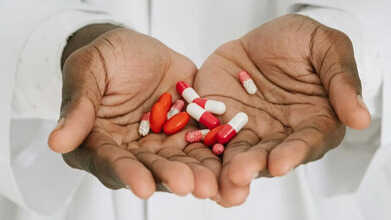
Credits: Canva
A widely used medication prescribed to lower cholesterol and reduce the risk of heart disease may trigger uncomfortable side effects in some people, including nosebleeds. In England, around 5.3 million people are currently taking statins, a group of drugs designed to help bring cholesterol levels down.
What Is Atorvastatin?
Atorvastatin, sold under brand names such as Lipitor, is a commonly prescribed statin medication. Doctors use it to lower cholesterol levels and help reduce the risk of heart attacks, strokes, and other cardiovascular problems, as per Mayo Clinic.
Atorvastatin: What Atorvastatin Is Prescribed For?
Atorvastatin is commonly prescribed to people with raised cholesterol, as well as those who have a family history of heart disease or long-term conditions such as diabetes or arthritis. NHS guidance explains that the medicine is usually taken as a tablet, with chewable options available for people who struggle to swallow pills.
High cholesterol can cause fatty deposits to build up in blood vessels, increasing the risk of serious complications such as heart attacks and strokes. It is also a major factor in cardiovascular disease, which is responsible for more than a quarter of all deaths in England.
Atorvastatin Possible Side Effects
While atorvastatin is effective at lowering the risk of cardiovascular disease, it is not suitable for everyone. Like many medicines, it can cause side effects in some people, particularly when taken over long periods. Others may take it for years without noticing any problems at all.
People Advised To Avoid Atorvastatin
The NHS advises that atorvastatin is generally not recommended during pregnancy, as it may pose risks to a developing baby. If someone becomes pregnant while taking the drug, they are advised to stop using it and speak to a doctor as soon as possible.
Alternative treatments may be offered during pregnancy. Women may also be advised to stop taking atorvastatin while breastfeeding. It is not yet clear how much of the drug passes into breast milk or whether it could cause side effects in infants.
When To Speak To A Doctor
NHS guidance stresses the importance of seeking medical advice if you are taking atorvastatin and are trying to conceive, are already pregnant, or are breastfeeding. You should also speak to a doctor before taking atorvastatin if you:
- Have lung disease
- Have previously had a stroke caused by bleeding in the brain
- Have experienced muscle-related side effects from statins in the past
- Have ever had an allergic reaction to atorvastatin or another medicine
- Have a history of myasthenia gravis or ocular myasthenia
- Have an underactive thyroid
- Have ever been diagnosed with a muscle disorder, including fibromyalgia
- Regularly drink large amounts of alcohol
- Have liver or kidney problems
Disclaimer:
This information is for general awareness only and is not a substitute for medical advice. Always consult a qualified doctor or healthcare professional before starting, stopping, or changing any medication.
US Measles Cases Surge Past 2,000, Putting Elimination Status At Risk

Credits: Canva
More than 2,000 measles cases have been recorded in the United States this year, according to federal health data, marking the highest annual total the country has seen in several decades.
Active outbreaks, most notably in upstate South Carolina and in communities along the Arizona-Utah border — are continuing to report new infections each week. Health officials warn that this sustained spread could jeopardise the measles elimination status the US has maintained for the past 25 years.
Measles Cases Surge Past 2,000 In The US
As of December 30, a total of 2,065 confirmed measles cases had been reported nationwide in 2026, based on figures released Wednesday by the US Centers for Disease Control and Prevention. The last time annual measles infections crossed the 2,000 mark was in 1992, shortly after public health authorities revised vaccination guidance to recommend two doses of the measles-mumps-rubella (MMR) vaccine for children instead of one.
Measles: How Effective Is The Measles Vaccine?
Measles is among the most infectious diseases known, but it can be prevented through vaccination. The CDC says a single dose of the MMR vaccine is about 93 percent effective at preventing measles, while two doses increase protection to 97 percent. Despite this, immunisation coverage has been slipping steadily over recent years.
Measles In US: Falling vaccination rates raise concern
CDC data shows that during the last school year, only 92.5 percent of children entering kindergarten had received the MMR vaccine. This falls below the 95 percent coverage level that public health experts say is needed to prevent outbreaks and protect communities through herd immunity.
Measles In US: Why Elimination Status Is Now At Risk
The US has been considered measles-free since 2000, a designation that means no continuous chains of transmission have lasted longer than a year. However, several large outbreaks reported this year may be linked, raising concerns that ongoing transmission could persist beyond late January and threaten that status.
One major outbreak that began in West Texas in late January was officially declared over in mid-August. That outbreak led to hundreds of related cases across Texas and New Mexico and resulted in three deaths — two children and one adult — all of whom were unvaccinated.
In early October, South Carolina’s health department confirmed a measles outbreak in the state’s upstate region. Over the past four months, that outbreak has grown to nearly 180 cases and continues to spread. At least 20 new infections have been reported since Friday, and close to 300 people are currently in quarantine due to exposure to confirmed cases.
“We know that many of the cases we are seeing involve people who were already under quarantine because of known exposure,” said Dr Linda Bell, South Carolina’s state epidemiologist, speaking on Tuesday. She added that the virus is spreading within households as well as in schools and churches.
Another significant outbreak remains active along the Utah-Arizona border, where more than 350 measles cases have been reported between the two states so far this year.
Canada Loses Measles-Free Status
In November, the Pan American Health Organization, which operates under the World Health Organization, announced that Canada had lost its measles elimination status due to a large and ongoing outbreak.
“At the same time, the remaining 34 countries in the region continue to hold their measles-free certification,” said PAHO Director Dr Jarbas Barbosa.
Health officials say potential genetic connections between the Texas outbreak earlier this year and the ongoing outbreak in South Carolina could pose a serious challenge to the US designation.
“The trend we are seeing suggests that more cases are likely to occur well into January,” Bell said. “What that means for our national status as a country that has eliminated measles is still uncertain.”
Superbug Fungus Candida Auris Is Spreading In The U.S., Check Where Cases Are Rising Fastest?

Credits: Canva
A dangerous superbug that does not respond to most antibiotics is spreading rapidly across the United States, with Alabama reporting 158 cases so far this year. The data, shared by the Alabama Department of Public Health, highlights growing concern among health officials as infections continue to rise in healthcare settings.
The organism, known as Candida auris, is a type of yeast or fungus that can lead to severe and sometimes life-threatening infections. According to the Centers for Disease Control and Prevention, the fungus is especially troubling because it can survive on human skin and hard surfaces for months, even after routine cleaning and disinfection.
Why Candida auris Is Hard to Control
Unlike many other infections, Candida auris can spread easily through shared medical equipment and direct contact between people. Its ability to withstand commonly used disinfectants makes it difficult to eliminate once it enters a healthcare facility.
State health officials say cases have increased every year, pointing to a steady and worrying trend. “Each year, we have seen increases in our case counts which underscores the need for sustained vigilance,” the Alabama Department of Public Health told AL.com.
Superbug Fungus Candida Auris: Nursing Homes Among the Worst Affected
Nursing homes and long-term care facilities are bearing the brunt of the outbreak. According to ADPH, these settings face a higher risk because residents often have weakened immune systems and require frequent medical care.
“At this time, the Alabama Department of Public Health’s primary concern is the potential for unrecognized transmission within and between healthcare facilities,” the department said. Officials fear that infections may spread silently before being detected.
Superbug Fungus Candida Auris: CDC Guidelines and State Response
The health department confirmed via email that it is following the CDC’s recommended containment strategy to limit further spread. Healthcare providers and laboratories in Alabama are voluntarily reporting cases, although the state’s figures are not currently listed on the CDC’s national tracking dashboard, as per USA Today.
Alabama is not alone in dealing with the superbug. Nearby states are also seeing significant numbers. CDC data shows Tennessee has reported 189 cases, Mississippi 108, and Georgia 377. Florida, like Alabama, does not yet have figures publicly listed on the CDC website.
Superbug Fungus Candida Auris: A Growing National Problem
Candida auris was first identified in 2009 and has become increasingly common since then. The CDC said the fungus was first detected in the United States in 2016, when 51 cases were reported. By 2020, that number had climbed to more than 700.
This year, the rise has been sharp. As of December 20, 7,046 cases have been reported nationwide. In 2025 alone, 28 states recorded infections, with Nevada reporting the highest number of cases.
Superbug Fungus Candida Auris: Symptoms and Health Risks
The fungus can infect different parts of the body, including the bloodstream, wounds, and ears. Symptoms vary depending on where the infection occurs and how severe it is. In some cases, people may not show symptoms at all.
The CDC noted that most patients who develop Candida auris infections are already seriously ill. This makes it difficult to determine how much the fungus contributes to death compared to other existing health conditions.
Superbug Fungus Candida Auris: Preventing Further Spread
ADPH stressed that stopping the spread will require strong coordination across healthcare systems. “Continued collaboration with healthcare partners, timely reporting, and adherence to recommended infection control practices are critical to preventing further spread and limiting outbreaks,” the department said.
Health officials say ongoing awareness, strict hygiene measures, and early detection remain the best tools to contain this growing threat.
High-Dose Nimesulide Oral Medicines Banned By Centre Over Safety Concerns

Credits: Canva
The central government has announced a decisive regulatory move concerning nimesulide, a widely prescribed non-steroidal anti-inflammatory drug used to treat pain, fever, and inflammation. In an effort to protect public health, the Centre has barred the manufacture, sale, and distribution of oral nimesulide formulations that contain more than 100 mg of the drug. The restriction has come into force with immediate effect and applies across the country, as per NDTV.
The decision follows mounting safety concerns linked to high-dose oral preparations of the medicine. According to the official notification issued by the government, doses exceeding 100 mg may pose a risk to human health. The order also notes that safer and well-established alternatives are already available in the market. Given this, the authorities concluded that continuing the availability of high-dose nimesulide does not serve the public interest.
What Is Nimesulide and Why Is It Prescribed?
Nimesulide belongs to a group of medicines known as non-steroidal anti-inflammatory drugs, or NSAIDs. Doctors commonly prescribe it to manage acute pain, reduce fever, and relieve inflammation associated with conditions such as musculoskeletal injuries, dental pain, or post-surgical discomfort. The drug works by blocking substances in the body that cause pain and swelling, as per Mayo Clinic.
Despite its effectiveness in symptom relief, nimesulide has remained controversial for years due to questions surrounding its safety, especially when used in higher doses or for longer durations. While it continues to be prescribed in India under regulated conditions, its use has been closely watched by health authorities and medical experts.
Legal Basis for the Ban
The prohibition has been issued under Section 26A of the Drugs and Cosmetics Act, 1940. This provision allows the central government to restrict or ban drugs if they are found to be unsafe, ineffective, or harmful to patients. Before finalising the decision, the government sought the opinion of the Drugs Technical Advisory Board, or DTAB, which is the highest advisory body on technical matters related to drugs and cosmetics in India.
After reviewing available scientific data and expert input, the board supported the move, leading to the issuance of the nationwide ban on high-dose oral formulations, as per NDTV.
Safety Concerns and Global Position
Nimesulide has faced sustained scrutiny from regulators and healthcare professionals, primarily due to concerns about liver-related side effects. Several studies and post-marketing surveillance reports have linked the drug to cases of liver toxicity, particularly when used in higher doses.
The World Health Organization has not included nimesulide in its Model List of Essential Medicines, a key reference document that guides countries on priority medicines for basic healthcare needs. This exclusion reflects ongoing global caution around the drug’s safety profile. In fact, regulatory authorities in multiple countries have either restricted its use or removed it from the market altogether after reviewing reports of hepatic injury documented in WHO pharmacovigilance data.
Indian Regulatory Reviews and Safer Alternatives
In India, the Central Drugs Standard Control Organisation has reviewed the risk-benefit balance of nimesulide on several occasions. These reviews were prompted by both domestic data and international findings related to adverse effects. Medical experts in the country have consistently highlighted that alternatives such as paracetamol and ibuprofen offer a more reliable safety record when taken at recommended doses.
These commonly used pain relievers are backed by extensive clinical evidence and guidance from bodies like the Indian Council of Medical Research, which supports their use for pain and fever management under standard dosing protocols.
- Follow Us :


© 2024 Bennett, Coleman & Company Limited