
- Health Conditions A-Z
- Health & Wellness
- Nutrition
- Fitness
- Health News
- Ayurveda
- Videos
- Medicine A-Z
- Parenting
The Next Ozempic? New 4-in-1 Weight Loss Drug Could Treat Obesity, Diabetes, Cancer And Heart Diseases
Credits: Health and me
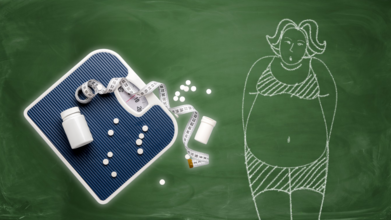
What if a single shot could help you lose weight, lower your risk of diabetes, protect your heart, and even cut your chances of developing certain cancers? That’s the promise scientists at Tufts University are chasing with a new experimental drug. Unlike Ozempic or Wegovy, which rely on one or two hormones, this compound combines four. Early research suggests it could deliver weight loss on par with bariatric surgery—without going under the knife and change how we think about treating obesity and the diseases tied to it.
Despite the popularity of drugs like Ozempic and Wegovy, these drugs come with side effects—nausea, bone loss, and weight regain—that limit their long-term potential. Now, researchers at Tufts University believe they may have found a more powerful alternative: a single drug that combines four hormones to tackle obesity and, in turn, the cascade of diseases it fuels, including diabetes, cancer, and cardiovascular disease.
Obesity is not just about excess weight. It is linked to more than 180 conditions ranging from type 2 diabetes and heart disease to certain cancers and liver disorders. According to the World Health Organization, over 650 million adults worldwide live with obesity. In the United States, more than 40% of adults are affected. Treating obesity effectively could ripple across public health, reducing risks of chronic illness and cutting healthcare costs.
That’s what makes the Tufts team’s work so promising. Their “quadruple-action” drug design aims not only to deliver substantial weight loss—up to 30%, on par with bariatric surgery—but also to change how obesity-related conditions are treated at scale.
How Current Weight Loss Drugs Work?
The first wave of modern weight loss drugs works by mimicking hormones released in the gut after a meal. The most prominent of these, GLP-1 (glucagon-like peptide 1), triggers insulin release, lowers blood sugar, and sends signals to the brain that suppress appetite. Ozempic, which is based on GLP-1, has been so effective that the American Diabetes Association now recommends it as a first-line injectable treatment for diabetes.
But GLP-1 drugs have drawbacks. Patients must inject them weekly. Nearly 40% stop after the first month due to intense nausea. Long-term use is associated with bone and muscle loss, and discontinuation often leads to weight regain.
To improve results, drug developers have experimented with combining hormones. Mounjaro (tirzepatide) pairs GLP-1 with GIP (glucose-dependent insulinotropic peptide), which also promotes satiety but reduces nausea. Retatrutide, still in clinical trials, adds glucagon, which boosts calorie burning and suppresses appetite, offset by the glucose-lowering effects of GLP-1 and GIP. This three-hormone chimera has shown weight loss up to 24%—a significant leap from Ozempic’s 6–15%.
What Makes the New 4-in-1 Drug Different?
The Tufts team, led by chemistry professor Krishna Kumar, decided three wasn’t enough. They added peptide YY (PYY), another gut hormone that reduces appetite and slows digestion, but through different pathways than GLP-1 and GIP. PYY may even play a role in fat burning.
Blending PYY with the other three hormones wasn’t simple—it belongs to a completely different structural class. The researchers fused peptide segments end-to-end, creating a new “tetra-functional” compound that engages four distinct receptors at once. The hope is that this design will deliver more consistent results across diverse patients, many of whom respond differently to existing therapies due to genetic or biological variation.
Bariatric surgery remains the most effective intervention for severe obesity, with patients often losing 30% or more of their body weight and keeping it off long term. But surgery is invasive, expensive, and not accessible to everyone. Current drugs fall short of this benchmark. If the new 4-in-1 therapy delivers weight loss on par with surgery, it could transform obesity treatment by offering comparable results without the risks of an operating table.
Graduate researcher Tristan Dinsmore, a co-author on the Tufts study, explained: “We wanted to bring in PYY to complete the weight control quartet. By hitting four receptors at once, we’re aiming for a more balanced, durable effect.”
Tackles Obesity Diabetes, Cancer and Heart Disease
Obesity rarely comes alone. It drives insulin resistance, raising the risk of type 2 diabetes. It fuels inflammation, which is linked to cancer progression. It strains the heart, worsening conditions like heart failure.
At the recent European Society of Cardiology conference in Madrid, large-scale studies revealed that GLP-1-based drugs reduce the risk of hospitalization or premature death among heart patients by as much as 58%. A study published in JAMA further showed that semaglutide (the active ingredient in Ozempic) lowered the risk of heart attack, stroke, or cardiovascular death by 20%, regardless of weight loss achieved.
These drugs are not just cosmetic. They could become a frontline defense against chronic, life-threatening diseases. By adding PYY into the mix, the Tufts candidate drug could amplify these benefits.
Does It Have Any Side Effects?
Side effects remain a stumbling block. For many patients, nausea is so severe that they abandon treatment early. Tufts researchers hope their four-hormone combination will not only boost effectiveness but also improve tolerability. Tirzepatide already demonstrated that blending GLP-1 with GIP reduces nausea; PYY may offer additional relief while protecting muscle and bone mass.
Another challenge is weight regain after stopping treatment. Studies show that weight lost with GLP-1 drugs often creeps back once injections stop. By acting on more pathways simultaneously, the new compound could make weight loss more sustainable, narrowing the gap between drug therapy and surgical intervention.
When Will This New Weight Loss Drug Be Available?
The Tufts research, published in the Journal of the American Chemical Society, is still in preclinical stages. Clinical trials will be the real test, both for safety and for proving whether the quadruple-action therapy can deliver surgery-level weight loss.
If successful, the drug could be a paradigm shift. More than 15 million American adults roughly 4.5% of the population are already using weight loss medications like Ozempic or Wegovy.
Krishna Kumar and his team emphasize that this isn’t just about shedding pounds. “Obesity is linked to over 180 conditions, from diabetes to cancer,” Kumar noted. “What drives us is the idea that we can design a single drug to treat obesity and simultaneously mitigate the risk of developing a long list of health problems plaguing society.”
Warning Issued In Plymouth Over Drug Overdose; NAP Shares Antidote That Could Save Lives

Representational Image (Canva)
Warning has been issued in Plymouth due to an increase in drug overdose which have been linked to substances like heroin or pregabalin. Naloxone Advocates Plymouth, also known as NAP issued the warning for people to take "extra care". NAP is a community interest company or a CIC, which is made of volunteers who work to reduce drug-related deaths in Plymouth.
Warning On Drug Overdose: What Is It?
On March 2, NAP shared a Facebook post, where the NAP spokesperson said: "A quick heads up for people in Plymouth/ We have recently seen more overdoses than usual linked to substances that slow breathing (such as heroin or pregabalin). We want people to be aware so they can take extra care."
Signs Of Someone Who Is Overdosing
- Being unconscious
- Slow breathing or not breathing
- Loud snoring
- Choking or gurgling sounds
- Blue lips
NAP also said if someone becomes unwell, one must immediately call 999, and place the person in the recovery position if they are breathing.
What To Do If Someone Has Overdosed On Drugs?
NAP also noted emergency antidote, as reported by Plymouth Herald too, in the event of an overdose of heroin or other opiated or opioids. NAP noted that even if you are unaware of what the unwell person has takes, the antidote "will not harm them, and sometimes drugs contain opioids even when they are not sold as such". NAP said one can administer naloxone as an antidote.
NAP also asked the person to stay with the unwell person for 20 minutes or until help arrives as the person could go back into overdose once naloxone wears off.
If the person is not breathing, one should immediately call 999 and start CPR, noted NAP.
What Is Naloxone? The Antidote That Works On Drug Overdose
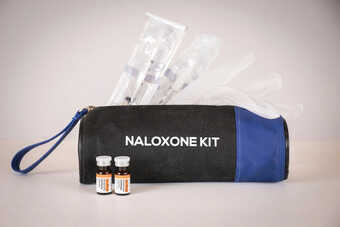
As per the National Institute on Drug Abuse, NIH, US, naloxone is a medicine that rapidly reverses an opioid overdose. It is an opioid antagonist. This means that it attaches to opioid receptors and reverses and blocks the effects of other opioids. Naloxone can quickly restore normal breathing to a person if their breathing has slowed or stopped because of an opioid overdose. But, naloxone has no effect on someone who does not have opioids in their system, and it is not a treatment for opioid use disorder.
It should be given to any person who shows signs of an opioid overdose or when an overdose is suspected. It could be administered through nasal spray or injected through the muscle, under the skin or into the veins.
The National Institute on Drug Abuse notes that families and loved ones could carry naloxone with them if they know someone in their family struggles with drug abuse. However, they can ask pharmacists or health care provider on how to administer the antidote.
However one must not that it works in the body for only 30 to 90 minutes, whereas some opioids could stay longer than that. This is why it is important to call for help. Furthermore, people given naloxone must be observed and monitored even after the last dose of naloxone to make sure their breathing do not slow down.
Unvaccinated Traveler Triggers Measles Outbreak in US, 17 Infected: CDC
Credit: Canva
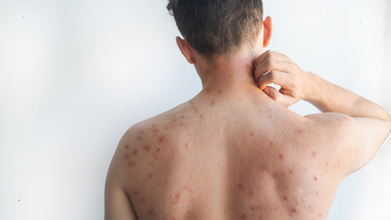
The US Centers for Disease Control and Prevention (CDC) has stated that an unvaccinated person who traveled to the US from Europe spread measles to 17 others in the country last year.
In a paper published in The Journal of Infectious Diseases, the CDC highlighted the case of an unvaccinated traveler who arrived at the Denver International Airport in Colorado in May 2025.
The person traveled with a fever, persistent cough, cold-like symptoms, and conjunctivitis (“pink eye”). He stayed overnight in a hotel and then boarded another flight to North Dakota. A day later, the person developed a rash.
“The index case was in an unvaccinated adult. Aircraft contact investigations identified 135 exposed domestic travelers. Fifteen secondary cases were identified among people exposed during the international (5) and domestic (3) flights, and at the airport (7),” the CDC said in the paper.
“Two tertiary case-patients were also identified. Five of the secondary case-patients had at least one documented prior measles vaccination,” it added.
The 2025 US Measles Outbreak
While measles was declared eliminated in the US in 2000, and sporadic outbreaks were controlled quickly, falling vaccination rates, especially during the COVID-19 pandemic, raise the risk of larger, harder-to-contain outbreaks.
This was further compounded by the anti-vaccine stance of President Donald Trump and his Health Secretary Robert F Kennedy Jr.
As per the CDC, a total of 2,281 confirmed measles cases were reported in the US in 2025. In 2026, the agency reported 10 new outbreaks, with more than 1,000 measles cases confirmed to date. More than 90 percent cases each year occurred in the unvaccinated.
Air Travel Increases Measles Spread
Recently, two passengers from India infected with measles landed in Auckland, New Zealand, via Singapore Airlines.
The Straits Times quoted Associate Professor Lim Poh Lian, group director of the Communicable Disease Agency’s (CDA) Communicable Disease Program, who noted that the individuals developed symptoms only while onboard the flight from Singapore to Auckland.
“Measles transmission may occur during travel. Travelers with fever and other overt signs of transmissible illness, such as coughing or malaise, should be strongly encouraged to delay travel while symptomatic,” the US CDC said.
Vaccination Key To Tackling Measles
Measles is a highly infectious disease characterized by the three Cs:
- Cough
- Coryza or runny nose
- Conjunctivitis or red and watery eyes
It easily spreads from one infected person to another through breaths, coughs, or sneezes and could cause severe disease, complications, and even death.
Even though a safe and cost-effective vaccine is available, in 2024, there were an estimated 95,000 measles deaths globally, mostly among unvaccinated or under-vaccinated children under the age of 5 years, according to the World Health Organization (WHO).
The CDC recommends that all travelers aged 6 months or older get vaccinated before international travel.
Rajshri Deshpande’s Breast Cancer Diagnosis Highlights Importance of Routine Screening

Credit: Instagram
Sacred Games actress Rajshri Deshpande today informed of being diagnosed with grade 1 breast cancer and shared her journey of recovery.
In an Instagram post, the 43-year-old actress announced being diagnosed with the Infiltrating ductal carcinoma (NOS) -- the most common breast cancer type, accounting for roughly 80 percent of cases.
Importantly, the actress known for her work in Trial by Fire and Manto said that the deadly disease was detected during routine screening, initiating the road to early recovery.
“As you’re reading this, it means I’ve finally found the courage to tell my parents that I have been diagnosed with Infiltrating ductal carcinoma (NOS), a grade 1 Breast cancer. Now it’s time you all know,” the Instagram post read.
“We fortunately caught this early in a routine checkup, which gave us a fighting chance,” she added.
Rajshri called her treatment with ‘tons of tests and surgery” “a rollercoaster ride”.
“Trust me, it was everyone’s love and warmth that carried me through,” she said, while thanking her fans and her parents whose “faces after surgery melted my fears into unbreakable strength”.
“With everyone’s support, I feel am ready to take on the world,” Rajshri said, adding that she “is recovering beautifully and soon heading home from the hospital”.
What Is Infiltrating Ductal Carcinoma (IDC)
Also known as Invasive ductal carcinoma, the cancer occurs when abnormal cells growing in the lining of the milk ducts change and invade breast tissue beyond the walls of the duct.
Breast ducts are the passageways where milk from the milk glands (lobules) flows to the nipple.
Common symptoms of IDC include
- A lump or thickening in the breast or armpit area
- Changes in the size, shape, or appearance of the breast
- Nipple changes, such as inversion, discharge, or scaling
- Breast pain or discomfort
- Skin changes on the breast, like redness or dimpling
Key risk factors of IDC include
- Genetic mutations such as BRCA1 and BRCA2 gene mutations, and a family history of breast cancer
- Higher levels of estrogen
- Prolonged exposure to ionising radiation
- smoking
- excessive alcohol consumption
- obesity
- a sedentary lifestyle
Rising Early-Onset Cancers in women
The recent The Lancet Oncology study mentioned a rise in new cases in women aged 20-54 years (up 29 percent) since 1990.
Recently, American actress Christy Carlson Romano announced a positive cancer screening test.
Cancer is everywhere, said Romano, 41, in a tearful video on social media platform Instagram.
A 2025 study by Duke Cancer Institute in the US revealed that for women younger than 50, the risk of developing cancer is 82 percent higher than that of men, up from 51 percent in 2022.
The 2025 annual report from the American Cancer Society (ACS) also showed that cancer rates in young and middle-aged women are rising past those of men in the same age group, but especially among women under age 50.
Importance of Early Screening
As with Rajshri, catching cancer in its early stages can help individuals experience less severe symptoms, minimize discomfort, and improve overall quality of life.
Detection of cancer at an early stage can boost survival rates. It can increase the chances of successful treatment.
Common screening methods include
- Physical examination of your breasts by your doctor
- Mammography
- Breast ultrasound
- Breast magnetic resonance imaging (MRI)
- Follow Us :


© 2024 Bennett, Coleman & Company Limited