
- Health Conditions A-Z
- Health & Wellness
- Nutrition
- Fitness
- Health News
- Ayurveda
- Videos
- Medicine A-Z
- Parenting
Tylenol And Autism: Trump Announces Link Between The Two, Science Does Not Back Him

Credits: Reuters, Tylenol
Acetaminophen: The official announcement linking Tylenol, a popular pain medicine with autism was made by President Donald Trump on Monday. In the announcement, he noted that the US Food and Drug Administration (FDA) will notify doctors that the use of Tylenol during pregnancy can be associated with a "very increased risk of autism", despite years of research and evidence that clearly point its safety.
"They are strongly recommending that women limit Tylenol use during pregnancy unless medically necessary," such as to treat fever, "if you can't tough it out," said Trump.
Read: What Is Leucovorin - The Drug Trump Suggests As A Treatment For Autism?
Tylenol, Pregnancy, And Childhood Autism
As per earlier studies, one of which is published in American Family Physician in 2014 also noted that during pregnancy most people used acetaminophen, sold under the brand name Tylenol. Acetaminophen is considered the one safe over-the-counter option for pain or fever for pregnant people. Other common pain relief options like ibuprofen or regular-dose-aspirin is available, however, they can pose serious risk in pregnancy and could lead to complications.
Is There Any Evidence That Show The Link Between Tylenol And Autism?
As per a recent 2024 study published in JAMA Network, titled Acetaminophen Use During Pregnancy and Children’s Risk of Autism, ADHD, and Intellectual Disability, there is no risk of autism for mothers who consume the medicine during pregnancy. The study notes: "Acetaminophen use during pregnancy was not associated with children’s risk of autism, ADHD, or intellectual disability in sibling control analyses."
James Cusack, chief executive of Autistica, a UK autism research and campaigning charity in London, who is autistic told Nature: "There is no definitive evidence to suggest that paracetamol use in mothers is a cause of autism, and when you see any associations, they are very, very small. At the heart of this is people trying to look for simple answers to complex solutions.”
Helen Tager-Flusberg, a psychologist who studies autism at Boston University, Massachusetts told Nature, "he better controlled studies are less likely to find even a small risk. And even then, what we're talking about is a minor association. … We do not think that taking acetaminophen is in any way contributing to actually causing autism.”
A study led by Viktor Ahlqvist, an epidemiologist at the Karolinska Institute in Stockholm (mentioned above, published in JAMA Network) is considered one of the biggest studies in this subject have also found no such link.
Ahlqvist’s team analyzed data from nearly 2.5 million children born in Sweden between 1995 and 2019, drawing from the nation’s detailed health records. These included acetaminophen prescriptions during pregnancy, self-reported use collected by midwives, and later autism diagnoses in children.
The findings showed autism in about 1.42% of children exposed to acetaminophen prenatally, compared to 1.33% among those not exposed, a difference Ahlqvist described as “very small.”
However, a previous study from 2022, published in Cureus, titled A Systematic Review of the Link Between Autism Spectrum Disorder and Acetaminophen: A Mystery to Resolve, concluded that "using acetaminophen during pregnancy was associated with attention problems and poorer executive development in children, especially with a longer duration of acetaminophen use". The studied reviewed 16 previously published studies and noted: "All 16 studies selected in our data showed a consistent association between acetaminophen and adverse neurodevelopmental outcomes."
Also Read: Tylenol And Autism: Trump, RFK Jr., And Officials To Link The Two In An Announcement Soon
What More Was Discussed In The Announcement?
At the White House, President Trump appeared alongside US Health and Human Services Secretary Robert F. Kennedy Jr., FDA Commissioner Dr. Marty Makary, NIH Director Dr. Jay Bhattacharya, and CMS Administrator Dr. Mehmet Oz. While the discussion included concerns over Tylenol use during pregnancy, Trump went further, calling for delays in childhood vaccinations, even suggesting postponing the hepatitis B shot, which has helped nearly eliminate infections in children, until age 12.
“It’s too much liquid, too many different things are going into that baby,” Trump said, offering no evidence to support his claims.
Scientific consensus remains firm: extensive research has shown no connection between vaccines and autism.
Trump praised Kennedy for bringing autism “to the forefront of American politics” and claimed, “We understood a lot more than a lot of people who studied it.” Kennedy, a longtime vaccine skeptic, has promoted theories linking vaccines to autism that experts widely dismiss.
By contrast, Kennedy and the FDA delivered more measured messages. Kennedy announced that HHS will launch a national campaign to inform families about safe Tylenol use during pregnancy. He stressed that acetaminophen should be used only when necessary, at the lowest effective dose, and for the shortest duration possible.
The FDA said it will begin revising acetaminophen safety labels and issue a letter to physicians. The agency emphasized that while some studies have noted an association, no causal link to autism has been proven, and decisions about Tylenol use remain with parents.
Tylenol’s manufacturer, Kenvue, strongly rejected any claim that acetaminophen causes autism, warning that misinformation could endanger pregnant women. “Acetaminophen is the safest pain reliever option for pregnant women throughout their entire pregnancy,” the company said, adding that untreated fever and severe pain can pose serious risks to both mother and baby.
Kenvue also urged expectant mothers to consult healthcare professionals before using any over-the-counter medication.
Mumbai Locals Suffer Burns After Hydrogen Filled Balloons Erupt In Lift

Credit: X
Two people have suffered burn injuries in Mumbai after a cluster of gas-filled balloons exploded and turned into a ball of fire inside a residential building’s lift earlier this week.
The incident occured at Anmol Towers, a residential building opposite a petrol pump in Mumbai's Goregaon West and police have registered a case against the balloon vendor, according to NDTV.
CCTV footage shows a woman entering the lift with a small trolley, followed by a man carrying several balloons packed in a large bag. Moments later, the balloons mysteriously caught fire, leading to the blast inside the elevator.
Despite flames briefly covering the CCTV camera, the woman and two men were seen running out of the elevator seconds later. In the end, the clip shows the elevator doors shutting as flames erupt at the centre of the lift.
It was unclear what type of gas was used to inflate the balloons. However, while many consumers assume decorative balloons are filled with helium, a non-combustible gas, authorities and safety experts suggest that it is highly possible that hydrogen was used instead.
Mumbai police have urged the public to exercise caution and warned balloon sellers against using flammable gases, particularly in residential buildings and enclosed areas.
Why Is Hydrogen Dangerous?
Hydrogen has a very wide range of flammability in air (4-75 percent by volume) and requires very low energy to ignite. It often causes explosions rather than just fires, especially in confined spaces.
In high concentrations in enclosed areas, hydrogen acts as a simple asphyxiant by displacing oxygen, which can lead to dizziness, unconsciousness, or death. Additionally, hydrogen fires burn with a nearly invisible, pale blue flame, making them almost impossible to detect with the naked eye during daylight.
Moreover, hydrogen gas also burns faster than most conventional fuels, increasing the risk of deflagration (subsonic) or detonation (supersonic).
On the other hand, as a noble gas, helium has a completely filled outer shell of electrons, meaning it does not react with other elements or catch fire in the presence of oxygen and heat.
Along with this, unlike hydrogen, which is also lighter than air but highly explosive, helium will not ignite even if exposed directly to a flame or spark and it can can act as a buffer and actually suppress flames by displacing oxygen in the immediate area.
What To Do If You Suffer From Burns?
For minor burns, immediately run cool (not cold) water over the area for 10–20 minutes, remove jewelery or tight clothing near the injured area and cover with a sterile bandage. A minor burn might need emergency care if it affects the eyes, mouth, hands or genitals.
However, for serious and large burns, protect the burned person from further harm and ensure that they are breathing. Loosely cover the area with gauze or a clean cloth and raise the burned area above heart level, if possible.
As you call emergency services, watch for symptoms of shock which include cool, clammy skin, weak pulse and shallow breathing.
Seek immediate care for burns, which:
- May be deep, involving all layers of the skin.
- May cause the skin to be dry and leathery.
- May appear charred or have patches of white, brown or black.
- Are larger than 3 inches (about 8 centimeters) in diameter.
- Cover the hands, feet, face, groin, buttocks or a major joint, or encircle an arm or a leg.
- Are accompanied by smoke inhalation.
- Begin swelling very quickly.
Globally, about 10 million people experience burns and about 180,000 die from them each year.
Nipah Virus Fatality Reported in Bangladesh, One Woman Dead

A woman with no travel history has died from Nipah virus in Bangladesh, the World Health Organization has confirmed.
The patient, aged between 40 and 50, developed a fever and headache-like symptoms consistent with the virus, followed by hypersalivation, disorientation and convulsion on 21 January.
The case was reported in the northern Naogaon district, Sharmin Sultana, senior scientific officer at the Institute of Epidemiology, Disease Control and Research, later said.
She died on January 28 and was confirmed to be infected with the virus the day after. Although she had no travel history, she regularly consumed raw date palm sap, reports suggest.
The WHO said all 35 people who had contact with the now-deceased patient were being monitored and have tested negative for the virus. No new cases had been detected to date.
Since its emergence in 2001, Bangldesh has reported cases of Nipah virus in humans every year. In 2025, four laboratory-confirmed fatal cases were reported in the country.
What's Happening In India?
The Nipah virus outbreak began in West Bengal, India in January with two hospital nurses at AIIMS, Kolkata, testing positive for the infection and being quarantined, prompting widespread testing. Soon after, five cases, including a doctor and a staff member, were confirmed and over 100 people were quarantined.
However, one of the nurses, a 25-year-old unidentified man has now made a recovery and revealed his experience with the virus, claiming that despite irritation in the throat and uncertainty about what lay ahead, he had faith in his doctors and fellow nurses.
In an interview with the Metro, he said: “After I was taken off ventilation and regained consciousness, I came to know that I have Nipah. I still had the tube in my mouth, and there was irritation. Despite the irritation and my fear, I had faith in the doctors and nurses.
“I have suffered and I know the symptoms. I will tell people when they should get checked for the Nipah virus. I want to raise awareness about the virus and its symptoms.
“I am not sure how I came in contact with the deadly virus. Maybe it was while treating a patient. But I will continue to work as a nurse. I am waiting to rejoin the hospital,” he added.
The unidentified healthcare professional remains very weak physically and is undergoing physiotherapy to regain his strength. “I was bedridden for over a month. I am still very weak and have an unstable gait. So, I am undergoing physiotherapy,” he said.
The other nurse, a woman, remains in a coma but has been taken off ventilation support, a hospital official confirmed this week.
Nipah Virus: What Is It And What Are Its Symptoms?
According to WHO, Nipah virus is a zoonotic illness which means it is mostly transmitted from animals to humans through bats. However, it can also spread through fruits that have been contaminated by the saliva, urine or droppings of infected bats. Human-to-human transmission can also occur through close contact with an infected person or their bodily fluids.
The illness has a 75 percent fatality rate, and there are no vaccines to protect the public.
The virus was first identified in 1998 during an outbreak among pig farmers in Malaysia and soon made its way to India and Bangladesh in 2001, with cases often involving family members or caregivers tending to the infected patient.
READ MORE: Nipah vs Bird Flu in India: Which Virus Poses A Greater Threat To Humans?
Although the Nipah virus has caused only a few known outbreaks in Asia, it infects a wide range of animals and causes severe disease and death in people. Some of its common symptoms include:
- Fever
- Headache
- Breathing difficulties
- Cough and sore throat
- Diarrhea
- Vomiting
- Muscle pain and severe weakness
Samples collected from the patient’s home and workplaces, including pets and partially eaten fruits dropped by bats, all tested negative for the virus, and the exact source of the infection could not be identified.
Wet Wipes Warning: Patient Dies Using An Infected, Non-Sterile Wipe
Credits: Canva
Wet Wipes Waring: 59 people have fallen ill, with one dead, after using non-alcoholic, non-sterile, infected wet wipes in UK. The UK Health Security Agency (UKHSA) and Medicines and Healthcare products Regulatory Agency (MHRA) issued a warning, and said that there is still "an ongoing risk of infection associated with their use". The bacteria that is causing this infection is burkholderia stabilis or B. stabilis.
Wet Wipes Warning: Which Ones Not To Use
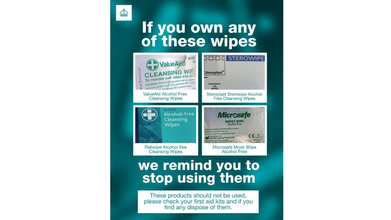
The UKHSA also in its warning included names of four different wet wipes and asked people to avoid using them.
- ValueAid Alcohol Free Cleaning Wipes
- Stereoplast Sterowipe Alcohol Free Cleansing Wipes
- Reliwipe Alcohol Free Cleansing Wipes
- Microsafe Moist Wipe Alcohol Free
Wet Wipes Warning: What Actually Happened?
The Pharmaceutical Journal noted that the UKHSA and MHRA published a joint statement that warned people that they should not use non-sterile, non-alcoholic wipes in their homes and first-aid kits.
After an outbreak investigation conducted by MHRA in 2025, four products were identified to be contaminated with Burkholderia stabilis. “There have been 59 confirmed cases of Burkholderia stabilis associated with some non-sterile alcohol-free wipe products — identified in an outbreak in the United Kingdom from January 2018 to 3 February 2026,” the statement said.
“A small number of cases continue to be detected. These have included some serious infections which have required hospital treatment and one death has been attributed to Burkholderia stabilis infection.”
UKHSA and MHRA is telling people to look out for wipes marked 'sterile' to be used on wounds or broken skin.
Wet Wipes Warning: What Is Burkholderia Stabilis?
UKHSA on its official website notes: 'Burkholderia are a type of bacteria found naturally in the environment, including in soil and water. Burkholderia stabilis is one species within this group. While many people never encounter problems with this type of bacteria, it can cause serious infections in certain circumstances, particularly among vulnerable individuals.'
Read: Does Bigger Penis Help You Ski Better? Why Olympians Are Injecting Hyaluronic Acid - Explained
Wet Wipes Warning: Who Is At More Risk Of B. Stabilis Infection?
- Those with weakened immune systems – including people undergoing chemotherapy, organ transplant recipients, or those with conditions that affect immune function
- Individuals with other risk factors such as cystic fibrosis
- Patients at home with intravenous lines
Wet Wipes Warning: How Can Someone Get Infected By B. Stabilis?
The UKHSA notes: "The risk of acquiring infection is generally very low. Infections can occur through contact with contaminated products on broken or damaged skin, or through introduction of bacteria through medical devices such as intravenous lines."
Wet Wipes Warning: What Are The Common Symptoms Of B. Stabilis Infection?
- Symptoms of a wound infection can include redness, swelling, increased pain, warmth around a wound or or break in skin, and pus or other drainage from the wound / break in skin
- Symptoms of infection involving an intravenous line can include signs such as redness, swelling, or pain around the insertion site and / or fever and chills
- In more serious cases, symptoms associated with bloodstream infection (sepsis).
- Follow Us :


© 2024 Bennett, Coleman & Company Limited