
- Health Conditions A-Z
- Health & Wellness
- Nutrition
- Fitness
- Health News
- Ayurveda
- Videos
- Medicine A-Z
- Parenting
Tylenol Use In Pregnancy Has No Link With Childhood Autism: Finds New Lancet Study

Credits: Wikimedia Commons and Tylenol
At a press conference in September 2025, President Donald Trump announced of a connection between the use of Tylenol, a popular pain medicine during pregnancy and autism. The active ingredient acetaminophen, while, many studies, have shown does not have any link with childhood autism if consumed during pregnancy. However, Trump insisted that "They", [read the FDA], "are strongly recommending that women limit Tylenol use during pregnancy unless medically necessary...if you cannot tough it out..."
However, a scientific review of 43 studies on acetaminophen use during pregnancy concluded that there was no evidence that the painkiller increased the risk of autism or any other neurodevelopmental disorders.
The lead author of the report, Dr Asma Khalil, professor of obstetrics and maternal fetal medicine at St George's Hospital, University of London, in a news briefing said, "We found no clinically important increase in the risk of autism, ADHD, or intellectual disability." The findings were published on Friday in British medical journal The Lancet.
Dr Khalil said that acetaminophen, which is an active ingredient in Tylenol, remains "the first line treatment that we would recommend if the pregnant women have pain or fever in pregnancy".
Read: Tylenol And Autism: Trump Announces Link Between The Two, Science Does Not Back Him
What Have Earlier Studies Said About Tylenol Use And Autism?
Earlier studies too, including one of which is published in American Family Physician in 2014 also noted that during pregnancy most people used acetaminophen, sold under the brand name Tylenol. Acetaminophen is considered the one safe over-the-counter option for pain or fever for pregnant people. Other common pain relief options like ibuprofen or regular-dose-aspirin is available, however, they can pose serious risk in pregnancy and could lead to complications.
2024 study published in JAMA Network, titled Acetaminophen Use During Pregnancy and Children’s Risk of Autism, ADHD, and Intellectual Disability, there is no risk of autism for mothers who consume the medicine during pregnancy. The study notes: "Acetaminophen use during pregnancy was not associated with children’s risk of autism, ADHD, or intellectual disability in sibling control analyses."
James Cusack, chief executive of Autistica, a UK autism research and campaigning charity in London, who is autistic told Nature: "There is no definitive evidence to suggest that paracetamol use in mothers is a cause of autism, and when you see any associations, they are very, very small. At the heart of this is people trying to look for simple answers to complex solutions.”
Read More: Trump's Claim On Linking Tylenol And Autism Is Unscientific, According To Doctors
Helen Tager-Flusberg, a psychologist who studies autism at Boston University, Massachusetts told Nature, "he better controlled studies are less likely to find even a small risk. And even then, what we're talking about is a minor association. … We do not think that taking acetaminophen is in any way contributing to actually causing autism.”
A study led by Viktor Ahlqvist, an epidemiologist at the Karolinska Institute in Stockholm (mentioned above, published in JAMA Network) is considered one of the biggest studies in this subject have also found no such link.
Ahlqvist’s team analyzed data from nearly 2.5 million children born in Sweden between 1995 and 2019, drawing from the nation’s detailed health records. These included acetaminophen prescriptions during pregnancy, self-reported use collected by midwives, and later autism diagnoses in children.
The findings showed autism in about 1.42% of children exposed to acetaminophen prenatally, compared to 1.33% among those not exposed, a difference Ahlqvist described as “very small.”
Medical Institutions Rejected Trump's Tylenol And Autism Claim: Why Is This Medicine Recommended To Pregnant Women Over Other Painkillers?
Medical bodies across the world, including the American College of Obstetricians and Gynecologists, were quick to push back against the president’s remarks. They stressed that doctors already advise pregnant women to use acetaminophen carefully and warned that leaving a fever untreated during pregnancy can pose serious risks to both the mother and the baby.
Because acetaminophen can enter the brain and cross the placenta, researchers have been studying its potential impact on fetal brain development for over a decade. However, reaching clear conclusions has proved challenging.
One major reason is the ethical limits on research involving pregnant women. Randomized controlled trials, considered the gold standard in medical science, have not been carried out in this case, making it harder to establish cause-and-effect relationships.
Another complication is how commonly acetaminophen is used. Many other painkillers are known to be harmful during pregnancy, which is why acetaminophen has long been recommended as the safest first option. Its over-the-counter availability also makes it difficult for researchers to accurately track how much is taken, how often, and at what stage of pregnancy.
NHS England Expands Access To Life Saving Prostate Cancer Drug
Credits: Canva
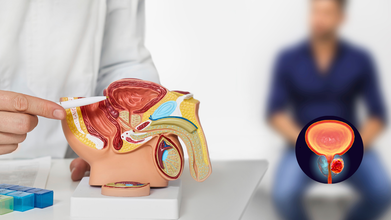
NHS expanded access of a life-extending prostate cancer drug after a campaign ran by a patient and a charity. This drug is abiraterone, which had been available on the NHS in Scotland and Wales since 2023, but now in England and Northern Ireland, except in the most severe cases.
In the UK, the cancer drug is prescribed for patients with prostate cancer at a very advanced stage. However, now, the drug will be available to prostate cancer patients in England on the NHS, even for those where cancer has not metastasized or spread. This could save hundreds of lives.
The assistant director of health improvement at charity Prostate Cancer UK, Amy Rylance said that the decision was "a momentous, life-saving victory for the thousands of men whose lives will not be saved".
The charity estimated that this will enable 7,000 men a year to start their treatment, with around 1,470 cancers being avoided rom getting worse. This could save somewhere around 560 lives.
The drug is soon to be available on NHS England in weeks.
What Is Abiraterone?
As per the Cancer Research UK, abiraterone is a hormone therapy drug. The Prostate Cancer UK notes that this is most commonly offered to men whose cancer has stopped responding to other types of cancer drugs.
As per Mayo Clinic, it is used in combination with prednisone to treat patients with metastatic castration-resistant prostate cancer and metastatic high risk castration-sensitive prostate cancer. This medicine is only available on doctor's prescription and is available as a tablet.
What Is Prostate Cancer?
The prostate is a small walnut-shaped gland in men that produces seminal fluid that nourishes and transports sperm. It occurs when abnormal cells form and grow in that gland.
Experts say that not all prostate cancer is deadly. There are cancers that are slow-growing and will not affect a man's lifespan, which is found in 1 in 3 men over 50. Then there is a small number of very aggressive prostate cancers which move quickly and cause harm, this is why regular screening is important.
Read: Olympic Cyclist Sir Chris Hoy Shares His Diagnosis Of Prostate Cancer From A Common Shoulder Pain
Are There Any Tests For Prostate Cancer?
In the UK, there is no prostate cancer screening programme like those for breast, bowel and cervical cancer. The onus is therefore on men to request a blood test from their general practitioner once they are over 50. When not aware, it can become life-threatening as it did for Sir Chris Hoy, the six-time Olympic cyclist, who opened up on his diagnosis of the same through a shoulder pain last year.
Despite more men dying from prostate cancer than women from breast cancer, as per BBC, there are no reliable tests for this. The blood test that men over 50 request from their general practitioner measure prostate-specific antigen (PSA), released by the prostate, a small gland located below the bladder involved in the production of semen.
However, experts say that PSA levels can be high for many other reasons too, including enlarged prostate, inflammation, infection, recent vigorous exercise or sex.
Children Should Not Be Dying Of Preventable Diseases, Says Doctor On CDC's Latest Vaccine Guidelines
Credits: Canva
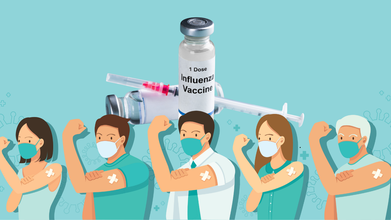
The latest vaccine recommendation are confusing, children should not be dying because of such ambiguity, say experts. Doctors have noted that the recent vaccine recommendation which removed four vaccines, including influenza vaccine from recommended shots compulsory for children is giving mixed signals. This is at the time when the country has reached record-breaking rates of illness and hospitals are struggling to keep up with the surge of flu patients.
Seema Lakdawala, associate professor of microbiology and immunology at Emory School of Medicine, as reported by The Guardian said, "We are in the midst of a very severe flu season". However, she pointed, despite this, the US has dismantled many of its vaccine recommendation, now the flu vaccine must have a "shared clinical decision-making".
While the secretary of the US Department of Health and Human Services and vaccine critic Robert F Kennedy Jr told CBS News "that's a better thing" upon being asked if these new restrictions would mean fewer children getting vaccination against the flu. However, doctors say otherwise. Mehmet Oz, administrator for the Centers for Medicare & Medicaid Services also said, "Every year, there is a flu vaccine. It does not always work very well. That's why it's been controversial of late". Instead, Oz told Newsmax that Americans must "take care" of themselves, so they can "overwhelm" the flu when they encounter it.
While the Centers for Disease Control and Prevention (CDC)'s press statement reads: "the decision to vaccinate is a personal one”. The press statement has asked people to consult their GPs and doctors and understand the "potential risks and benefits associated with vaccines".
Also Read: Flu Symptoms In Kids Could Be Deadly, Doctors Say Shot Is Still The Best Protection
What Are Experts Saying On CDC's Latest Vaccine Recommendation?
Megan Berman, professor of internal medicine at the University of Texas Medical Branch, and faculty with the Sealy Institute for Vaccine Sciences told The Guardian, that vaccine rates have already gone down and with these new changes, it will further dampen the vaccination rates because it "gives the message that it is not important". Yet, "nothing has changed from the science, and I know that physicians are still strongly recommending it to everyone six months and older...Children should not be dying from a preventable illness".
Dr. Yvonne Maldonado, a pediatric infectious disease epidemiologist and professor at Stanford University, told TODAY.com, “It’s more than unfortunate; it's tragic," for the CDC to change its flu shot guidance for kids. “(Flu shots) probably are the most effective intervention in the last 100 years to reduce child deaths in this country.”
Experts have warned that the new guidance creates confusion, which could lead to fewer children getting vaccinated. However, doctors time and again have said that the best line of defense remains to be the flu shots. Dr Pedro Piedra, professor of molecular virology and pediatrics at Baylor College of Medicine told Today.com, "There is plenty of data showing the effectiveness... of the influenza vaccine in children." The CDC website also states that the "flu vaccine can prevent severe, life-threatening complications in children."
Josie Gibson Says Her Lipoedema Is Worsening—Here’s What That Means Medically

Credits: Josie Gibson Instagram
Josie Gibson has shared a candid update about her ongoing health condition, saying it has been getting “worse and worse” as she grows older. The 40-year-old Big Brother winner recently revealed that she has been living with lipoedema, a condition that leads to an uneven and excessive build-up of fat, and explained that neither intense workouts nor strict training routines can reduce it.
The TV presenter, who regularly appears on ITV’s This Morning alongside relief hosts such as Craig Doyle and Dermot O’Leary, featured as a guest on Thursday’s episode of the show. During the segment, she spoke openly with main presenters Cat Deeley and Ben Shephard and offered an update on her health. Below, we explain what this condition involves.
Also Read: Father Donates Liver To Save His One-Year-Old Son From A Rare Liver Disorder
Josie Gibson Opens Up About Battle with Lipoedema
Josie Gibson, best known for her work on ITV’s This Morning, recently spoke about her health during an appearance with regular hosts Cat Deeley and Ben Shephard. In a frank discussion, she revealed that her lipoedema has been progressing with age. Reflecting on her diagnosis, she said she had long sensed something was not right with her body but did not know what lipoedema was. She was diagnosed around a year ago and underwent surgery in September. Sharing what doctors have explained to her, Josie said she has consulted specialists in Berlin and met three experts in London.
According to them, her body stores fat differently. Despite training regularly, eating sensibly, and maintaining good overall fitness, she was told that even exercising every day would not remove lipoedema fat, which she described as feeling like hardened or congealed fat.
What Is Lipoedema?
Lipoedema is a long-term and often painful condition that causes an unusual and symmetrical build-up of fat, mainly affecting the hips, thighs, buttocks, and legs, and in some cases the arms. The hands and feet are usually not affected. This type of fat does not respond to dieting or exercise and is commonly linked with easy bruising, sensitivity, a feeling of heaviness, and reduced mobility. It can have a serious impact on daily life and emotional wellbeing. According to the NHS, the condition affects women far more often than men.Types of Lipoedema
Some people may experience more than one type of lipoedema at the same time, depending on where symptoms appear. The types include:
- Type I: Fat accumulates between the belly button and the hips.
- Type II: Fat develops from the pelvis down to the knees.
- Type III: Fat extends from the pelvis to the ankles.
- Type IV: Fat appears between the shoulders and the wrists.
- Type V: Fat is mainly seen between the knees and the ankles.
Lipoedema: How Common Is It?
Researchers suggest that around 1 in 72,000 people are affected by lipoedema, though this figure is likely underestimated because the condition is often mistaken for obesity or lymphoedema. Other global estimates indicate that up to 11% of women may have lipoedema. The condition is considered rare among men.
Lipoedema: What Are The Early Symptoms?
Common symptoms of lipoedema include:
- Fat accumulation in the buttocks, thighs, calves, and sometimes the upper arms, affecting both sides of the body.
- Small lumps within the fat that feel like something is sitting under the skin.
- Pain that can range from mild to severe and may be constant or triggered by pressure.
- A persistent heavy sensation in the legs.
- Swelling.
- Skin that bruises easily.
- Ongoing fatigue or feeling unusually tired.
Josie, who has also appeared on I’m A Celebrity…Get Me Out Of Here! along with several other television programmes, admitted that the condition even affected her while she was working. She recalled filming A Taste of the South West and struggling to stay upright in the kitchen, often leaning against surfaces for support. At the time, she chose not to mention it to anyone, but explained that her legs felt extremely heavy throughout the shoot.
- Follow Us :


© 2024 Bennett, Coleman & Company Limited