
- Health Conditions A-Z
- Health & Wellness
- Nutrition
- Fitness
- Health News
- Ayurveda
- Videos
- Medicine A-Z
- Parenting
UK Under Amber Cold Health Alerts With Death Toll Expected To Rise
Credits: Canva
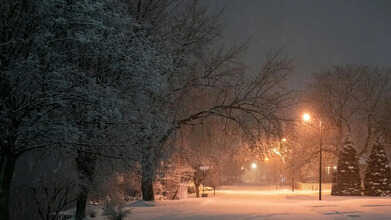
Amber cold health alerts have been announced for parts of northern England after forecasts warned that falling temperatures could lead to more deaths, particularly among older and vulnerable people. The UK Health Security Agency has issued two amber-level alerts for north-east and north-west England, which will be in effect from 8pm on Sunday until midday on Monday 5 January.
UK Under Amber Cold Health Alert: Elderly And Vulnerable People At Highest Risk
The agency said the expected cold spell is likely to increase pressure on healthcare services, with more vulnerable people needing medical attention. Officials warned this could lead to a rise in deaths, especially among those aged 65 and above and people with existing conditions such as heart disease, respiratory illnesses, and other long-term health problems.
UK Under Amber Cold Health Alert: UKHSA Gives Alert
UKHSA noted that risk is not limited to older adults. Younger people with health vulnerabilities and those sleeping rough are also likely to be affected as temperatures continue to fall.UK Under Amber Cold Health Alert: Concerns Over Indoor Temperatures
The agency warned that indoor temperatures in buildings such as hospitals, care homes, and clinics are expected to drop. Maintaining the recommended indoor temperature of 18C may be difficult, increasing health risks for patients and residents. While all other regions in England will be under a lower-level yellow alert, officials said there is still potential for added pressure on health services. Staffing shortages linked to travel disruption were also flagged, along with possible impacts on essential services such as transport and energy.
How Does Cold Weather Affect People In The UK
Cold weather in the UK can worsen existing health problems and create new risks, particularly during prolonged spells of low temperatures. It places extra strain on the heart and lungs, increases the likelihood of infections, and can make daily life harder for people who struggle to keep warm. Those living in poorly insulated homes or facing high heating costs are often hit the hardest.
The Met Office said much of England will remain cloudy overnight, with patches of frost and fog likely to develop. These conditions could lead to difficult and potentially hazardous travel on Monday morning.
Sub-zero Temperatures Forecast In Parts Of The UK
Overnight temperatures are expected to fall to around minus 1C in Penrith and hover close to freezing in parts of the Lake District where the amber alert is in place. In northern areas of Scotland, temperatures are forecast to drop further, reaching between minus 6C and minus 7C, as per Sky News.
A brisk northerly breeze is also expected along the north-east coast of England, making conditions feel colder and more uncomfortable. Dr Agostinho Sousa, head of extreme events and health protection at UKHSA, as per Sky News, urged people to look out for friends, family, and neighbours as the cold weather sets in.
“The temperatures we are expecting can have a serious impact on health,” he said. “They increase the risk of heart attacks, strokes, and chest infections, particularly among people over 65 and those with existing health conditions.”
Rabies Scare In Uttar Pradesh: Nearly 200 Villagers Get Vaccinated After Consuming Milk From Dog-Bitten Buffalo
Credits: Canva
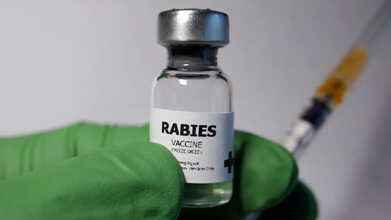
Nearly 200 residents of Piprauli village in Uttar Pradesh’s Budaun district received anti-rabies injections as a precaution after learning that the raita, a curd-based dish served at a funeral, had been prepared using milk from a buffalo that later died following a dog bite.
Rabies Scare In Uttar Pradesh: Nearly 200 Villagers Get Vaccinated
Almost 200 people from Piprauli village in Uttar Pradesh’s Budaun district were given rabies vaccines as a safety measure days after consuming raita made from the milk of a buffalo that had been bitten by a dog. Villagers said the funeral ceremony took place on December 23, where raita was served to attendees. It later came to light that the buffalo whose milk was used had been attacked by a dog a few days before the event, as per NDTV.
The buffalo died on December 26, which led to panic in the village amid fears of possible infection. Soon after, villagers visited the Ujhani Community Health Centre, where they were administered rabies vaccinations.
Rabies Scare In UP: CMO Dr Rameshwar Mishra Clarifies Risk Of Transmission
Chief Medical Officer Dr Rameshwar Mishra said on Sunday that authorities were informed about a buffalo in the village that had been bitten by a suspected rabid dog and later died after showing symptoms associated with rabies.
There were reports that villagers had consumed what was believed to be “infected” raita. As a precaution, everyone who may have been exposed was advised to get vaccinated.
“Prevention is better than cure. Anyone who had even the slightest doubt was given the anti-rabies shot. Usually, there is no risk after milk has been boiled, but vaccination was done to eliminate any possible danger,” Dr Mishra said, as per NDTV. The health department confirmed that no cases of illness have been reported in the village so far and that the situation remains stable.
The CMO added that all those who came for vaccination were given the injection without delay at the Ujhani Community Health Centre. To ensure smooth access, primary and community health centres remained open on both Saturday and Sunday.
What Is Rabies Pre-Exposure Prophylaxis Vaccine?
Rabies pre-exposure prophylaxis, also known as PrEP, involves a series of injections taken before any potential exposure to the rabies virus, as per Cleveland Clinic. It is mainly advised for people at higher risk, including veterinarians, animal handlers, laboratory staff, and travellers visiting areas where rabies is common. While PrEP does not eliminate the need for treatment after a bite, it simplifies post-exposure care. Those who have received PrEP require fewer follow-up doses and do not need rabies immunoglobulin, which can be difficult to obtain during emergencies and can save valuable time.
How Can Rabies Pre Exposure Prophylaxis Vaccine Protect You?
According to Dr Deepa Aggarwal, MD, DNB, an allergy specialist with over 20 years of experience from LHMC and AIIMS Delhi, who shared insights on her Instagram account, the rabies pre-exposure prophylaxis vaccine helps prepare the immune system in advance.
It allows the body to build antibodies before any exposure occurs. If a vaccinated person is bitten later, they only need two booster shots and no immunoglobulin. This faster immune response reduces the chance of the virus reaching the brain, which is especially important for people at higher risk or in situations where medical care may be delayed.
Delhi Under Orange Alert for Cold Wave, AQI Remains 'Severe'; Here’s How It Could Affect Your Health
Credits: iStock
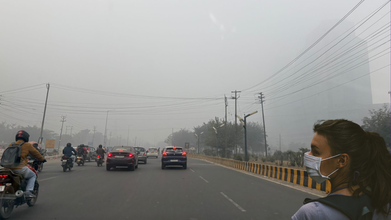
Today, Delhi again woke up to a thick layer of smog, and the adjoining cities like Noida, Ghaziabad, Gurugram, and Faridabad too woke up to zero-visibility fog on Monday. The air quality too dipped down to 'severe' category, with AQI registered at 400 plus on the index. While on Sunday, the AQI did show some improvement, as the city registered 'very poor' AQI, however, by the end of the day, the capital city was trapped under fog and pollution.
Delhi Struggling With Pollution And Cold Wave
The Indian Meteorological Department (IMD) has also issued an orange alert for Delhi on 29 December, Monday. The maximum temperature is expected to be around 22 degree Celsius, while the minimum will be at 7 degree Celsius. Mornings would encounter heavily dense fog, while there is an expectation of marginal relief on December 30. Most of North India is also said to be worst hit, including states like Uttar Pradesh, where thick fog is predicted till December 31, Punjab and Haryana is expected to face cold wave through December 30, and Himachal and Uttarakhand could see rain and snowfall from December 30 onwards.
As per IMD, cold wave is a condition of air temperature which becomes fatal to human body when exposed. This happens during the winter seasons and the cold wave impact gets aggravated due to wind speed. Cold Wave is considered when minimum temperature of a station drops to 10 degree Celsius or less for plains and 0 degree Celsius for Hilly regions.
How Can Cold Waves Impact Your Health?
IMD says that cold wave could cause mild to severe hypothermia. The common symptoms include shivering, dizziness, drowsiness, irritability, confusion, slowed, slurred speech, and altered vision. This happens when body experiences a lowered core temperature below 34.4 degree Celsius.
Frostbite is another health hazard that can happen due to cold waves. It is freezing of body tissue, accompanied with hypothermia. When ice crystal form between the cells of the skin and grow by extracting fluid from the cells, the circulation is obstructed, causing additional damage to the tissue affected. It commonly affects hands, feet, ears, nose and cheeks. The common symptoms are redness in skin, or skin turning grey. Some may also experience tingling sensations, fingers turning numb yellowish, waxy, or grey color.
Chilblains could be caused due to exposure to cold, wet, and humid conditions. Repeated prolonged exposure of bare skin could lead to this development in just few hours. It could impact your ears, nose, cheeks, fingers, and toes. Common symptoms include skin turning pale and colorless, prickly sensations, red, swollen, hot, and itchy skin and blisters.
Dehydration could also happen due to lack of fluid intakes, which is common during extreme cold. This could lead to headaches, dizziness, dry mouth, stomach cramps, and increased heartbeat. IMD notes carbon monoxide poisoning or CMP, snow blindness, and trench foot are also common during cold seasons, and provides ways to prevent these from happening.
What Do These Alerts Mean?
Delhi is currently under Orange Alert for cold wave. What do these different alerts mean?
Green Alert: This means no action will be taken, as this is a normal day during winter season
Yellow Alert: This means 'be updated' and refers to cold wave alert where the conditions in isolated areas may persist for two days
Orange Alert: This means 'be prepared' and refers to severe cold wave conditions that could persist for two days. This could also mean that though the condition is not severe, but the conditions could persist for four days or more
Red Alert: This means 'take action' and refers to severe cold wave conditions that persists for more than two days, or total number of cold wave days exceeding six days
TV Presenter Julia Bradbury Opens Up About The Lifestyle Changes She Made After Being Diagnosed With Cancer
Credits: LinkedIn Julia Bradbury
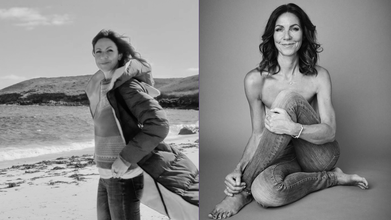
BBC Countryfile presenter Julia Bradbury, who was diagnosed with breast cancer during the lockdown, in 2021, underwent a single mastectomy back to remove her tumor. Now, 55, she has recently opened up about a big lifestyle change that she has made to ensure that her cancer does not come back.
She said that she has given up alcohol completely, which some people also find "infuriating". In an interview with The Times, she said that doctors had warned her that every drink she consumes which is above a certain limit could increase the chance of her cancer returning. She said "death looked me in the eyes".
Speaking to The Times, she said, "I get a lot of pushback on social media about this. People go, ‘I was healthy, I go to the gym, I got cancer, and now it’s metastasized, and I’ve got secondary cancer. So, are you blaming me for my illness? No. All I’m saying is, this is what I went through. It was a wake-up call, and it made me look at life differently. It made me prioritize my sleep, emotional health, and gave me more time for my loved ones. If I drink more than four units of alcohol a week, my risk of recurrence goes up by 28 per cent. But people find me giving up drinking infuriating.”
What Does Data Say About Alcohol And Cancer?
The National Cancer Institute, US, notes that there s strong scientific evidence that alcohol drinking can cause cancer. The International Agency for Research on Cancer (IARC) classified alcohol as a Group 1 carcinogen (cancer-causing substance) in 1987 due to sufficient evidence that it causes cancers of the oral cavity, pharynx, larynx, esophagus, and liver in people. The National Toxicology Program has listed consumption of alcoholic beverages as a known human carcinogen in its Report on Carcinogens since the ninth edition, in 2000.
Epidemiologic studies have shown that people who drink alcohol are at higher risk of certain cancers than those who do not drink alcohol and that the more someone drinks, the higher the risk of these cancers. Even light drinkers can be at increased risk of some cancers.
In the US in 2019, alcohol consumption was responsible for about 5% or nearly 100,000—of the 1.8 million cancer cases. It also led to 4% or nearly 25,000 of the 600,000 US cancer deaths that year.
Read: Can Drinking Beer Cause Cancer? A New Study Says There Is No Safe Limits
Julia also notes that her poor health took a hit on her confidence as well as her bank balance. This is why she has taken a new approach to life, as reported by the Express. She said, "I am very, very fortunate, and overall, I am having a wonderful life."
“But I’ve had a cancer diagnosis, both my parents have had cancer, I’ve lost people along the way, I’ve had financial worries, I’ve had to reinvent myself, and I’m not 100 per cent happy all of the time - of course not. But you can get through things, you can overcome hardships, and I like to think that’s what I do," she said.
While she is now healthy, she continues to go on her routine check-ups every year. "I wasn’t close to death, but death looked me in the eyes. So I am more focused on my health than I ever have been. I don’t drink, I eat a healthy diet, and exercise every day. When I came home from my mastectomy, I promised I would spend time outside every day, and that is my mantra, however poor it might be in this winter.”
- Follow Us :


© 2024 Bennett, Coleman & Company Limited