
- Health Conditions A-Z
- Health & Wellness
- Nutrition
- Fitness
- Health News
- Ayurveda
- Videos
- Medicine A-Z
- Parenting
Unique Symptoms Of Flu In 2026 And How Long Infection Now Last
Credits: iStock
Flu cases are surging, and reports have shown that this year is the worst hit of all, with record breaking cases, and hospital visits are highest in the last 25 years.
Data from the Centers for Disease Control and Prevention (CDC), US, has shown that this year, the visits to doctor for fever, cough and a sore throat, which are common among flu symptoms have been highest since 1997-98 flu season. The data was published on Monday Dr Caitlin Rivers, an epidemiologist and senior scholar at Johns Hopkins Center for Health Security said, "This is definitely a banner year. It’s the worst we’ve had in at least 20 years. We’re seeing a majority of the country is experiencing very high levels of activity, and we’re still in the thick of it.”
Also Read: COVID-19 Cicada Variant: Will It Become The Dominant Strain In The US? Know All About The Virus
Not just that, but this year, we have a new unique symptom added on the list.
Unique Symptom of Flu In 2026
The fast-spreading flu is thanks to the mutated virus of influenza A or the H3n2 virus, which is called the subclade K. It is known to cause the superflu. Experts say this is partly because the virus has changed enough to slip past immunity built from earlier vaccinations or past illness, making outbreaks harder to control. Older adults and other high-risk groups tend to be affected most.
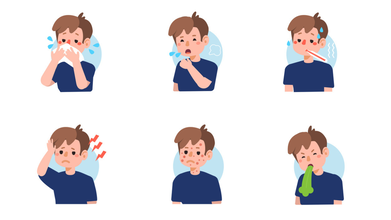
Many patients have described vomiting “yellow bile” as one of the standout symptoms of their flu infection. Virologists believe this may happen because the flu is suppressing appetite more than usual, leading people to vomit when their stomachs are empty.
Also Read: Olivia Munn Opens Up About Detecting No-Symptom Breast Cancer With Lifetime Risk Assessment Test
People experiencing symptoms such as coughing, sore throat, or a runny nose have been advised to reduce contact with vulnerable groups. This includes older adults, pregnant women, and those with existing health conditions, as they face a higher risk of serious illness.
The main illness lasts about a week, cough and tiredness can linger for 1-2 weeks or longer, with full recovery taking time, especially for at-risk.
What Are The Other Symptoms Of The Superflu?
Additional flu symptoms include muscle pain, fever, weakness, extreme tiredness, and a dry cough. These symptoms often start suddenly and usually mean staying in bed to recover. Professor Stephen Griffin, a virology expert at the University of Leeds, told the Daily Mail that people vomiting yellow bile should focus on staying hydrated. “It’s important to drink plenty of water, even if you’re being sick, because some fluid will still be absorbed,” he said.
Also Read: Bipolar Disorder: How Early Detection Can Help Prevent Serious Complications
While many flu symptoms are widely recognized, some are less commonly associated with the illness. The NHS lists ten typical flu symptoms, which often appear suddenly.
Among these, three signs that people may overlook are trouble sleeping, a reduced appetite, and feeling unusually tired or drained. During the busy weeks leading up to Christmas, these symptoms can easily be dismissed as stress or exhaustion rather than flu.
Home Secretary Shabana Mahmood, as per The Independent, said that strikes within the NHS “undoubtedly” put lives at risk. Speaking to Sky News’ Sunday Morning With Trevor Phillips, she said, “We want to ensure the NHS is supported through a difficult winter and this flu outbreak we are currently seeing. It is important that everyone understands what is at stake.”
She also pointed to a difference between the position taken by resident doctors’ leadership and the views of individual doctors, noting that the situation remains sensitive as the NHS navigates one of its most demanding winter periods.
NASA’s Artemis II Mission To Test Human Health in Deep Space

Credit: NASA
Nearly 60 years after humanity first set foot on the Moon, NASA has launched its historic Artemis II mission, marking the first crewed journey around the lunar surface.
The nearly 10-day flight was launched successfully on April 1 from the Kennedy Space Center (KSC) in Florida at 6:24 p.m. EDT.
Four astronauts were launched to the surface of the Moon aboard Orion, which lifted off atop NASA's Space Launch System.
The Orion spacecraft flight carries NASA astronauts Reid Wiseman, Victor Glover, and Christina Koch, along with Canadian Space Agency astronaut Jeremy Hansen.
The crew aims to loop around the moon and return to Earth on a free-return trajectory, reaching roughly 4,700 miles (7,560 kilometers) beyond the moon's far side — farther than Apollo 8's historic lunar flyby and the most distant journey ever attempted by humans.
During the 10-day journey, the four astronauts will also perform several science experiments, along with scientists on Earth, to facilitate science investigations to inform future human spaceflight missions.
NASA stated that the Artemis II science operations will lay the foundation for safe and efficient human exploration of the Moon and Mars.
Health Research in Space
The astronauts will conduct five research projects while in orbit. These include:- Artemis Research for Crew Health and Readiness (ARCHeR)
The study will evaluate how crew members perform individually and as a team throughout the mission, including how easily they can move around within the confined space of their Orion spacecraft.
- A Virtual Astronaut Tissue Analog Response (AVATAR)
- The Immune Biomarkers
Scientists will analyze blood and saliva samples from Artemis II crew members to see how deep space changes the immune system.
- Artemis II Standard Measures
Crews are supplying a consistent set of health information to a data bank so that future researchers can learn more about astronaut health.
- Radiation Studies
Equipment will monitor radiation levels inside and outside the Orion capsule to help characterize the deep space environment.

“The findings are expected to provide vital insights for future missions to destinations beyond low Earth orbit, including Mars,” said Laurie Abadie, an aerospace engineer for the program at NASA’s Johnson Space Center in Houston.
“The lessons we learn from this crew will help us to more safely accomplish deep space missions and research,” she said.
Steven Platts, chief scientist for human research at NASA Johnson, explained the mission will need to protect against challenges, including exposure to higher radiation levels than on the International Space Station, since the crew will be farther from Earth.
“Together, these studies will allow scientists to better understand how the immune system performs in deep space, teach us more about astronauts’ overall well-being ahead of a Mars mission, and help scientists develop ways to ensure the health and success of crew members,” he said.
COVID Cicada Variant Unlikely To Pose Major Threat, Claims Study

Credit: Canva
The emerging COVID-19 BA.3.2 variant, dubbed Cicada and detected in 23 countries, may not pose a significant global threat, claimed a study.
The 2025 study, published in the mBio journal, showed that the immune response of the BA 3.2 COVID variant from vaccines or prior infection is less effective than against the original strain. The antibody effectiveness is three times lower against the BA.3.2 variant. However, it does not mean that there is no protection at all.
“BA.3.2 showed intermediate neutralization, representing a 3-fold reduction compared to the ancestral strain,” said the researchers from the Icahn School of Medicine at Mount Sinai, US.
“BA.3.2 occupied an intermediate but distinctly separate position,” they said, adding that the variant “shows substantial immune escape potential that threatens protection”.
In the study, the researchers used antigenic mapping to assess neutralizing antibody responses in 56 adults with varied exposure histories following KP.2 vaccination against emerging variants, including LP.8.1, LF.7.1, NB.1.8.1, XFG, and BA.3.2.
While KP.2 vaccination enhanced neutralization against homologous variants, substantial reductions in neutralizing activity were observed against emerging Omicron variants across all exposure groups.
Exposure history showed some influence on neutralization breadth, with self-reported vaccination-only participants exhibiting better cross-neutralization compared to individuals with hybrid immunity.
The findings highlight the ongoing challenge of maintaining vaccine effectiveness against evolving SARS-CoV-2 variants and argue for continuous updating of vaccines, the researchers said.
“Despite its extraordinary number of mutations, BA.3.2 is not able to overcome immunity from vaccination, finds study. Other variants were more capable of evading immunity. This indicates it is not a major real-world threat,” said Dr Rajeev Jayadevan, Ex-President of IMA Cochin and Convener of the Research Cell, Kerala, in a post on social media platform X. He was not part of the study.
What Is The BA.3.2 Variant?
Also read: COVID Variant BA.3.2 Spreads To 23 Countries: Is The Variant Under Monitoring A Cause Of Worry?BA.3.2 is a descendant of the Omicron BA.3 lineage. It is genetically distinct from the previously circulating JN.1 lineages (including LP.8.1 and XFG).
BA.3.2 comprises two major branches, BA.3.2.1 and BA.3.2.2. BA.3.2.2 also has substitutions like: K356T, A575S, R681H, and R1162P, the CDC report said.
What makes the BA.3.2 variant special is the “70 to 75 substitutions and deletions in the gene sequence of its spike protein”, according to the US CDC’s latest Morbidity and Mortality Weekly Report.
“BA.3.2 represents a new lineage of SARS-CoV-2, genetically distinct from the JN.1 lineages (including LP.8.1 and XFG) that have circulated in the US since January 2024,” said the CDC researchers.
“BA.3.2 mutations in the spike protein have the potential to reduce protection from a previous infection or vaccination,” they added.
Cicada Variant: Increased Risks To Children
However, the new Cicada variant with around 75 genetic changes in its spike protein is likely to disproportionately affect children, as per an expert, who noted its presence in the UK.
“Some people have done analysis on this, suggesting it may be more prevalent among young children. Children get infections all the time, but this might be something to do with the fact that they have never been exposed to Covid vaccines," Prof Ravindra Gupta, of Cambridge University, who advised the UK government during the pandemic, was quoted as saying to The Mirror.
“So this is something we’re looking at in the lab to try and work out why. The problem with this is that it is an infection that spreads fast. Eventually, it ends up in someone vulnerable," he added.
Symptoms seem to be similar to those of other recent variants and include
sore throat,
cough,
congestion,
fatigue,
headache
fever.
According to the CDC, the Cicada variant is also likely to raise gastrointestinal issues such as nausea or diarrhea.
India Passes Jan Vishwas Bill: Here’s How It Decriminalizes Health Sector, Boosts Compliance

Credit: iStock
The Jan Vishwas (Amendment of Provisions) Bill, 2026, passed by both Houses of Parliament, marks a significant step towards decriminalizing the health sector by amending certain provisions and boosting compliance.
The Union Health Ministry said that the Bill reflects the Government’s commitment to fostering a trust-based governance framework and ensuring proportionate regulation by reducing the compliance burden on individuals and businesses.
The reforms involving 23 Ministries rationalized over 1,000 offences across 79 Central Acts. These are aimed at helping advance Ease of Doing Business and Ease of Living across sectors.
It makes a key shift from criminal penalties to civil penalties as well as introduces adjudication mechanisms. The amendments ensure consistency, predictability, and proportionality in enforcement, the Ministry said.
Prime Minister Narendra Modi called the passing of the Jan Vishwas Bill by the Parliament "a matter of immense delight".
"This Bill strengthens a trust-based framework that empowers our citizens. It marks the end of rules and regulations that are outdated. At the same time, it ensures speedy disposal of cases, reduces litigation burden with decriminalization," PM Modi added.
Know ALL About the Jan Vishwas Bill
- Within the health sector, several provisions have been amended in key legislation, such as the
Drugs and Cosmetics Act, 1940 -- to substitute imprisonment with financial penalties and to introduce a structured adjudication mechanism.
Pharmacy Act, 1948 -- to modernize penalty provisions and enhance accountability through increased financial penalties for non-compliance.
Food Safety and Standards Act, 2006 -- to strengthen enforcement while ensuring that penalties are proportionate to the nature of the offence.
Clinical Establishments (Registration and Regulation) Act, 2010 - to emphasize monetary penalties for non-compliance, particularly in cases where deficiencies do not pose immediate risks to patient safety.
National Commission for Allied and Healthcare Professions Act, 2021 -- to ensure compliance with professional standards and regulatory requirements, with penalties designed to deter violations while maintaining proportionality.
- The new Bill replaces criminal penalties, particularly imprisonment for minor procedural violations, with graded monetary penalties.
The Bill introduces a civil penalty framework to reduce the burden on courts, minimize layers of litigation, and enable faster resolution of minor compliance issues.

In the case of cosmetics, minor violations (other than spurious or adulterated) will not require court intervention and can instead be addressed through a civil penalty framework.
Further, violations such as non-maintenance of documents or non-submission of information, which were earlier punishable through court-imposed fines or imprisonment, can now be adjudicated through this civil penalty mechanism.
For the first time, the Act provides for the appointment of adjudicating authorities by the Central Government and State Governments, along with a defined process involving issuance of show cause notices, provision for personal hearing, and an appellate mechanism.
Union Health Minister JP Nadda noted that the Jan Vishwas Bill, "aims to remove outdated laws, reduce unnecessary legal burdens, and create a system that responds faster to people’s needs".
"These reforms will streamline operations for Indian medical devices manufacturers, enhance global competitiveness, and align with international best practices, ultimately benefiting patients and healthcare delivery across the country," Rajiv Nath, Forum Coordinator of The Association of Indian Medical Devices Industry (AiMeD).
- Follow Us :


© 2024 Bennett, Coleman & Company Limited