
- Health Conditions A-Z
- Health & Wellness
- Nutrition
- Fitness
- Health News
- Ayurveda
- Videos
- Medicine A-Z
- Parenting
US Doctors Name 2025 As The Worst Year For MMR Vaccination Rates As Measles Continues To Spread
US Doctors Name 2025 As The Worst Year For MMR Vaccination Rates As Measles Continues To Spread
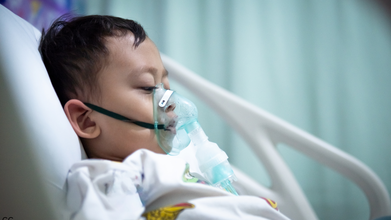
The US Centers for Disease Control and Prevention is asking parents across the country to ensure their children have received both doses of the measles, mumps, rubella (MMR) vaccine as cases continue to surge for the first time in three decades.
As of December 30, three people have died and 2,065 Americans have been found suffering from the life-threatening illness. Officials say this is the largest outbreak since 2,126 cases were last reported in 1992 and warn that the case count will continue to grow through January.
While the initial outbreak was reported in a small religious community in Texas, the disease quickly spread throughout the country and is currently affecting children and teenagers in Alabama, Alaska, Arizona, Arkansas, California, Colorado, Connecticut, Florida, Georgia, Hawaii, Idaho, Illinois, Indiana, Iowa, Kansas, Kentucky, Louisiana, Maryland, Michigan, Minnesota, Missouri, Montana, Nebraska, Nevada, New Jersey, New Mexico, New York City, New York State, North Dakota, Ohio, Oklahoma, Oregon, Pennsylvania, Rhode Island, South Carolina, South Dakota, Tennessee, Texas, Utah, Vermont, Virginia, Washington, Wisconsin and Wyoming, according to the CDC.
The federal agency also noted that out of the cases reported, 865 patients were between the ages of five to 19 while 650 were over the age of 20. Apart from this, 537 people were below the age of five while the ages of the remaining 13 were unknown.
Only three percent of the cases have received their first dose of the MMR vaccine while merely four percent completed both doses. It remains unclear whether 93 percent of people have received any doses of the vaccine.
Dr Linda Bell, South Carolina’s state epidemiologist, noted at a press briefing last week that one of the primary reasons for the rampant spread of the disease have been family gatherings during this holiday season and cross-country travel.
Measles: The World's Most Infectious Disease
Measles is a highly contagious illness that can cause widespread rashes and flu-like symptoms such as high fever, cough, red spots, bloodshot eyes, muscle pain and headaches. If left untreated, the disease can lead to life-threatening complications like brain inflammation and pneumonia.
The virus is spread through direct contact with infectious droplets or through the air that can linger in the air for up to two hours. Patients with a measles infection are contagious from four days before the rash through four days after the rash appears.
Without immunity from a vaccine or prior infection, about 9 in 10 people exposed to measles will be infected. About one in five unvaccinated people are hospitalized and three in 1,000 people who contract the disease are expected to die.
READ MORE: US Measles Cases Surge Past 2,000, Putting Elimination Status At Risk
Falling Vaccination Rates of Measles
Despite being deadly, the illness can be prevented through vaccination. The CDC says a single dose of the MMR vaccine is about 93 percent effective at preventing measles, while two doses increase protection to 97 percent.
However, immunization coverage has seen a stark decline in the last few years. While the nationwide MMR vaccination rate is 92.5 percent, merely 79.6 percent of of kindergartners were vaccinated for the 2023-2024 school year.
Additionally, only 84.3 percent of school children were vaccinated in Alaska while Hawaii, Ohio , Georgia, Oklahoma and Arizona saw a vaccination rate of about 89 percent, CDC data shows.
According to a John Hopkins University study, 2025 was noted to be the worst year for MMR immunization coverage as the nationwide average saw a decline of 2.67 percent of vaccination rates among US children since the 2020.
James Colgrove, a professor at Columbia University Mailman School of Public Health told The Washington Post, "The most dangerous deadly diseases will come back and it won’t only be kids who suffer. It’ll be adults in the community who are immune-compromised, who are elderly. It’ll be infants."
FSSAI Seized Fake 1,400 Kg of Khoya, 400 Kg of Ghee And Paneer Ahead Of Holi

Credits: FSSAI
Just ahead of Holi, the Food Safety and Standards Authority of India (FSSAI) seized fake paneer near Noida, along with 1,400 kg of fake khoya in Jhansi, and 400kg of expired ghee. The FSSAI started a series of raids in the Indian state of Uttar Pradesh and Rajasthan ahead of the festivities, when the demands of these food items are increased. Health and Me previously reported on the FSSAI raids in Kanpur where oil, rotten dates, and sweets were found to be adulterated.
Paneer Seized Near Noida At Yamuna Express Way
FSSAI on 27 February posted a video where officials could be seen disposing of a large quantity of adulterated paneer at a landfill site. FSSAI noted that the consignment was intercepted late at night at Jewar Toll Plaza on the Yamuna Expressway. The sample was seized and sent for laboratory testing, while rest of the stock was destroyed immediately.
From time and again news of adulterated paneer have made headline. Fake paneer is an adulterated, non-dairy, or low-quality substitute made using starch, hydrogenated oil (vanaspati), urea, detergent, or ammonium sulphate to mimic real milk cheese. It is found in street foods and local markets, and feels rubbery.
How to test fake paneer? The easy way to test is to use iodine on it, and if it turns blue or black, it means it is fake.
1,400 kg Of Adulterated Khoya In Jhansi
In another series of raid by FSSAI in Jhansi, officials confiscated nearly 1,400kg of adulterated khoya. This too happened as a part of a late night operation.
A mobile laboratory unit detected starch adulteration and fungal contamination in the product. The khoya confiscated was worth 3.5 lakh and was destroyed on the spot after inspectors determined that they were unsafe for consumption.
In the images shared by FSSAI, it could be clearly seen that mould-infested khoya had been dumped and discarded.
Expired Food Seized In Rajasthan
FSSAI on March 1 raided in Salumbar district of the Indian state of Rajasthan, where authorities confiscated nearly 400 kg of expired and contaminated food items. This included ghee, cooking oil, tea leaves and spices. Samples from several shops were collected and sent for tests.
Cases Of Contaminated Food In India
Not too long ago, Health and Me reported food contamination from Indore's Bhagirathpura, the same place which was the epicentre of water contamination that took many lives. Health and me also reported the news of Horlicks adulteration in Odisha.
In another news, bacteria were found in Amul milk packages, along with Mother Dairy and Country Delight. Eggoz too landed in a controversy, when a YouTube video went viral claiming that the sample tested positive for Nitrofuran.
MicrobioTx, a Bengaluru-based gut health startup tested samples from urban populations across 9 Indian states and 14 cities and found that people are significantly exposed to pesticides, insecticides, antibiotics, steroidal growth regulators, and forever chemicals.
The independent study found:
- 78% were exposed to pesticide residues, with 36% exposed to three or more pesticides, indicating cumulative exposure that may pose serious health risks.
- 54% showed presence of antibiotics, linked to antimicrobial resistance, harder-to-treat infections, and disruption of the gut microbiome that may contribute to metabolic disorders.
- 39% were exposed to steroids, compounds that may cause endocrine disruption and increased carcinogenic risk.
- 38% tested positive for forever chemicals, persistent toxins that may cause cancer risk, reduced fertility, thyroid disease, hormone suppression, high cholesterol, liver damage, and ulcerative colitis.
- 17% of the samples had 10 or more toxins in their blood across 3 categories, indicating hidden chronic exposure.
WHO Recommends Tongue Swabs For Faster Tuberculosis Diagnosis, Curbing Transmission

Credit: Canva
In a significant breakthrough for faster diagnosis of tuberculosis -- the world’s most infectious disease --, the World Health Organization (WHO) has recommended tongue swab tests.
The new recommendations come as many people with TB do not produce sputum, but are contributing to transmission. The swab tests may not only expand access to testing but also enable early and timely treatment that can help break chains of TB transmission.
The updated guidance also includes recommendations for the use of near point-of-care molecular tests - the nucleic acid amplification tests (NPOC-NAATs) for drug-resistant TB and pooling of sputa as a diagnostic strategy for the initial detection of TB and drug resistance.
“The WHO has just issued recommendations on new near-point-of-care (NPOC) tests for the diagnosis of #TB; easy-to-collect tongue swab samples to expand access to testing; & a cost-saving sputum pooling strategy to increase testing efficiency for TB & RR-TB,” Tereza Kasaeva, Director - WHO department on HIV, Tuberculosis, Hepatitis, in a post on social media platform X.
“These new recommendations mark a major step toward making #TB testing faster and more accessible,” she said, while calling on countries to roll out the guidelines to close diagnostic gaps.
What Are Tongue Swabs
Tongue swabs are new, readily available, and easy-to-collect specimens for use with NPOC-NAATs and low-complexity automated NAATs (LC-aNAATs) for the initial detection of TB, with and without drug resistance.
The global health body recommends using the low-complexity automated NAATs as initial diagnostic tests in adults and adolescents with signs and symptoms of lung TB.
However, in cases where respiratory samples such as sputum (expectorated or induced), tracheal aspirate, and bronchoalveolar lavage (BAL) cannot be obtained, tongue swabs may be used as initial diagnostic tests for TB.
Tongue swabs may be collected by trained personnel or self-collected with guidance from trained personnel.
Dr Rakesh PS, from the International Union Against Tuberculosis and Lung Disease (The Union), in a LinkedIn post mentioned individuals having no or minimal symptoms, and often cannot present respiratory specimens.
"Tongue swabs offer a practical way to include this otherwise “missed” group in the diagnostic pathway. By enabling testing of individuals who would otherwise be excluded, tongue swab–based testing can enhance the efficiency of active systematic screening," Dr. Rakesh said.
"Tongue swabs are a strategic alternative when obtaining a respiratory specimen is difficult or not possible -- and, when used appropriately, they can strengthen our fight against TB," he added.
What Are NPOC-NAATs
NPOC-NAATs are swab-based molecular tests for TB detection that can produce results from a primary sputum or tongue swab sample in less than one hour. These tests use instruments that can be battery-operated and do not require specialized infrastructure for use or storage.
The tests can be done in basic peripheral laboratories, such as those that perform smear microscopy, and health clinics, mobile units, or community sites that do not have laboratories.
They can be performed by health care workers with basic technical skills because they do not require laboratory methods like precision pipetting.
What Is Sputa Pooling
In sputum pooling, samples from several individuals are mixed and tested together. It is a proven strategy to improve testing efficiency and reduce costs in resource-constrained environments.
Global TB burden
While being preventable and curable, TB remains a top infectious killer, with an estimated 10.7 to 10.8 million new cases and 1.23–1.25 million deaths in 2024, as per WHO.
The infectious disease disproportionately affects low- and middle-income countries.
While TB incidence rates have shown a slight, uneven decline since 2015, the overall burden remains high, with 30 countries accounting for 87 percent of global cases, led by India, Indonesia, China, the Philippines, and Pakistan.
Why Are NHS Doctors Choosing To Work Independently?

Credits: Representational Image (Canva)
An increasing number of the National Health Service or the NHS UK doctors are now choosing to practise privately. This has happened at the backdrop of mounting pressures and burnout that reshaped the landscape of general practice in England. According to a recent BBC report on Care Quality Commission (CQC), data found a sharp rise in doctors registering to work outside the NHS.
In the five years to the end of 2025, the CQC received 1,238 new registrations for "independent consulting doctors" in England. This is a 212 per cent increase as compared to 396 doctors registering to work independently over the five years. Between 2024 and 2025, registrations rose by 58 per cent.
Independent consulting doctors provide care privately, either in person or online, across a range of specialties including general practice, skin conditions, women’s health and aesthetics.
"You Don't Have Time To Go To The Toilet"
Dr Yvonne Girgis-Hanna is among those dividing her time between NHS and private practice. Speaking to the BBC, she said full-time NHS work had become unsustainable.
“I could not work as a full-time NHS GP,” she said. “The days I do in the NHS, the next day I'm totally wiped out… You might have 30 face-to-face contacts, then extra telephone calls and paperwork. You just don't have time to even go to the toilet.”
She now sees private patients in Essex, charging from £129 for a 20-minute appointment, with options of up to an hour. Longer consultations, she told the BBC, allow for continuity of care reminiscent of the “cradle to grave” model that once defined family medicine.
Demand, she argues, is the central strain on NHS general practice. With practices receiving roughly £120 per patient annually, frequent attenders can stretch resources thin. “If you imagine £120 for somebody that might be presenting 20 times, it is very little,” she said.
Patients Pay For Time And Familiarity
A 2024 LaingBuisson report noted that 13 per cent of GP consultations were private, which is up by 3 per cent two decades ago. This is because, some patients want faster access and longer appointments. Vanessa Ravazzotti, 51, told BBC that NHS wait worsened her symptoms and heightened anxiety. This is when seeing a private GP felt "mentally better". "She knows me; I know her."
Ian Miller, 85, who has arthritis, told the BBC he found short NHS appointments difficult and disliked seeing different clinicians. Private care offered familiarity and focus: “You immediately get down to the problem.”
Greater Autonomy, But Less Affordability
Dr Karen Benson, who works privately from a pharmacy in Hertfordshire, said the environment is calmer. “I haven't got constant interruptions… it's a much more relaxed atmosphere." She said she is better able to offer longer appointments and address the root cause of the illness. However, some patients switch back to NHS for specialist referrals that they cannot afford privately.
Dr Oliver Denton of the British Medical Association (BMA) told the BBC that while it is difficult to pinpoint a single cause, “with growing pressures within the NHS it is no wonder more may be considering looking to work outside the health service.”
- Follow Us :


© 2024 Bennett, Coleman & Company Limited