
- Health Conditions A-Z
- Health & Wellness
- Nutrition
- Fitness
- Health News
- Ayurveda
- Videos
- Medicine A-Z
- Parenting
US Flu Outbreak: 52 Pediatric Deaths So Far, Unvaccinated Kids Most At Risk
Credits: Canva
US Flu Outbreak: At least 52 children have died of the flu so far this season, with over 90 per cent not receiving the flu shots, the Centers for Disease Control and Prevention has reported.
“We are absolutely bracing ourselves,” Michele Slafkosky, executive director of the nonprofit Families Fighting Flu, was quoted by NBC News. “We’re concerned that we’re not even at the peak of flu season yet.”
Overall flu activity picked up again last week, according to the CDC report, following several weeks of decline. The agency estimates that there have been at least 20 million flu cases so far this season, resulting in 270,000 hospitalizations and 11,000 deaths. The CDC has also reported that this is the worst flu season so far.
These cases are surging, along with an increase in hospitalization, driven by a mutated influenza A variant, H3N2, 'subclade K'. Experts have warned that flu activity could further increase in the weeks to come. Unlike past years, parents may have to jump through extra hoops to get their children a flu shot.
US Flu Outbreak: Pediatric Flu Deaths In 2024-25 Season
The 2024-25 flu season led to 280 flu-related pediatric deaths. This has been the highest number since the CDC started reporting these in 2004. Nearly all the children were unvaccinated.
Dr. Yvonne Maldonado, a pediatric infectious disease epidemiologist and professor at Stanford University, told TODAY.com, “It’s more than unfortunate; it's tragic," for the CDC to change its flu shot guidance for kids. “(Flu shots) probably are the most effective intervention in the last 100 years to reduce child deaths in this country.”
The change in the flu shot recommendation also drew criticism from the American Academy of Pediatrics and the Infectious Disease Society of America.
Read: Super Flu Now Reached California, Confirm Health Officials
Experts have warned that the new guidance creates confusion, which could lead to fewer children getting vaccinated. However, doctors time and again have said that the best line of defense remains to be the flu shots. Dr Pedro Piedra, professor of molecular virology and pediatrics at Baylor College of Medicine told Today.com, "There is plenty of data showing the effectiveness... of the influenza vaccine in children." The CDC website also states that the "flu vaccine can prevent severe, life-threatening complications in children."
US Flu Outbreak: How Effective Is The Flu Vaccine?
The flu shot helps the immune system learn how to fight the virus by exposing it to harmless pieces of killed or weakened flu germs, allowing the body to build antibodies that can quickly recognize and stop the infection if exposed later.
While the flu shot may not always stop you from catching the virus, its biggest strength lies in making the illness far less dangerous. Vaccinated people are significantly less likely to be hospitalized, need intensive care, or die from flu-related complications.
Overall flu shot effectiveness usually falls between 40 to 60 percent, depending on the season, but studies show the protection is often stronger in children. A 2022 study cited by the CDC found that flu vaccination reduced the risk of severe illness in children by 75 percent. Another CDC-listed study from 2020 showed the vaccine lowered flu-related hospitalizations by 41 percent and emergency room visits by 50 percent during the severe 2017–2018 flu season. Earlier research from 2017 also found that flu vaccination cut a child’s risk of dying from the flu by up to 65 percent, even among otherwise healthy children.
Bird Flu Outbreak In Bihar: Over 150 Crows Found Dead in Bhagalpur, Authorities on High Alert
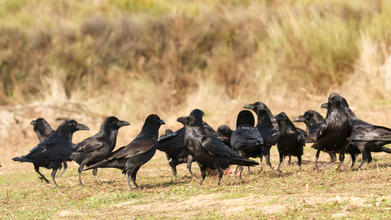
Credits: iStock (representational image)
Bird flu outbreak has been confirmed in Bihar's Bhagalpur district in Naugacha subdivision. More than 150 crows were found dead, which prompted an emergency response from the district administration.
This has led to panic among the residents, when during a morning walk on January 11, they spotted a large number of dead crows under a tree. Several birds also looked in distressed conditions. This has raised possibility of influenza outbreak among locals.
Bird Flu Outbreak In Bihar: What Is Happening Now?
Following the incident, Forest Department teams reached the spot and safely disposed of the dead birds. A joint team from the Forest and Animal Husbandry departments collected samples, which were sent to high-security laboratories in Patna and Bhopal for testing.
District Animal Husbandry Officer Anjali Kumari confirmed that reports from both laboratories detected the bird flu virus. After confirmation from Bhopal, the district administration went on high alert and launched a sanitization drive within a 10-kilometre radius of the affected area.
Authorities are also collecting samples from nearby poultry farms to rule out any spread to domestic birds. Surveillance has been stepped up across the subdivision. Officials have said the situation is under control, but strict precautionary measures are in place.
The Health Department and Animals Husbandry Department are also closely monitoring the situation. Dr. Anjali Kumari Sinha, District Animal Husbandry Officer, Bhagalpur, said, “The crows died on January 11, and at that time it was very cold, so it seemed that they died due to the cold. However, we sent samples for testing, and the Government of India has confirmed that the crows died due to bird flu.”
“So, currently, we are sanitising the affected areas. We had also sanitised the area on the 11th. In addition, zero surveillance will be conducted on all the poultry farms in this area, and samples will be sent again for testing,” she added.
Read: Bird Flu Detected in Dutch Cow, Marking Europe’s First Case
Bird Flu In Bihar: What Is It And What Are The Symptoms?
Bird flu is primarily a disease that affects birds, but it can occasionally infect humans, particularly those who come into direct contact with infected poultry or contaminated surfaces. The symptoms of bird flu in humans can vary but often resemble those of common flu, including:
- High fever (often above 38°C)
- Cough
- Sore throat
- Muscle aches
- Fatigue
- Shortness of breath
- Headaches
In severe cases, the infection can lead to more serious respiratory diseases, such as pneumonia, and can be fatal if not treated promptly.
Bird Flu In Bihar: How to Protect and Prevent Bird Flu
Given the potential for transmission to humans, it is crucial to take preventive measures to reduce the risk of infection. Here are some key steps that can be taken:
Avoid Contact with Infected Birds: Refrain from touching or handling birds that are sick or dead, especially in areas where bird flu has been reported.
Practice Good Hygiene: Wash your hands frequently with soap and water, especially after handling birds or being in environments where birds are kept.
Cook Poultry Thoroughly: Ensure that all poultry and eggs are cooked thoroughly before consumption. The virus is sensitive to heat and can be killed by proper cooking.
Use Protective Gear: If you are working in an environment where you are likely to come into contact with poultry, wear protective clothing, including gloves and masks, to minimize the risk of infection.
Stay Informed: Keep up-to-date with information from health authorities about any outbreaks in your area and follow their guidelines on how to stay safe.
NIMHANS-2 Set To Launch In North India, FM Nirmala Sitharaman Announces

Credit: Canva
Finance Minister Nirmala Sitharaman has announced the launch of National Institute of Mental Health and Neuro Sciences-2 in North India, making it the first in the area and second dedicated institute in the country during Union Budget 2026.
"There are no national institutes for mental healthcare in north India,” the finance minister said. This forces patients to travel long distances for specialized treatment, training and research-linked care," Sitharaman said of the launch.
The first National Institute of Mental Health and Neuro-Sciences (NIMHANS) is located in Bengaluru and serves as the apex center for mental health education and neuroscience research at present.
Initially named as the Bangalore Lunatic Asylum in 1847, the institution underwent changes in 1925 and was renamed Government Mental Hospital. However, in 1974, the institution was established as NIMHANS and was brought under the wing of the Ministry of Health and Family Welfare.
The launch of the new institute reaffirms the Union government’s commitment to mental health and trauma care and aims to address long-standing gaps in access to psychiatric and trauma care.
India's Ongoing Mental Health Crisis
The Ministry of Health & Family Welfare noted India contributes to 18 percent of the global population, and as per the World Health Organization (WHO), the burden of mental health problems in India is 2,433 disability-adjusted life years (DALYs) per 10,000 population.
The age-adjusted suicide rate is per 21.1 per 1,00,000 population, and the economic loss between 2012-2030 is estimated at USD 1.03 trillion.
Another study published in 2024 in Cureus, quotes a previous study from early 2021 by UNICEF and Gallup that reveals that children in India were hesitant seeking help for mental health.
READ MORE: Lucknow University Professor's Initiative Of Diary As Mental Well-being Doctor Gets Patent
According to another 2024 study, the prevalence rate of mental health issues in children and teenagers in India was determined to be 23.33 percent in school and 6.46 percent in the community.
The National Mental Health Survey 2016 also found that teenagers had a 7.3% prevalence of illness, distributed equally across boys and girls. However, it was greater in metropolitan metro areas, and the prevalence of anxiety issues was 3.6%, with depression-related conditions at 0.8%.
Why Is India's Youth Struggling?
A 2025 study published in the International Journal of Indian Psychology notes certain risk factors due to which the Indian youth is struggling with mental health issues:
- Family Environment and Parenting Style: Dysfunctional family dynamics lead to poor mental health outcomes in young people.
- Substance Use and Peer Influence: Interaction with antisocial peers can lead to substance abuse and further lead to depression.
- Academic Pressure and Performance Anxiety: An intense pressure to perform in academics, and the parental expectation that leads to risk of depression in youth.
- Socioeconomic Status: Youth from financially disadvantaged families face higher risks of depression and anxiety due to income struggles and financial stress.
- Violence, Abuse, and Trauma: Exposure to physical or sexual abuse significantly increases the likelihood of depression and anxiety in young people.
- Gender, Identity, and Relationship Issues: Struggles with gender, sexuality, or relationships heighten vulnerability to mental health crises, often worsened by stigma and isolation.
- Urban vs. Rural Settings: Urban youth report more mental health disorders than rural youth, linked to academic pressure, social isolation and weaker family support.
- Pandemic-Related Stress: The COVID-19 pandemic intensified depressive symptoms among students, with women disproportionately affected due to added household burdens and limited social interaction.
What Else Was Announced In Budget 2026?
Sitharaman also proposed launching a scheme to support states in setting up five regional medical hubs, which will include AYUSH centers and infrastructure for diagnostics and post-care rehabilitation.In addition, ten new allied health disciplines will help train one lakh professionals, strengthening the healthcare support system across hospitals, wellness centers and medical tourism facilities.
Furthermore, she noted that no mental health institutions have been set up in North India and to boost care, the government will set up centers in Ranchi, Jharkhand and Tezpur, Assam.
Namrata Jain, Psychotherapist, Relationship Expert and Founder at Out Aloud commended the government's initiative to improve mental health care and told Healthandme: The focus on mental health alongside Ayurveda and wellness in this budget is a powerful affirmation that holistic wellbeing matters. Now is the time to harmonize our ancient Indian sciences with contemporary mental health frameworks to nurture resilient, compassionate communities.
"It feels deeply reassuring to see mental health, Ayurveda and wellness coming together in this budget. Healing has always been holistic and this is our reminder to blend ancient Indian wisdom with modern, trauma-informed mental health practices to support gentler, deeper, more human wellbeing."
Keltie Knight Was Gaslit By Doctors For Years Before Getting A Hysterectomy

Credits: Instagram
Keltie Knight, Canadian-born American television presenter and a podcast host, now 43, a couple of years ago had blurry vision. She writes for Telegraph UK that she could not read the teleprompter on set. "I started to panic," she says.
She used to be a professional ballet before her career on television took off. She writes this made her so busy that her health started to deteriorate more and more. "I was so tired that I could have easily slept for 22 hours a day. The walk from my room to the bathroom became so exhausting that sometimes I wouldn’t have the energy to go. My hair started falling out, and I sometimes had rashes and hives all over my body for no reason," she writes.
She usually brushed off the most of it as stress-related, but one day her symptoms became unexplainable.
Keltie Knight Health Update: The Symptom That Triggered Her
She says that three years ago, things got "really bad". She could not see from one of her eyes, and her gum bled "profusely". She was depressed and started to blame herself for having a big career that destroyed her health.
"I told only my husband, Chris, how I was really feeling. I never took a sick day and never complained to anyone at work that I was feeling unwell. Chris was extremely supportive, but I wasn’t myself and I knew it was hard on him. I would come home after a long day of masking and be on another planet. I certainly wasn’t a present wife and constantly worried that I was never going to get better," she says
Keltie Knight Health Update: Doctors Gaslit Her For Years
She said that during that period she visited 15 different doctors. She had also gotten multiple iron blood infusions and tests for every possible disease. "Most of them just told me to eat more vegetables and get some rest."
After a lot of trial and error, she finally found a specialist who carried out an in-depth blood test, which is how she got a diagnosis. She was diagnosed with microcytic anaemia.
Keltie Knight Has Microcytic Anaemia: What It Means
It is a condition where a person's red blood cells are smaller than usual because they do not have enough hemoglobin, which is a protein present in the red blood cell. It helps the red blood cells carry oxygen throughout the body. Low hemoglobin also causes your red blood cells to be paler than normal or "hypochromic".
Keltie Knight Health Update: What Happened After The Diagnosis?
She was also told that her ferritin levels were "incredibly low". It was 8, while 15 is the standard.
"My doctor had a conversation with my gynaecologist and they decided that, due to my deficiency, the best thing they could do was to stop my period completely, because I was losing too much blood," writes Knight.
"We talked through a few options and decided on an ablation, which is effectively burning the lining of the uterus," she writes about her treatment options. However, when she went in for an MRI, her uterus was "heart-shaped", which meant an ablation could not work because the thermal balloon would not be able to reach all parts of it.
Keltie Knight Health Update: Treatment Options
Hysterectomy was the only solution she was left with. This meant that her uterus and her cervix would be removed. Which also meant that she would not only not get her period, but would never be able to have children.
"I had already decided that motherhood wasn’t the right path for me, but it was still a hard decision to make. On the one hand, I was desperate to get better, so I was willing for them to take my uterus and cervix out; on the other, getting a hysterectomy was so final," she writes. Throughout all, she notes, her husband Chris was very supportive.
While the surgery was successful, returning to work was a little bumpy. Returning to work after a month and standing up for long periods was difficult. She says she wore a corset under her clothes "to keep everything tight and upright" in a hope that things would eventually improve, and they did.
Eight months later, she does not have the rashes anymore, her hair is shiny and gorgeous, as she writes, and she was not tired all the time. "I finally felt like myself again."
- Follow Us :


© 2024 Bennett, Coleman & Company Limited