
- Health Conditions A-Z
- Health & Wellness
- Nutrition
- Fitness
- Health News
- Ayurveda
- Videos
- Medicine A-Z
- Parenting
US Government Is Erasing Sexual Orientation From Medical Research Findings—What Does It Mean For Healthcare?
Credits: Canva
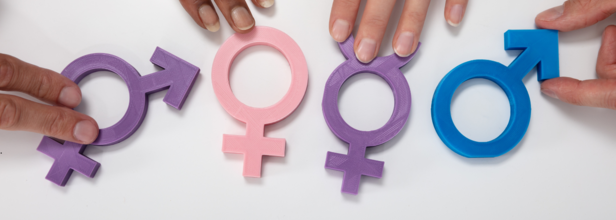
Two California researchers have alleged that the US Government health journal instructed them to remove references to gender and sexual orientation from a scientific manuscript that had already been accepted for publication. Their paper examine smoking habits among the youth in the rural areas and was set to be published in Public Health Reports, the official journal of the US Surgeon General and the US Public Health Service.
However, in the blog post, the two researchers Tamar Antin and Rachelle Annechino, revealed that they were asked to delete terms such as "gender", "cisgender" and "equitable" to comply with an executive order signed by President Donald Trump on his first day back in office. The order directs government agencies to eliminate what it calls "gender ideology" from all official publications.
The blog post also included screenshots that suggested deletion of demographic data on sexual orientation. It also included categories like "straight or heterosexual", "gay and lesbian", "bisexual" and "unknown".
A note accompanying the deletions stated: “Per the Executive Order, we cannot include language surrounding gender.”
Rather than complying with the order, the researchers decided to withdraw their paper entirely.
“In normal times, this would never happen,” said Antin, who serves as the director of the Center for Critical Public Health, a California-based research organization. “I have never been asked to censor any articles for publication, nor, to my knowledge, have any of my colleagues ever been asked to censor words, word choice, or remove data from a publication in response to an executive order from the White House. This is extremely unusual.”
The Rise Of Gender Politics in the US
Ever since Trump returned to the White House, gender identity and sexuality have become the key political battleground. His administration has moved to roll back the policies which address gender issues and also policies that promote diversity, equity, and inclusion (DEI) and has targeted LGBTW+ rights in multiple sectors from education to healthcare.
The executive order that he had passed also has led to censorship of researcher's work, as he and the people in his administration believe that gender identity and sexual orientation have been overly politicized.
How Does It Impact Healthcare And Medical Research?
Public health experts stress that including gender and sexual orientation in research is not a political statement but a scientific necessity. These demographic factors play a crucial role in health outcomes, particularly in studies related to smoking, substance use, mental health, and disease prevention.
Antin noted that removing this data could weaken public health efforts. “Understanding how smoking fits into the lives of rural young adults of all genders and sexual orientations can help tailor more effective public health messages,” she explained.
The censorship of such information could have broader implications:
Medical Research Gaps: Without gender and sexual orientation data, researchers may struggle to identify disparities in disease prevalence, mental health risks, or substance use patterns among LGBTQ+ populations.
Policy Decisions: Public health policies could be based on incomplete or misleading data, leading to ineffective interventions.
Funding Challenges: Research grants and funding for LGBTQ+ health issues may decline as federal agencies downplay the importance of gender-related studies.
Perez Hilton Spent 21 Days In Hospital After Taking Medication on an Empty Stomach

Credits: Instagram
Perez Hilton thanked doctors and nurses after his care at the Southern Hills Hospital in Las Vegas. He was hospitalized for 21 days after he experienced complications with the medicines he was taking for flu. In a video, he said, "My stupidity landed me in the hospital;". The celebrity blogger explained that he was taking medications on an empty stomach that led to serious health complications.
What Happened To Perez Hilton?
He posted a video on March 23 on his YouTube channel and said, "It was the worst and best thing that's ever happened to me". The 48-year-old, whose real name is Mario Armando Lavandeira Jr, and goes by Perez Hilton said that he had flu for "about a week" and started to take his medications to get better.
However, the biggest mistake he did was taking those medications on an empty stomach. Though, he shares that he has never had food before any of his medications.
Turns out, the medications were hard on his stomach and intestines. After a week of taking the medications on an empty stomach, he developed an ulcer, a perforation and sepsis that led him to be admitted in a hospital with intense stomach pains.
“The first few days were a lot of pain and constant tests,” Perez recalled. “Because they couldn't find where the perforation was.” He added: “Eventually, after five days, I ended up having laparoscopic surgery. Surgery where they don’t cut you up, but they miraculously make these incisions.”
He aid that surgeons used cameras to "literally flip around all of my organs, trying to find the perforation first. Then after flipping around all of my organs, washing me our 'cause I had so much infection in there. So much infection". He also said that his lungs had to be drained out and that his body "kept falling apart". He was also put on heart medication because his "heart got out of control".
Read: World Tuberculosis Day 2026: Theme, Origin, And Significance
Due to his long hospital stay, he developed another infection and for two weeks he could not eat normal food. “It was such a slow process,” Perez shared. “Two weeks of just sickness and then another week of getting better before I was released. The last week was hell, because I had already been in the hospital two weeks by then.”
How Is Perez Hilton Now?
Perez is now at home and would continue to receive his medication intravenously through a PICC line in his arm for 10 days. He said it is more effective than oral medications. “When I saw my kiddos—who had visited me—but when we got home we had the biggest, most cathartic group hug. And tears and tears and tears. They were so worried for their dad," he said.
He also said that he learned from his experience of being hospitalized and hopes that his video works as a "cautionary tale" to those who are watching. He said, "I hope this video can be a cautionary tale to some of you. Take medication with food. That's very important. Take medication with food. Don't have it on an empty stomach. Don't end up like me in the hospital for 21 days.”
World Tuberculosis Day 2026: Theme, Origin, And Significance
Credits: Canva
Every year on March 24, World Tuberculosis (TB) Day is observed. According to the World Health Organization (WHO) data, 10.7 to 10.8 million people fell ill with TB, globally in 2023-2024. This has made TB the world's top infectious killers. While many countries have been able to successfully reduce the cases of TB, there has been resurgence of the disease in Indonesia, Myanmar and the Philippines. While in the United States and in high-income European nations, the infection levels remain low, however, the disease has not been fully eradicated.
World Tuberculosis Day 2026: Theme
This is why, this year's theme is 'Yes! We can end TB!' As per the WHO, this is a bold call to action and a message of hope that affirms that it is possible to get back on track and turn the tide on the TB epidemic, even in a challenging global environment. With decisive country leadership, increased domestic and international investment, rapid uptake of new WHO recommendations and innovations, accelerated action, and strong multisectoral collaboration, ending TB is not just aspirational - it is achievable.
World Tuberculosis Day 2026: Origin
The Centers of Disease Control and Prevention (CDC) notes that it was on March 24, 1882, when Dr. Robert Koch announced the discovery of Mycobacterium tuberculosis, the germ that causes tuberculosis (TB). A century later, in 1982, the global health community recognized March 24 as World TB Day.
In 1882, the disease killed one in seven people in the US and Europe, however, Koch's discovery was significant in the elimination of TB disease.
The CDC also notes that TB germs may have been around as long as 3 million years. During ancient times, TB had several names, for instance, it was called:
- "Phthisis" in ancient Greek,
- "Tabes" in ancient Latin, and
- "Schachepheth" in ancient Hebrew.
- During the Middle Ages, health care providers referred to active TB disease of the neck and lymph nodes as "scrofula."
- In the 1700s, people referred to TB disease as "the white plague" due to the pale complexion of people with TB disease.
- In the 1800s, people called TB disease "consumption." In 1834, Johann Schonlein named the disease "tuberculosis."
- In 1909, Clemens von Pirquet invented the term "latent TB infection" to refer to inactive TB.
World Tuberculosis Day 2026: Significance
World TB Day is held annually on March 24 to raise awareness, mobilize funding, reduce stigma, and accelerate global efforts to end the tuberculosis epidemic. This disease kills thousands daily and is thus a critical call for action on prevention and treatment is important.
World Tuberculosis Day: What Is TB?
As per a Singapore Government Agency Website called Communicable Disease Agency or CDA, TB is an infectious airborne disease caused by Mycobacteirum tuberculosis.It primarily affects the lungs but can also affect other parts of your body, such as the brain, lymph nodes, kidneys, bones, and joints.
The disease is transmitted through the air when an infected person coughs or sneezes and usually requires close and prolonged contact with an infectious individuals. It cannot spread through touch or kissing.
Common Symptoms Of TB
- Persistent cough (two weeks or more)
- Persistent fever
- Coughing blood or sputum
- Night sweats
- Weight loss
- Fatigue
- Loss of appetite
- Chest pain
Your Kids’ Fast-fashion Clothing May Be Laced With High Levels of Toxic Lead

Credit: iStock
While you may be buying fast-fashion clothes that are easy on your pocket and also give your children trendy looks, a new study highlights the risk of being laced with a highly toxic ingredient: lead.
The preliminary research, based on lab tests of several shirts from different retailers in the US, found that all the samples exceeded the country’s federal regulatory lead limits.
The US Consumer Product Safety Commission currently has a 100 parts per million (ppm) lead limit for children's products like toys and clothing.
"I started to see many articles about lead in clothing from fast fashion, and I realized not too many parents knew about the issue," said Kamila Deavers, principal investigator of the study, at Marian University in the US.
Deavers began the study after her young daughter’s lab reports showed elevated levels of lead in her blood from toy coatings.
How was study conducted?
The team tested 11 shirts that spanned the rainbow—red, pink, orange, yellow, gray, and blue. All brightly colored fabrics, particularly reds and yellows, showed higher levels of lead compared to more muted tones.
"We saw that the shirts we tested were all over the allowed limit for lead of 100 ppm," said Priscila Espinoza, from Marina.
The researchers explained that some manufacturers use lead (II) acetate as an inexpensive way to help dyes stick to the materials and produce bright, long-lasting color.
Children At Greater Risk
The researchers found the risk is particularly higher among younger kids as they tend to playfully suck or chew their clothes during play.
"Even briefly chewing these fabrics could expose children to dangerous lead levels,” they found in the study, to be presented at the forthcoming meeting of the American Chemical Society.
According to the US Environmental Protection Agency (EPA), lead exposure can lead to behavior problems, brain and central nervous system damage, as well as other negative health effects in children.
The agency considers children under six years old to be most at risk from exposure. Even low levels of lead in the blood of children can result in:
- Behavior and learning problems
- Lower IQ and Hyperactivity
- Slowed growth
- Hearing Problems
- Anemia
The researchers also pointed out safer alternatives to lead-based dyeing agents that already exist. These include natural and less harmful substances such as:
- Plant-based tannins (e.g., oak bark, pomegranate peel)
- Rosemary
- Alum.
- Follow Us :


© 2024 Bennett, Coleman & Company Limited