
- Health Conditions A-Z
- Health & Wellness
- Nutrition
- Fitness
- Health News
- Ayurveda
- Videos
- Medicine A-Z
- Parenting
US Weighs China Travel Warning As Chikungunya Cases Near 5,000: Report
Credits: Canva
The United States Centers for Disease Control and Prevention (CDC) is assessing a potential travel notice for China following a sharp rise in cases of chikungunya, a mosquito-borne viral infection that has sparked public health alarms in southern China, as reported by the Independent and the South China Morning Post.
Nearly 5,200 infections have been reported in the Guangdong province since early July, with most of them concentrated in the city of Foshan. Health officials there have since escalated their emergency response to a level III alert, which signals a “relatively major” public health threat in China’s four-tier system.
While the CDC has not yet published a formal advisory, a spokesperson told The Independent that the agency is “aware of the reported chikungunya outbreak in Guangdong Province in China and is currently assessing the size and extent of the outbreak.”
What is chikungunya?
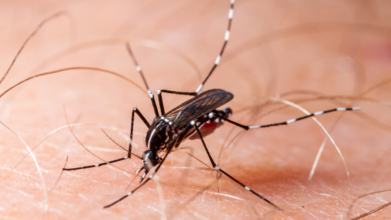
Chikungunya is a viral infection transmitted by the bite of an infected Aedes mosquito, the same mosquito species responsible for dengue and Zika. Symptoms typically include sudden onset of fever and joint pain, but may also include headache, muscle pain, swelling, and rash.
Although most cases are mild and self-limiting, some infections can lead to prolonged joint pain or, in rare cases, long-term complications. Serious outcomes are more likely among those with pre-existing health conditions. There are no antiviral treatments available, so prevention, particularly mosquito control and bite avoidance, remains the primary approach.
Vaccines against chikungunya have recently become available and are recommended for travelers to high-risk areas, although they are not yet widely accessible.
According to local health authorities in Foshan, around 95% of reported cases have been mild, with patients recovering within a week. However, the outbreak’s rapid spread has raised concern among international health bodies.
Global spread and WHO alert
The outbreak in China follows a global pattern of chikungunya resurgence. The World Health Organization (WHO) issued an alert last week warning of the risk of the virus repeating its global spread from two decades ago. Diana Rojas Alvarez, a medical officer with WHO, said that nearly 5.6 billion people across 119 countries live in areas where the virus could potentially spread.
Chikungunya was first identified in 1952 in Tanzania and has since been detected in more than 110 countries, including major outbreaks in India, Italy, and the Americas. The virus is not spread from person to person; instead, it is carried by mosquitoes that have fed on infected individuals and then pass it to others.
The concern is not just local: international travel plays a key role in how the virus crosses borders. Infected travelers returning to or visiting countries with mosquito populations capable of transmitting the virus can trigger new outbreaks.
China’s response: Mosquito control and surveillance
The first case in this outbreak was reported in Foshan’s Shunde district on July 8 and was believed to be imported. Since then, local and national health authorities have moved quickly to contain the spread.
Measures taken include the use of drones to detect rooftop water accumulation, the release of larva-eating fish into lakes, and widespread public awareness campaigns. Residents have been urged to eliminate standing water, install window screens, and wear protective clothing.
Hospitals in affected areas have increased bed capacity for confirmed cases and designated specialized treatment centres. Border controls have been stepped up in Hong Kong to prevent imported cases from mainland China, with expanded testing capabilities introduced at key entry points.
CDC travel warnings: What it means for travelers
The CDC’s travel health notices are used to inform travelers about global disease risks and provide precautionary guidelines. The warning system has four levels, ranging from “practice usual precautions” (Level 1) to “avoid all travel” (Level 4).
As of now, China has only a Level 1 travel health notice for measles. However, the CDC has issued Level 2 notices for chikungunya in several countries including Bolivia, Kenya, and Madagascar in recent months.
If the CDC decides to escalate China’s status, it would be a significant development, both in terms of travel planning and diplomatic perception.
US–China tension and public health
The potential issuance of a travel notice also comes against the backdrop of complex US–China relations. While the CDC’s move would be grounded in public health data, the optics of a travel warning could have broader implications.
On Thursday, Chinese foreign ministry spokesperson Guo Jiakun responded to the reports, saying that China is in communication with the WHO and “making every effort to ensure a safe environment for travelers.”
The WHO has not issued any travel restrictions related to the outbreak but continues to monitor the situation closely.
A word of caution for travelers
With mosquito-borne diseases on the rise globally, driven by climate change, urbanization, and increased mobility, health experts advise travelers to stay informed and take preventive measures.
“Mosquito control is key,” said an official from the Hong Kong Centre for Health Protection. “Simple actions like using insect repellent, sleeping under mosquito nets, and avoiding stagnant water can go a long way in preventing infection.”
As global health agencies monitor the chikungunya outbreak in China, travelers to affected areas should remain vigilant and stay updated with official advisories. Prevention remains the best protection in the face of a disease with no cure.
Nipah Virus Outbreak In India: Myanmar Airport Tightens Health Screenings

Credits: iStock
Nipah virus outbreak in India triggered airport screenings of travelers, including in Myanmar. Many reports claim that passengers are being checked in similar ways as they were during the COVID-19 virus spread. Health and Me reported how in Thailand the health screenings of foreign travelers were taken seriously, a similar case is seen in Myanmar.
Nipah Virus Outbreak In India: How Are Travelers Screened In Myanmar?
Myanmar has tightened its health screenings and surveillance at Yangon International Airport to prevent any possible entry of Nipah virus case, reported The Global New Light of Myanmar. Travelers who are arriving from India, especially West Bengal are given special attention to check for any fever or other Nipah-related symptoms, read the report by the Ministry of Health.
The ministry also noted that health screening of passengers arriving from abroad is being conducted in line with the established guidelines for infectious diseases that could give rise to public health emergencies, Xinhua news agency reported.
Informational leaflets too are being distributed among travelers to be aware of the symptoms. Posters are also displayed at the airport. Along with all that, disease prevention and control measures are also being carried out in the airport.
Screening measures are also enhanced and implemented at Mandalay International Airport.
Nipah Virus Outbreak In India: What Is It?
As per the World Health Organization (WHO), Nipah virus infection is a zoonotic illness that is transmitted to people from animals, and can also be transmitted through contaminated food or directly from person to person.
In infected people, it causes a range of illnesses from asymptomatic (subclinical) infection to acute respiratory illness and fatal encephalitis. The virus can also cause severe disease in animals such as pigs, resulting in significant economic losses for farmers.
Although Nipah virus has caused only a few known outbreaks in Asia, it infects a wide range of animals and causes severe disease and death in people.
Nipah virus is infectious and can spread from animals like bats and pigs to humans through bodily fluids or contaminated food. It can also pass between people through close contact, especially in caregiving settings. While it can spread via respiratory droplets in enclosed spaces, it is not considered highly airborne and usually requires close, prolonged contact for transmission. Common routes include direct exposure to infected animals or their fluids, consuming contaminated fruits or date palm sap, and contact with bodily fluids such as saliva, urine, or blood from an infected person.
Nipah Virus Outbreak In India: What Are The Common Symptoms?
- Fever
- Headache
- Breathing difficulties
- Cough and sore throat
- Diarrhea
- Vomiting
- Muscle pain and severe weakness
Measles Outbreak In Disneyland: An International Traveler Gets Infected
Credits: iStock
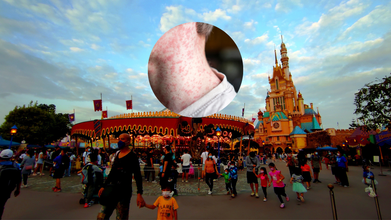
Measles Outbreak in Disneyland: Health officials in Orange County sounded alarmed after they confirmed a recent measles case in a child who visited Disneyland last week. The Orange County Health Care Agency said on Saturday that the child was an international traveler who arrived at Los Angeles International Airport (LAX). The child then went to Disneyland on Wednesday and that is what became the potential exposure window.
As per the health authorities there could be two possibilities of getting the disease:
- Goofy’s Kitchen in Disneyland Hotel, 10:30 a.m. to 1:30 p.m. on Wednesday
- Disneyland Park and Disney California Adventure Park, 12:30 p.m. to closing on Wednesday.
Health authorities said they are coordinating with Disneyland to contact employees who may have been exposed to measles. According to Orange County health officials, visitors present at the theme park during the identified period could develop symptoms between seven and 21 days after exposure.
Measles Spreads Easily, Experts Warn
Dr Danielle Curitore, a pediatrician at St Joseph Heritage Providence, explained NBC Los Angeles that measles is highly contagious and spreads through respiratory droplets.
“Very similar to these respiratory viruses, but even more so because it can be in a close setting and if that person with measles sneezes or coughs and transmits some respiratory droplets, you are exposed,” she said. “And that room that they’ve been in is also contagious for at least two hours after they left.”
Measles Outbreak In Disneyland: Vaccination Remains The Strongest Protection
Doctors emphasize that individuals who have received the measles vaccine, particularly the recommended two doses, are generally well protected against the disease. Those who have not been vaccinated face a significantly higher risk of infection.
Read: Measles Elimination Status In The US Is ‘Not Really’ At Risk, CDC Says As Cases Surge
“Your best protection is to be vaccinated, so if you’ve been vaccinated against measles and you’ve received your two doses of measles vaccine at any point, those are usually given in childhood but you do continue to be immune as you get older,” Dr Curitore added.
New Measles Cases Reported In Southern California
Health officials have confirmed at least five new measles cases in Southern California, prompting renewed warnings and surveillance. Authorities are closely monitoring the situation to limit further spread and identify potential exposure chains.
What Is Measles?
Measles, also known as rubeola, is an extremely contagious viral illness that typically causes high fever, cough, runny nose, red and watery eyes, and a characteristic rash that begins on the face and spreads downward across the body. It spreads through respiratory droplets and can lead to severe and sometimes fatal complications, including pneumonia and inflammation of the brain known as encephalitis.
Although it is preventable through the safe and effective MMR vaccine, measles remains a serious threat in many regions. There is no specific cure, and treatment focuses on managing symptoms, according to the Cleveland Clinic.
Measles Outbreak In Disneyland: Common Symptoms To Watch For
Experts say measles symptoms often begin with signs similar to a common cold, including cough, congestion, and high fever. Some patients may also develop conjunctivitis.
“Sometimes it just starts out like the common cold cough congestion: high fever sometimes conjunctivitis can be part of it,” Dr Curitore said. “Then day three to five, you get that very classic measles rash, which usually starts on the face, center of the body.”
World Cancer Day 2026: Theme, Origin, And Significance
Credits: iStock
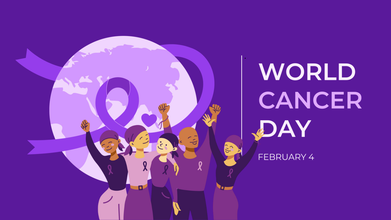
Cancer is not just a medical diagnosis, it is also a deeply personal journey towards recovering. Ever story is different, every experience and struggle of cancer patients is different. This is why the theme of World Cancer Day 2025-2027 is 'United By Unique'.
Every year on February 4, World Cancer Day is observed to raise awareness among the population about cancer. The day also aims to encourage prompt detection and prevention and support global initiatives to reduce the cancer burden.
World Cancer Day 2026: Origin
For the first time, World Cancer Day was celebrated on February 4, 2000 at the World Cancer Summit Against Cancer for the New Millennium which was held in Paris.
The Charter of Paris Against Cancer signed by global leaders and the Union for International Cancer Control established this day to be officially known as Cancer Day to promote research, prevent cancer, and improve patient services.
World Cancer Day 2026: Theme
The theme 'United by Unique' is part of the three year long campaign from 2025 to 2027 that highlights that every cancer journey is unique. However, the theme highlights that despite this uniqueness, care could be promoted by staying united and to decrease inequalities. It also focuses on person centered care, compassion and seeing the person before the patient.
The campaign of World Cancer Day notes: "People-centred care is an approach that focuses on the needs, values, and active participation of individuals, families, and communities in the planning, delivery, and evaluation of care. This approach represents a fundamental shift in how health and cancer services are designed and delivered, placing those impacted by cancer at the heart of health systems."
World Cancer Day 2026: Significance
World Cancer Day plays a vital role in promoting awareness among population. It also brings attention to early detection and initiates discussions about the symptoms that people may have missed which later turned out to be cancer. Furthermore, this day also helps people fight the stigma and misinformation around cancer.
The impact this day made last year was great. As per the World Cancer Organization Report, in 2025, 900 activities around cancer were conducted in 102 countries. Over 600 people shared their stories in different forms, including texts, videos, art, and more. The campaign reached over nine million engagement, with six billion impressions.
World Cancer Day 2026: What Is Happening In India?
India is witnessing a sharp rise in its cancer burden, with recent reports highlighting a steady year-on-year increase in new cases. Experts link this surge to a mix of modern lifestyle changes, widespread tobacco consumption, environmental exposure, and limited access to early screening in several regions. Estimates from the National Cancer Registry Programme place the lifetime risk of developing cancer in India at roughly 11 per cent, though this risk varies significantly across different states and populations.
In metropolitan hubs such as Delhi, as well as in states including Uttar Pradesh, Maharashtra, West Bengal, and Tamil Nadu, the number of newly reported cancer cases has climbed into the hundreds of thousands. This trend reflects not only a genuine rise in incidence but also improved diagnostic systems and reporting mechanisms that are helping identify cases more accurately.
Tobacco-related cancers continue to account for a substantial share of cases, particularly among men. At the same time, shifting lifestyle patterns, urban pollution, and environmental hazards are contributing to the broader increase in cancer rates across the country.
India’s cancer response framework includes preventive strategies such as awareness drives, early screening programmes, and vaccination initiatives like the HPV vaccine to reduce cervical cancer risk. Despite these efforts, significant gaps remain in terms of healthcare access, early diagnosis, and public awareness, which continue to challenge effective cancer control nationwide.
- Follow Us :


© 2024 Bennett, Coleman & Company Limited