
- Health Conditions A-Z
- Health & Wellness
- Nutrition
- Fitness
- Health News
- Ayurveda
- Videos
- Medicine A-Z
- Parenting
Utah To Become The First State To Ban Fluoride In Drinking Water

Credits: Canva
With many developments in the US in its health sector ever since Trump has become its 47th President, now, Utah could become the first state to ban fluoride in its drinking water. This is alarming, say the public health experts and dentists who have noted this mineral's role in reducing tooth decay.
The bill is sent by the Republican-controlled statehouse who sent the legislation to Gov. Spencer Cox, and if the bill is signed into law, it would prohibit adding fluoride to public water systems. It would also bar other cities and counties from requiring the mineral in their water.
Why Do You Need Fluoride?
Fluoride plays an important role in strengthening tooth enamel and is more resistant to cavities. It also reduces the amount of acid produced by bacteria on teeth, which in turn reduces plaque. Interestingly, this mineral also helps reverse early decay and remineralize tooth enamel. Fluoride stimulates new bone formation, thereby, playing a pivotal role in the skeletal system.
It is also important in protecting bones from mineral loss, as in osteoporosis. Important sources of fluoride are drinking water, mouthwash, toothpaste and supplements. However, on the contrary, daily intake of high amounts of fluoride has been associated with fluorosis, discoloration and mottling of the teeth during development. However, for the Republican government, this must be banned as it is against their MAHA branding of Make America Healthy Again. Ever since RFK Jr. has become the secretary of Health and Human Services, he has made sure to implement bans on things he believes are not healthy, which includes fluoride in drinking water, which as per him should be banned altogether.
The Logic Behind
While the opponent are arguing that it infringes on communities' right to decide to use the cavity-fighting mineral and also departs from decades of science demonstrating fluoride's enamel strengthening. Those in favor argue that this is a way to medicate the public without informing them, and if the bill is passed, it would prevent the government from medicating the public without its consent.
Fluoride In The Past
While debates over fluoride use aren’t new—Grand Rapids, Michigan, became the first U.S. city to fluoridate its water in 1945—the issue has traditionally been local rather than political. Interestingly, some Democratic-leaning states, like Oregon and New Jersey, have lower fluoridation rates, while Republican strongholds, such as Kentucky and South Carolina, have some of the highest.
Most Americans consume fluoridated water, including nearly half of Utah’s population. According to the CDC, community water fluoridation, which adjusts fluoride levels to recommended amounts, helps reduce oral health disparities. While most communities add fluoride voluntarily, about a dozen states mandate it—some for over 50 years.
In Utah, fluoridated water is available in Salt Lake County, Davis County, and Brigham City. Residents in these areas experience 25% to 50% less tooth decay than those without fluoridation, according to the Utah Dental Association. The group strongly opposes House Bill 81 and has urged residents to call Gov. Spencer Cox’s office to demand a veto.
“This bill contradicts efforts to reduce dental decay and strengthen enamel,” the association stated, as reported in the Washington Post.
The American Dental Association also weighed in, sending a letter to Cox on Tuesday urging him to reject the bill.
“If passed, Utah would become the only state to end this preventive health practice, which has been trusted and tested for over 75 years,” the letter stated, calling fluoridation a key public health strategy.
However, Rep. Stephanie Gricius (R), the bill’s sponsor, argues the legislation is about personal choice.
“Community water fluoridation removes the element of informed consent, which is essential in good healthcare policy,” she wrote in an email to The Washington Post, expressing optimism that Cox will sign the bill given its broad legislative support.
‘Contaminated’ wet wipes linked to fatal bacterial infections, death in UK
Credit: Canva
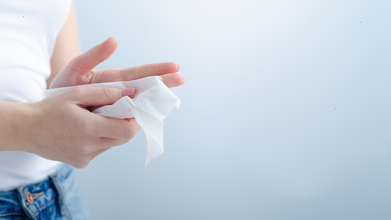
The UK Health Security Agency (HSA) and the Medicines and Healthcare products Regulatory Agency (MHRA) have warned people against using non-sterile alcohol-free wipes in their homes and first aid kits, over their link to a fatal bacterial infection, which has also led to death in the country.
After testing almost 200 products, the officials identified Burkholderia stabilis -- a type of bacteria found naturally in the environment, including in soil and water -- in four brands of skin cleansing wipes intended for first aid.
These brands of non-sterile alcohol-free wipes have been contaminated and have caused serious infection with the B. stabilis. These include:
- ValueAid Alcohol Free Cleansing Wipes
- Microsafe Moist Wipe Alcohol Free
- Steroplast Sterowipe Alcohol Free Cleansing Wipes
- Reliwipe Alcohol Free Cleansing Wipes
While B. stabilis rarely causes infection in healthy individuals, it can be dangerous to people with a weakened immune system, cystic fibrosis, or malignancy, the authorities said. Further, patients using intravenous lines at home are also at higher risk of developing infection.
The MHRA had, in 2025, also issued a warning against the four products.
“There have been 59 confirmed cases of Burkholderia stabilis associated with some non-sterile alcohol-free wipe products -- identified in an outbreak in the United Kingdom from January 2018 to 3 February 2026,” the joint statement said.
“A small number of cases continue to be detected. These have included some serious infections which have required hospital treatment, and one death has been attributed to Burkholderia stabilis infection,” it added.
The health agencies also stressed that only wipes marked as “sterile” should be used on broken skin and only used to clean intravenous lines if instructed by a patient’s medical team.
“We are reminding the public not to use, and to dispose of, certain non-sterile alcohol-free wipes, which have been linked to an outbreak of Burkholderia stabilis,” said James Elston, consultant in epidemiology and public health at UKHSA.
“Those who still have any of the affected products should stop using them immediately and dispose of them in standard household waste,” the UKHSA added.
A recent report by Eurosurveillance, early this month, also confirmed 59 cases of B. stabilis associated with contaminated non-sterile alcohol-free wipe products in the UK as of February.
Also read: What Kind Of Wipes Should You Use To Clean Wounds? Here's What UKHSA Suggests
Key Symptoms To Watch For
Anyone who has used non-sterile, alcohol-free wipes does not need to seek medical care unless they develop symptoms of infection, such as:
Wound infection: redness, swelling, warmth, increased pain, or pus/drainage from the site
Infection involving an IV line: redness, swelling, or pain at the insertion site, along with fever or chills
Safety Advice by UKHSA And MHRA
The UKHSA offers the following guidance for safe wipe use:
- Use only sterile wipes on broken skin, wounds, or scratches to reduce the risk of germs entering the body.
- Check that your first aid kit contains only wipes labelled “sterile,” ensure the packaging is intact, and dispose of any out-of-date or damaged products.
- Only use wipes on IV lines if specifically instructed by your healthcare team.
Dr Alison Cave, MHRA Chief Safety Officer, emphasized that wipes intended for medical purposes are classed as medicines.
These products do not have the necessary medicines authorization, and steps are being taken to enforce compliance.
“If you have these wipes at home or in a first aid kit, check the label and only use wipes marked as ‘sterile’ on broken skin,” Dr. Cave advised.
“Healthcare professionals should follow instructions provided in the national patient safety alert.”
Anyone who has used alcohol-free wipes and is concerned about possible infection should speak to a healthcare professional.
Passive Euthanasia: Harish Rana’s Case May Reshape End-of-life Protocols, Say Experts
Credit: iStock
The Supreme Court of India, in a landmark decision, authorized the removal of life support for Harish Rana, a 31-year-old man in a vegetative state since 2013.
This marks the country's first Court-approved case of passive euthanasia without a prior living will. The Court ruled that the "right to die with dignity" is a fundamental part of the right to life under Article 21.
Also read: Supreme Court Allows 1st Passive Euthanasia For Man In Vegetative State For 13 Years
Speaking to HealthandMe, the experts said that the landmark ruling will enable families and doctors to make compassionate decisions and may also influence end-of-life protocols.
There are several medical conditions where patients undergo prolonged suffering despite treatment, with no realistic scope for recovery, sometimes for decades.
“This judgment could have a significant impact on end-of-life care practices in Indian ICUs. Many patients remain in prolonged vegetative states with no meaningful quality of life, often sustained only through artificial life support,” Dr. Sandeep Dewan, Senior Director, Critical Care & Chairman ECMO Program, Fortis Gurugram, told this publication.
“The ruling reinforces that while preserving life is important, the quality and dignity of life must also be considered, and it provides clearer pathways for families and doctors to make compassionate decisions in such situations,” he added.
Harish was a BTech student in Chandigarh who suffered severe traumatic brain injury after falling from the fourth floor of his paying guest accommodation in August 2013.
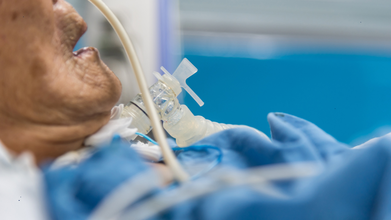
Since then, he has remained bedridden and was being treated with Clinically Administered Nutrition (CAN), where surgically installed PEG tubes helped him with breathing and nutrition.
The apex Court, in its ruling, noted that it can just prolong his biological existence, but it will not lead to any therapeutic improvement.
With the Harish Rana judgment, the apex Court today clarified how passive euthanasia should be applied in cases where a patient’s life is being supported by feeding tubes.
The top Court also waived off the reconsideration period of 30 days and noted that the medical treatment, including the CAN administered to the patient, can be withdrawn or withheld.
"Doctors and hospitals have often been reluctant to stop tube feeding in such patients, fearing that it could be interpreted as 'starving the patient to death',” Dr. Rajeev Jayadevan, Ex-President of IMA Cochin and Convener of the Research Cell, Kerala, told HealthandMe.
“Today’s ruling clarifies that artificial nutrition and hydration are indeed forms of medical treatment. Therefore, withholding such artificial feeding can be considered withdrawal of life-sustaining medical support in situations where treatment offers no prospect of recovery and only prolongs suffering,” he added.
Passive Euthanasia In India
Passive Euthanasia allows a terminally ill or irreversibly comatose patient to die naturally. It involves deliberately withholding or withdrawing life-sustaining treatments (like ventilators, feeding tubes, or medication). It has been legal since 2018, but under strict guidelines.
On the other hand, active euthanasia or assisted suicide for terminally ill patients is legal in several countries, but is not permitted in India.
The Aruna Shanbaug Case (2011) paved the way for passive euthanasia in India.
Shanbaug was a nurse at Mumbai's KEM hospital who remained in a vegetative state for 42 years after an assault in 1973. The hospital staff cared for her and did not stop treatment till she passed away naturally in 2015.
However, in the 2011 Aruna Shanbaug judgment, the SC allowed passive euthanasia by permitting the withdrawal or withholding of life-sustaining treatment under strict legal safeguards.
This framework was further clarified in the 2018 Common Cause judgment, which recognized advance directives or living wills.
Later in 2023, the SC modified the guidelines, noting that withdrawal of life support is permissible only after the approval of the Primary and Secondary Medical Boards.
A Living Will
Dr. Jayadevan noted that, as death is a certainty for all who are living, greater awareness must be created on adults preparing a "Living Will or Advanced Directive".
A Living Will is essentially made when individuals are "still in good health— documenting one’s preference for specific treatment measures in the event of a terminal illness occurring in the future”.
“This will help relatives and doctors to take the right decisions and avoid unnecessary treatment measures in such situations. Unlike the conventional Will that is executed after death, a Living Will is implemented when a person is still alive,” the doctor said.
Supreme Court Allows 1st Passive Euthanasia For Man In Vegetative State For 13 Years

Credit: iStock
In a landmark judgement, the Supreme Court today allowed passive euthanasia for a 32-year-old man, living in a vegetative state for the last 13 years.
A bench comprising Justice JB Pardiwala and Justice KV Viswanathan allowed the withdrawal of life support for Harish Rana, a resident of Ghaziabad, who has been in a coma and kept alive on tubes for breathing and nutrition after sustaining severe head injuries following a fall from a building in 2013 in Chandigarh.
Also Read: Metal Particle Found In Ibuprofen, Drug Now Recalled
It is the first known case of a court-ordered passive euthanasia in India, since it was legalised in 2018 and modified in 2023, recognizing the fundamental right to die with dignity.
"Harish Rana, presently aged 32 years, was once a young, bright boy. He met with a tragic life-altering accident after a fall from the fourth floor of his paying guest accommodation. His brain injury left him in a condition of Persistent Vegetative State (PSV) with 100 percent quadraplegia... Medical reports show that his medical condition has not improved in the past 13 years," LiveLaw quoted the bench as saying.
The Court noted that the continuation of his treatment -- Clinically Administered Nutrition (CAN) via surgically installed PEG tubes -- can just prolong his biological existence but will not lead to any therapeutic improvement.
What Is The Case Of Harish Rana?
Harish was a BTech student in Chandigarh who suffered severe traumatic brain injury after falling from the fourth floor of his paying guest accommodation in August 2013.
Since then, he has remained bedridden and dependent on others for all activities of daily life.
Harish's father, the petitioner, first approached the Delhi High Court in 2024, seeking permission for passive euthanasia, but was rejected as the patient was not terminally ill.
The same year, the petitioner knocked on the doors of the Supreme Court, which, though it refused to entertain the plea, directed the Uttar Pradesh government to bear the treatment expenses.
In 2025, the petitioner filed a miscellaneous application in the Supreme Court, noting that Harish's condition had no scope for improvement.
The Court then directed the constitution of a Primary Medical Board led by the District Hospital in Noida to examine his health, as well as a Secondary Medical Board constituted by the All India Institute of Medical Sciences (AIIMS).
After perusing the report, Justice Pardiwala remarked that it's a "sad report" and the man can't continue to live like this. Before passing the final order, the Court met the parents, LiveLaw reported.
The Court has asked AIIMS to provide palliative care, so that the withdrawal of CAN can be given effect to.
To maintain the dignity of death, the apex Court said that the life support must be withdrawn with a tailored plan.
1st Passive Euthanasia: What's New From The 2018 Judgment
In 2018, a five-judge Constitution Bench had recognized and given sanction for passive euthanasia, and living will/advance directives.
Later in 2023, the SC modified the guidelines, noting that withdrawal of life support is permissible only after the approval of the Primary and Secondary Medical Boards.
With the Harish Rana judgment, the apex Court today clarified how passive euthanasia should be applied in cases where a patient’s life is being supported by feeding tubes.
The top Court waived off the reconsideration period of 30 days and noted that the medical treatment, including the CAN administered to the patient, can be withdrawn or withheld.
What is Passive Euthanasia
Passive Euthanasia allows a terminally ill or irreversibly comatose patient to die naturally. It involves deliberately withholding or withdrawing life-sustaining treatments (like ventilators, feeding tubes, or medication). It has been legal since 2018, but under strict guidelines.
In Active Euthanasia, patients are administered a lethal injection to cause death. It is illegal in India and considered an offence.
The Aruna Shanbaug case in 2011 opened the door for passive euthanasia in India for the first time.
The top Court rejected euthanasia in the case of Shanbaug, a nurse at Mumbai's KEM hospital who was in a vegetative state for 42 years after an assault in 1973, as the hospital staff who cared for her for decades did not support stopping treatment.
Shanbaug continued to be under care and passed away naturally in 2015
However, in her case, the court made the judgment allowing for passive euthanasia in certain rare situations under strict conditions.
- Follow Us :


© 2024 Bennett, Coleman & Company Limited