
- Health Conditions A-Z
- Health & Wellness
- Nutrition
- Fitness
- Health News
- Ayurveda
- Videos
- Medicine A-Z
- Parenting
Wegovy And Ozempic Prices Drop As Drugmakers Reduce Costs — Here’s How Much You Will Pay Now
Credits: Public Domain
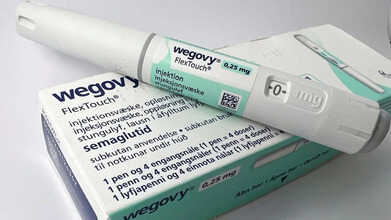
Wegovy: The maker of the well-known weight-loss and diabetes drugs Wegovy and Ozempic has lowered the prices for most of its products. Novo Nordisk announced that the monthly cost for injectable Wegovy and Ozempic will now be reduced for people who buy the medicines directly from the company, through telehealth partners or at retail pharmacies. The only dose not included in the cut is the 2 mg version of Ozempic, which will stay at 499 dollars per month.
This move is expected to reshape how much patients spend on these popular weight-loss and diabetes medicines. Here is what the change means for regular users.
Ozempic and Wegovy Prices Drop
The company’s decision comes after pressure from the Trump administration, which urged Novo Nordisk and rival Eli Lilly to reduce prices on popular weight-loss and diabetes treatments. Earlier in November, President Donald Trump announced that Medicare would begin covering Novo’s Wegovy and Lilly’s Zepbound for millions of older adults. Both companies also agreed to sell discounted versions of the medications through a new federal direct-to-consumer platform called TrumpRx, expected to launch in 2026.
Novo Nordisk continues to face challenges from compounding pharmacies that sell cheaper, non-approved copies of semaglutide, the active ingredient used in Wegovy and Ozempic.
“As pioneers of the GLP-1 class, we are committed to ensuring that real, FDA-approved Wegovy and Ozempic are affordable and accessible to those who need them,” said Dave Moore, executive vice president at Novo Nordisk. He added that the American healthcare system includes different types of coverage and purchasing options, and the updated savings programs aim to give faster financial relief to people without insurance or those choosing to pay on their own, as reported by USA Today.
Wegovy And Ozempic New Prices
Novo Nordisk has introduced new, lower prices for most doses of its leading weight-loss and diabetes medicines, Wegovy and Ozempic. The standard monthly rate for these medications is now set at 349 dollars for customers purchasing through the drugmaker, telehealth services or retail pharmacies. For first-time users, the .25 mg and .5 mg doses are priced at 199 dollars per month during the first two months. This introductory offer remains available until March 31, 2026, according to USA Today.
Many people have found GLP-1 medications difficult to afford because they carry steep price tags and are not widely covered by insurance. Wegovy’s current list price is $1,349.
Coverage has grown, but only gradually. A Mercer survey showed that in 2024, 44 percent of large employers offered coverage for GLP-1 drugs for weight management, compared with 41 percent the year before. Insurers tend to approve these medicines more readily when they are prescribed for diabetes or health issues such as heart conditions or sleep apnea.
Wegovy And Ozempic Oral Pills To Roll Out Soon
Both companies are also working on tablet forms of their injectable weight-loss drugs. Earlier this month, Trump said that the upcoming oral versions would be offered at $149 per month once they reach the market.
According to Moore, Novo expects the FDA to clear the Wegovy pill by late 2025, with availability planned for early 2026. Lilly has applied for priority review of its own oral drug, orforglipron. Novo is also awaiting the FDA’s priority review for a higher-dose injectable form of Wegovy.
Meghalaya Health Minister Warns State Has Highest HIV-Related Deaths
Credit: Hub News
Meghalaya's Health Minister Wailadmiki Shylla has raised alarm over the rising HIV cases in the state, noting that 10,293 infected residents were receiving antiretroviral treatment.
Along with this, Shylla noted that nearly 750 people have died due to the condition in the past decade with East Khasi Hills district reporting 435 of those cases. Coming in second is West Jaintia Hills with 123 cases, East Jaintia Hills with 90 cases, Ri Bhoi with 51 cases and Eastern West Khasi Hills reporting 16.
Nine deaths in West Garo Hills, eight in West Khasi Hills, seven in South West Khasi Hills, three in South Garo Hills, two in South West Garo Hills, and one in North Garo Hills have also been recorded.
During a question hour in an assembly session on February 25, the official said: "It is very unfortunate, but Meghalaya is having the highest cases in India".
He also highlighted the confidentiality clauses in the HIV and AIDS Prevention and Control Act, 2017 as well as existing social stigma as major challenges in addressing the rampant spread of the issue. “Early detection and intervention get complicated because testing requires consent and treatment cannot be forced,” he said.
“The State government has sanctioned a ₹25-crore intervention program for the next five years to address the alarming rise in HIV/AIDS cases,” Shylla declared as well as assured that the Department has been intensifying awareness campaigns to improve testing and treatment.
The global challenge of HIV/AIDS remains one of the most pressing public health issues today. According to the latest data from UNAIDS, around 38.4 million people worldwide are living with HIV/AIDS.
As of 2024–2025, India has approximately 2.5 million to 2.56 million people living with HIV (PLHIV), marking the third-largest HIV epidemic globally, underlining the need for not only medical intervention but also comprehensive awareness, education, and social change.
What Is HIV?
HIV is the virus responsible for attacking the body’s immune system, specifically targeting CD4 cells, which are crucial for the body’s defense against infections. As HIV progresses, it destroys these cells, weakening the immune system over time. If left untreated, this continuous damage can lead to AIDS.
HIV is highly contagious and can be transmitted through the exchange of bodily fluids such as blood, semen, vaginal fluids, and breast milk. It is primarily spread through unprotected sexual contact, sharing needles, from mother to child during childbirth or breastfeeding.
Without treatment, HIV progresses through three stages:
- Acute HIV Infection: This stage occurs shortly after transmission and may include symptoms like fever, fatigue, and swollen lymph nodes.
- Chronic HIV Infection: Often asymptomatic or mildly symptomatic, the virus continues to damage the immune system but at a slower rate.
- AIDS: This is the final stage, marked by severe immune damage and the presence of infections that take advantage of the compromised immune defenses.
The disease is diagnosed through blood tests or oral swabs that detect the presence of the virus or antibodies produced by the immune system in response to the virus. Early detection of HIV is crucial, as it allows for timely intervention and treatment, which can prevent the virus from progressing to AIDS.
For HIV, the primary treatment goal is to suppress the virus to undetectable levels, thus maintaining a strong immune system and preventing further transmission of the virus. People living with HIV can often live long, healthy lives if they adhere to antiretroviral therapy (ART).
What's Happening In Mizoram?
Mizoram Health Minister Lalrinpuii has expressed serious concern about rising HIV cases, as data shows that cases in the state are 13 times higher than the national average.
Calling it a "collective disgrace", Lalrinpuii said: “About 70 per cent of HIV transmissions in Mizoram occur through sexual contact. While the national prevalence rate stands at a mere 0.2 per cent, Mizoram’s rate has climbed to 2.74 per cent. This is a matter of shame for Mizo society.”
Speaking at an event organised for International Condom Day in Aizawl on February 13, she noted that a majority of that sexual contact remains the primary route of HIV infections in the state, accounting for 70 per cent of all cases.
The minister noted that the spread is largely driven by infidelity and a lack of preventive measures, which she argued contradicted the moral and religious values of the Mizo society.
She urged the people of the state to remain faithful to their partners. “To protect the future of Mizoram, our youth must remain vigilant,” Lalrinpuii added.
Lupita Nyong’o Opens Up About Fibroids Returning, Doubling 12 Years After Surgery

Credit: Instagram
Kenyan-Mexican actress Lupita Nyong’o has revealed that her fibroids have returned after undergoing surgery in 2014 -- now doubling up to 50, raising awareness about the often-overlooked health condition in women.
Speaking at the Today show, the Oscar-winning star Nyong’o said that she was first diagnosed with fibroids, a noncancerous tumor -- about 30 in number -- in 2014.
The growths made of muscle and tissue were removed with myomectomy, the fibroid-removal surgery.
However, the fibroids came back after over a decade, with the largest being the size of an orange, Nyong’o said.
She noted that the doubled-up fibroids are causing her more pain, while her treatment options remain largely the same.
“The first time I got the fibroids taken out, they took out 23,” she said on the show. “And this time, I’ve been informed two years ago that I have over 50.”
“And I’m being faced with the same options,” she added. “Surgery or live with the pain.”
Even as she is contemplating her treatment options, the A Quiet Place: Day One star opened up about feeling left alone and scared for her reproductive health during the initial phase.
She is now speaking out and connecting with other women suffering like her. Nyong’o is also advocating and raising money for scientists to research less invasive and non-invasive treatment methods for fibroids.
I was told that fibroids were something women live with. In refuse to accept that. Millions of women are suffering in silence, and we deserve better answers, better care and better options," Nyong’o wrote in a post on Instagram.
What Are Fibroids
Uterine fibroids are noncancerous growths that form inside or on the uterus. They are very common, affecting an estimated 40 to 80 percent of people with a uterus between the ages of 30 and 50.
In some cases, fibroids do not cause any noticeable symptoms, which means many people may not realize they have them. However, when symptoms are present, they often include:
- Heavy menstrual bleeding or painful periods
- Longer or more frequent periods
- Pelvic pressure or pain
- Frequent urination or trouble urinating
- Growing stomach area
- Constipation
- Pain in the stomach area or lower back, or pain during sex
Obesity and a higher body mass index (BMI) are the most common risk factors that can increase the chances of developing fibroids. Others include family history, not having children, early onset of menstruation (getting your period at a young age), and late age of menopause.
How To Treat Fibroids? Can They Recur?
There are several tests that can be done to confirm fibroids and determine their size and location.
These tests can include ultrasonography, magnetic resonance imaging (MRI), computed tomography (CT) scan, hysteroscopy, and laparoscopy.
Myomectomy is a commonly used surgical procedure to remove fibroids. There are several types of myomectomy, and they are used depending on the location of the fibroids, their size, and number.
The types of myomectomy procedures include hysteroscopy, laparoscopy, laparotomy, hysterectomy, uterine fibroid embolization, and radiofrequency ablation (RFA).
Even after a successful myomectomy, new fibroids can still develop. The recurrence risk is more common among young adults (under age 40) with many fibroids. The risk is less among people near menopause or with few fibroids.
Visit your doctor if you have:
- Pelvic pain that doesn't go away
- Heavy or painful periods that limit what you can do
- Spotting or bleeding between periods
- Trouble emptying your bladder
- Ongoing tiredness and weakness, which can be symptoms of anemia, meaning a low level of red blood cells.
British Woman Gives Birth After Rare Womb Transplant Surgery

Credit: PA Media
For the first time, a baby boy has been born to a mother with a womb transplanted from a deceased donor at Queen Charlotte’s and Chelsea hospital in London.
Weighing merely 3.09kg (6lb 13oz), Hugo Powell was born to Grace Bell and Steve Powell from Kent, right before Christmas 2025. "It's simply a miracle. I never, ever thought that this would be possible," Bell said. "I'm the happiest I've ever been in my life. When I was 16, I was told that this would never be possible," she said of her son's birth.
The father added: "When he came over the curtain, it was just sort of overwhelming emotions. I felt like I wanted to cry, but couldn't. From where we started - first meeting - to where we are today, with Hugo, is nothing short of a miracle after everything we've been through. It just felt quite unreal at the time, because this has been a long journey for us both."
Also Read: Unique Symptoms Of Sepsis: What To Know About TIME
The couple also paid tribute to the "kindness and selflessness" of their transplant donor and her family for their "incredible gift", while also thanking medical teams in Oxford and London who supported their journey.
"There are no words to say thank you enough to my donor and her family. Their kindness and selflessness to a complete stranger is the reason I have been able to fulfil my lifelong dream of being a mum.
"I hope they know that my child will always know of their incredible gift, and the miracle that brought him into this world," Bell said.
What Is Mayer-Rokitansky-Kuster-Hauser Disorder?
Bell, an IT programme manager, was born with Mayer-Rokitansky-Kuster-Hauser (MRKH), a disorder that causes the vagina and uterus to be underdeveloped or absent. MRKH syndrome is also called:
- Müllerian agenesis
- Müllerian aplasia
- Congenital absence of the uterus and vagina
- Rokitansky syndrome
Also Read: Indore Food Contamination: 6 People Hospitalized In Bhagirathpura
While women with MRKH syndrome have normal external genitalia, functioning ovaries, breast and pubic hair development, they are unable to carry a pregnancy and rely on either surrogacy or a womb transplant, as in the case of Bell.
There are two versions of the disorder:
- Type 1: The patient has normally functioning ovaries and fallopian tubes but a blocked or missing upper vagina, cervix and uterus. No other organs are affected.
- Type 2: The patient has a blocked or missing upper vagina, cervix and uterus as well as issues with ovaries, fallopian tubes, spine, kidneys or other organs.
However, these genetic changes have been found in only a small number of affected people and subsequent studies have not identified a clear association between MRKH syndrome and any specific environmental factors. It remains unclears whether they actually cause MRKH syndrome.
Treatment for MRKH depends on the patient's goals and symptoms and some options include:
- Vaginal dilators: Dilators are made of plastic or silicone and vary in length and width. These tubelike devices help expand and stretch the inside of the vagina.
- Vaginoplasty: This is a surgical procedure to create a vagina. There are several ways surgeons perform vaginoplasty, but most involve creating a hole and lining it with tissue from another part of your body.
- Uterus transplant: This is a major surgery that involves placing a donor uterus inside someone without a uterus. Uterine transplants give people with MRKH an opportunity to carry and deliver a child. Uterus transplants are rare.
How Did Bell Conceive Her Child?
Recalling her initial diagnosis, Bell said: "About 16 years ago, I was diagnosed with MRKH. It was a tough journey. I must admit, a very sad journey. I remember the story of the first womb transplant in Sweden, many years ago now, and following that story intently."I still can't believe that I'm here today and I've gone through this. It's just amazing."
At the age of 16, the new mother was told she wouldn't be able to carry her own child. However, in 2024 she received a phone call saying a womb had been donated and a transplant was possible, a moment she recalls left her "in complete shock" and "really excited".
Bell's womb transplant operation lasted 10 hours and took place at The Churchill Hospital in Oxford in June 2024 After her transplant surgery, she began fertility treatments several months after the transplant in 2024 and her son was born a year later.
According to The Guardian, Bell's transplanted womb will be removed when the couple have finished having children, to save her from a lifetime of taking immunosuppressant drugs.
- Follow Us :


© 2024 Bennett, Coleman & Company Limited