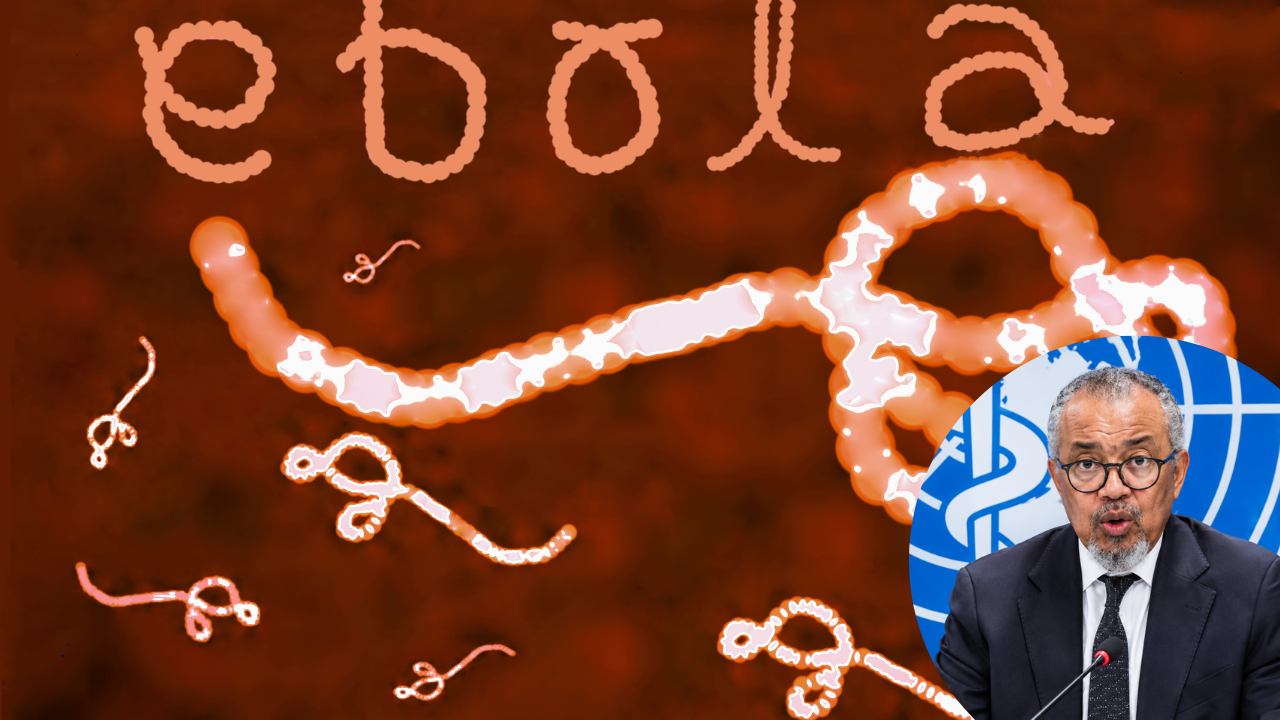
After previously warning that Ebola was "outpacing us," WHO Director-General Tedros Adhanom Ghebreyesus said on Thursday that "we are catching up" as efforts to contain the outbreak in the Democratic Republic of Congo show progress.A total of 381 Ebola cases have been confirmed in the Democratic Republic of Congo, including 63 deaths. Uganda has reported 16 confirmed cases. Meanwhile, the number of suspected cases has fallen from more than 1,000 last week to 116 as health teams work through the backlog.WHO Sees Signs of Progress“What I saw gave me hope,” Ghebreyesus said at a press conference.“The outbreak had a big head start, and we're still behind, but under the leadership of the Government of DRC, we are catching up,” he added.Importantly, he noted that six people in the DRC and two in Uganda have recovered to date, “showing that people can survive Ebola if they have access to care and go to health facilities as soon as they show symptoms.”Why Are Patients Recovering?The latest outbreak is caused by the Bundibugyo strain of the Ebola virus, for which there is currently neither a vaccine nor an antiviral treatment. So how are patients recovering?Dr. Rajeev Jayadevan, Co-Chairman of the National IMA COVID Task Force and Past President of the Indian Medical Association, Cochin, told HealthandMe that a combination of factors—including the virus strain, access to medical care, and individual immune responses—can significantly influence whether a patient survives the disease.Ebola virus disease is a severe illness caused by different strains of the Ebola virus. The current outbreak is linked to the Bundibugyo strain, which has a lower mortality rate than the more lethal Zaire strain responsible for several previous outbreaks, he said.“The mortality of Ebola virus disease is tied to several components,” Dr. Rajeev explained.Early Medical Care Improves SurvivalOne of the most important factors is access to early medical attention and supportive care. Patients who receive prompt treatment at well-equipped healthcare facilities staffed by experienced healthcare workers have a much greater chance of survival.However, such healthcare access is often limited in outbreak-affected regions of Africa due to ongoing conflicts and socioeconomic challenges.“The chance of survival is much higher if a person receives good medical attention and early supportive care,” he said.Bundibugyo Strain vs Zaire StrainAlso read: Ebola Bundibugyo Strain: All You Should Know About The Rare VirusThe strain of the virus also plays a critical role. Dr. Rajeev said that because the Bundibugyo strain is less lethal than the Zaire strain, more infected individuals are expected to survive under similar conditions.“If a hundred people get infected with the Zaire strain and another hundred with the Bundibugyo strain, more people in the Bundibugyo group will survive, all other conditions remaining the same,” he said.Difference In Immune Response Another important factor is the body's immune response, which varies from person to person. Dr. Rajeev highlighted the role of human leukocyte antigens (HLA), proteins that help the immune system recognize and respond to invading pathogens. Because each individual's HLA profile is unique, people infected with the same virus can generate different immune responses.“HLA works closely with the immune system by presenting pieces of the virus to immune cells, helping the body build a targeted response,” he said.Also read: Ebola Alert In India: Rajasthan, Hyderabad Report Suspected Cases of Deadly Virus This biological diversity is one reason why the same infection can affect individuals differently. It is also considered an evolutionary safeguard that helps prevent a single pathogen from devastating the entire human population.The Role of ProbabilityDr. Rajeev also pointed to a simple statistical reality. “If the mortality rate in the current outbreak is around 30 per cent, that means about 70 per cent of infected individuals are expected to survive,” he said.According to the expert, survival often results from a combination of favorable factors, including infection with a less lethal strain, timely medical care, a strong immune response, and the overall probability of recovery within a given outbreak.