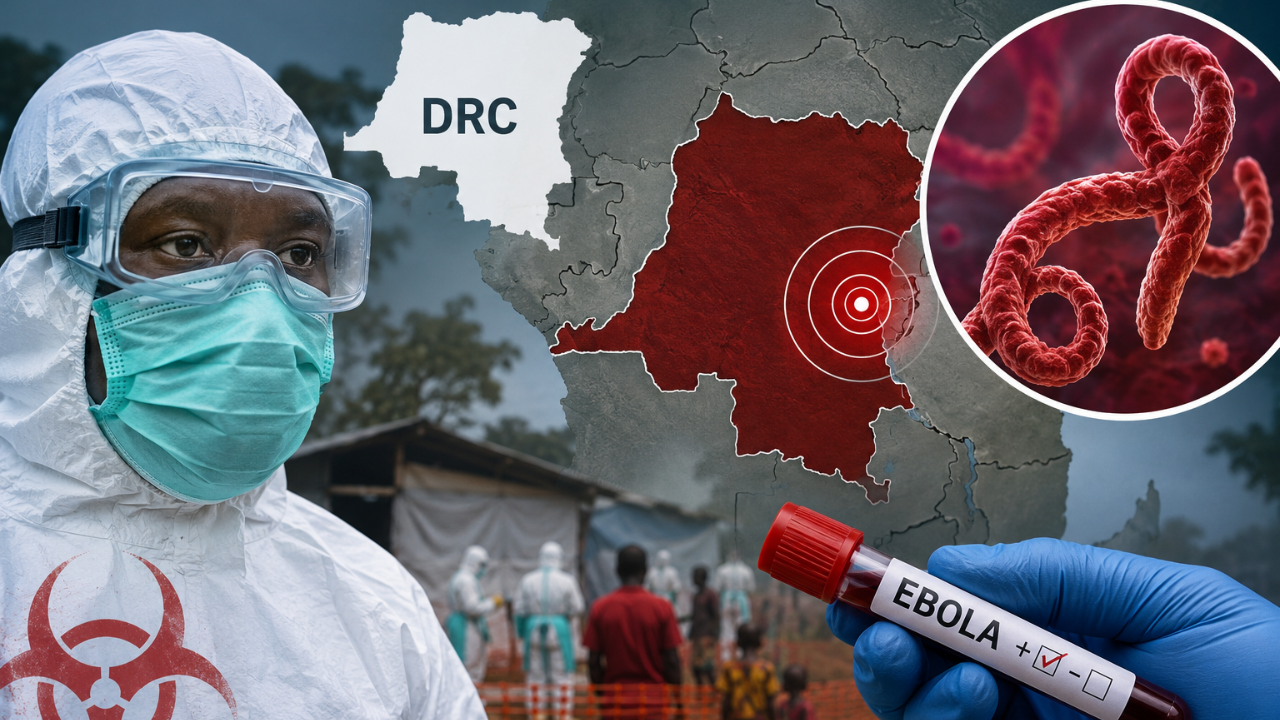
The World Health Organization (WHO) has warned that the rapidly expanding Ebola outbreak in the Democratic Republic of the Congo (DRC) is most likely to be bigger than what official figures suggest. It said that the true number of infections potentially two to four times higher than reported. The alarming update comes as the outbreak, caused by the rare Bundibugyo strain of the Ebola virus, has become the fastest-growing Ebola outbreak in the history. Ebola Cases In DRC Near 2,000As of July 14, 2026, health authorities confirmed recording 1,926 confirmed cases and 702 deaths due to Ebola, but WHO officials believe those numbers significantly underestimate the real picture of transmission as many infections are going undetected and unreported across communities.Speaking to reporters in Geneva, Dr. Chikwe Ihekweazu, Acting Regional Director for Emergencies at WHO, said the outbreak is spreading faster than surveillance systems can track it. "We think, with some of our support and modelling, the scale of the outbreak is at least two to four times the number of cases we are finding," Ihekweazu said. He also said that the DRC cannot tackle the epidemic by itself, appealing for international support and warning that the response is severely underfunded. WHO says it has received only about 40% of the $115 million required for the emergency response. Also read: Congo Starts Ebola Treatment Trial As Cases Reach 1,427, Deaths Hit 440Challenges In Containing DRC Ebola Outbreak The outbreak was first declared in May and is centered in Ituri province. Infections have now spread to North Kivu, South Kivu, Tshopo. Around 90% of reported cases remain concentrated in Ituri, particularly in the city of Bunia. Health experts say one of the biggest challenges is that around 80% of new infections cannot be linked to known Ebola patients, indicating widespread hidden community transmission. Many patients are dying at home before reaching treatment centers, making contact tracing increasingly difficult. Unlike previous Ebola outbreaks driven by the Zaire strain, the current epidemic involves the Bundibugyo virus, for which no licensed vaccine or approved treatment currently exists. Scientists hope that ongoing clinical trials evaluating the antiviral drug remdesivir and the experimental antibody therapy MBP134 could help improve survival rates. The WHO and the DRC's National Institute of Biomedical Research recently began enrolling patients into the study. Containment efforts are also being hampered by armed conflict, community mistrust, misinformation and strikes by local healthcare workers over unpaid wages. WHO has responded by expanding lab capacity and training more than 21,000 community health workers to strengthen surveillance and treatment. The U.S. Centers for Disease Control and Prevention (CDC) has also described the outbreak as spreading "substantially faster than previous Ebola outbreaks," noting that it surpassed 1,000 confirmed cases within just 40 days of response activation.About Ebola?Ebola is a severe and often fatal viral hemorrhagic fever first identified in 1976. Since then, more than 30 outbreaks have been recorded, primarily in Central and West Africa. Common symptoms of Ebola include: FeverHeadacheWeakness and fatigueVomitingDiarrheaMuscle painSore throatUnexplained bleeding or bruising.