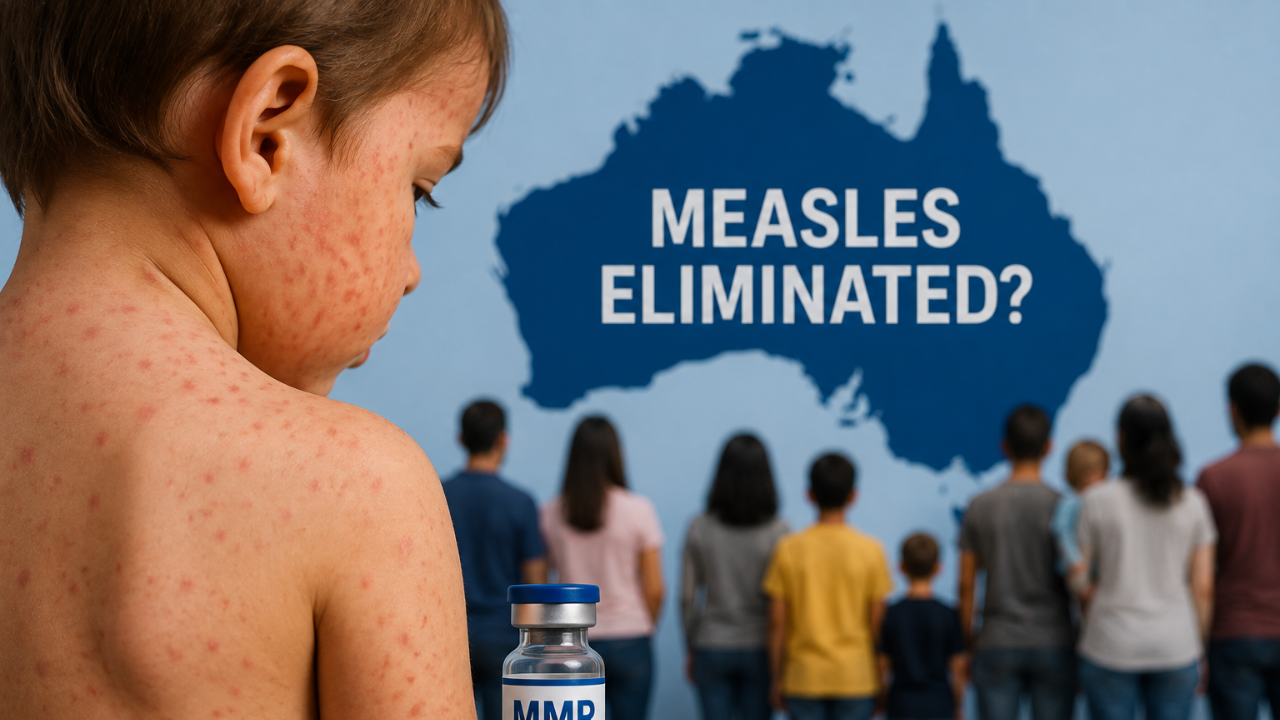
Australia has maintained its measles elimination status since 2014, but a new report has revealed a massive gap: an estimated 1.7 million Australians may not be adequately protected against the highly contagious virus. The update comes as measles cases linked to overseas travel continue to rise, raising concerns that infections imported from other countries could trigger outbreaks in communities where vaccination coverage is not high enough. The study, led by the National Centre for Immunisation Research and Surveillance (NCIRS), estimated that 6.7% of Australians were susceptible to measles in 2019, leaving overall population immunity at 93.3%. Researchers say this is around the lower end of the 93-95% level generally considered necessary to prevent sustained measles transmission. Australia Has Measles-Vulnerable People Despite Elimination Status When a country has elimination status of measles, it does not mean that every person in the country is immune or that the virus can infiltrate.Instead, elimination means there is no ongoing transmission of measles within the country. Imported cases can still occur when infected people arrive from countries where the virus continues to infect the local population. Australia has previously maintained elimination despite imported infections because vaccination has kept the virus from spreading continuously through communities. But the new analysis suggests that this protection is not evenly distributed across the population. “While we have maintained our measles elimination status since 2014, protection isn't shared evenly across the population, and the margin for error is relatively small,” lead author Zoë Croker said. Also read: Donald Trump's Order To Change Childhood Vaccine Schedule: Which US States & Countries Have Opposed To It?Which Australians Are Most Vulnerable? The researchers found important immunity gaps among several age groups in the country. People born from the late 1970s onwards showed increased susceptibility, with every birth group from 1977 onwards estimated to have at least 5% of people susceptible to measles. Some of the gaps may be due to changes in Australia's vaccination programs over the years. People born between 1977 and 1983, for example, were more likely to have received only one dose of a measles-containing vaccine. There are also younger adults who may have missed the second dose when it was introduced, while babies are naturally vulnerable because they are too young to have completed their routine vaccination schedule. The analysis also found that people aged 15 to 35 accounted for half of all measles cases reported in Australia between 2008 and 2022. Also read: U.S. Social Security Adds 14 Conditions To Its Compassionate Allowances; What Patients Need To KnowExperts' Take Measles is among the most contagious infectious diseases known. That means even a relatively small immunity gap can become crucial when the virus is introduced into a susceptible community. Australia recorded just single-digit measles cases in 2022, but notifications increased to 181 cases in 2025, with 113 cases already recorded in 2026, according to recent surveillance data. “Even relatively small immunity gaps in communities can create opportunities for the virus to spread when cases are imported from overseas,” Croker said. Senior author Professor Frank Beard also warned that some communities and regions could have considerably larger immunity gaps than the national average. “What’s happened overseas is a reminder that elimination status isn’t guaranteed, it has to be actively maintained,” Beard said.How To Prevent A Potential Infection? Experts are urging Australians born during or after 1966, particularly those planning international travel, to check whether they have documented evidence of receiving two doses of a measles-containing vaccine. People who cannot confirm their vaccination history are being advised to speak to their GP or immunisation provider.