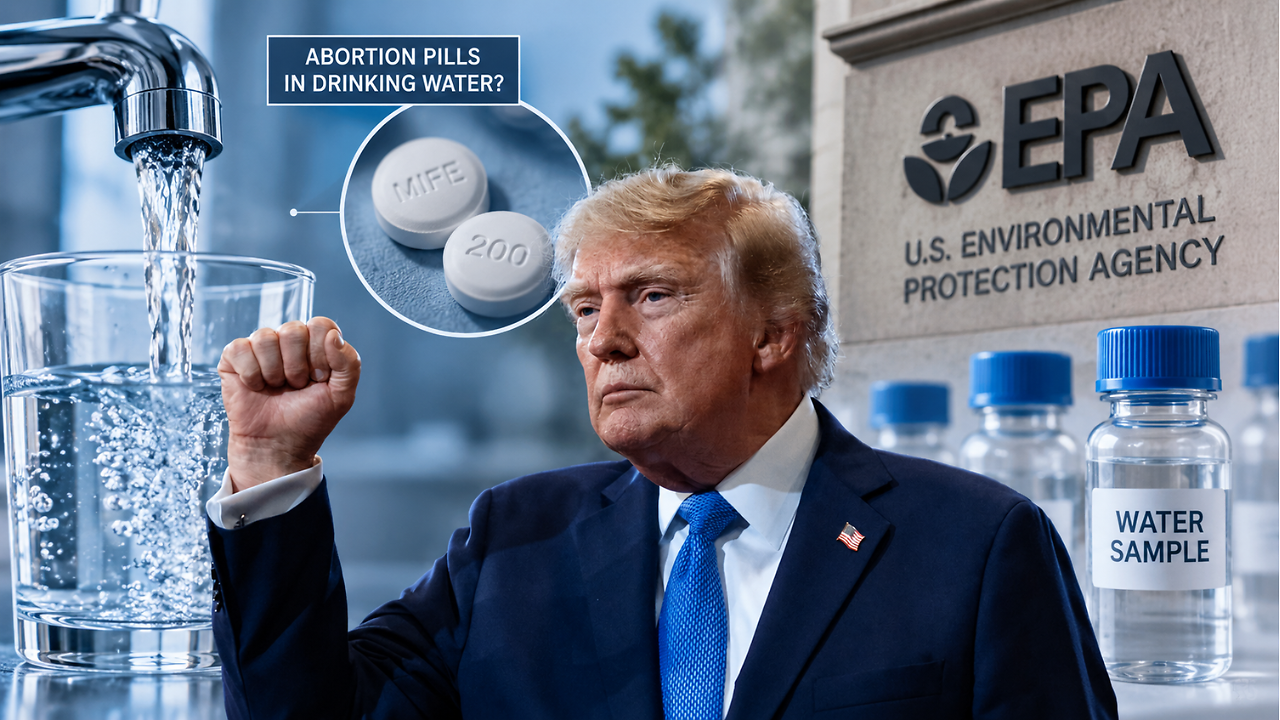
The US Environmental Protection Agency (EPA) has launched a new study to check drinking water for traces of more than 1,400 chemicals, including the abortion drugs mifepristone and misoprostol, as well as hormones, contraceptive drugs, pesticides and PFAS chemicals. It drawn attention as abortion pills have become a political and legal critical subject in the US following the Supreme Court's 2022 Dobbs decision. Anti-abortion groups and lawmakers have been urging federal agencies to probe into whether abortion pills could enter wastewater and, eventually, sources of water. So, the EPA is now testing whether these chemicals can be detected in water supplies. It is important to note that it has not said that drinking water in the US is contaminated with abortion pills or that the drugs pose a health risk to people drinking the water. About EPA Testing Also read: CDC Youth Report: US Teen Mental Health, Suicide Risk Improve; Sleep, Low Exercise Remain ConcernsAccording to the reports, EPA officials will gather water samples from several locations in different areas and use a general testing method to screen for thousands of chemicals and contaminants. The study includes mifepristone and misoprostol, which are commonly used together for medication abortion. It also includes testosterone, progesterone and levonorgestrel, a hormone used in several contraceptives including some birth-control pills and emergency contraception. EPA Administrator Lee Zeldin said the agency wants to investigate potential pollutants in drinking water to provide Americans with true information about what may be present in their water. He said, “We have heard loud and clear that Americans are concerned about potential unknown pollutants lurking in their drinking water. The Trump EPA is committed to getting to the bottom of this, so that Americans can feel confident about the safety of their drinking water.” Nathan Donley, the environmental health science director at the Center for Biological Diversity, told Politico that mifepristone is not one of the known contaminants on the EPA's list to regulate.“There are major water contaminants that need to be regulated, and testing for those things can be good as long as regulation happens. And then on the other hand, if we’re wasting time on a witch hunt for... those things like mifepristone, then that’s time and resources we take away from regulating and studying things that that are actually a problem,” Donley said. Why Are Abortion Pills Part Of The Study? Also read: Trump Proposes A New Board That Could Have Veto Power Over 48 Billion NIH Budget & Prevent 'Woke' ResearchThe move comes after years of pressure from anti-abortion groups, lawmakers and state attorneys general. Students for Life of America has argued that abortion pills could result in pharmaceutical residues entering wastewater after drugs are taken and pregnancy tissue is flushed. The group has also done its own testing and has called federal agencies to conduct research about presence of mifepristone in water. In 2025, Republican lawmakers also sent a letter asking the administration whether there are ways to detect mifepristone in water supplies. EPA officials subsequently began exploring testing methods. A Study Has Fueled The Debate One study cited by Answers in Genesis reported finding significant amounts of mifepristone in eight of nine water sources tested in Austin, Texas; Blacksburg, Virginia; and Carbondale, Illinois. The study also stated that conventional water treatment methods did not completely remove the compound and detected significant mean concentrations in tap water in two cities. However, that study’s interpretation has become a major dispute. In the last few months, several reports have emerged rubbishing the claims and saying that there is no established evidence that abortion pills are contaminating US drinking water. These reports have also included environmental experts who have questioned the study's credibility and validity. Water Safety Or Abortion Policing? According to the EPA, the study is about understanding various potential contaminants in drinking water. But reproductive-health and environmental advocates have raised concerns about how the findings could subsequently be used. Anna Bernstein of the Guttmacher Institute told The Cut, “The anti-abortion movement has become increasingly frustrated with that fact, so they are really throwing everything at the wall and seeing what sticks. They are really ramping up disinformation campaigns about the safety of medication abortion. This is the latest tactic of trying to weaponize laws that are meant to protect our environment and protect our wastewater.” Various reports similarly reported that the EPA's decision came after sustained pressure from anti-abortion advocates.