
- Health Conditions A-Z
- Health & Wellness
- Nutrition
- Fitness
- Health News
- Ayurveda
- Videos
- Medicine A-Z
- Parenting
World Cancer Day 2026: Theme, Origin, And Significance
Credits: iStock
Cancer is not just a medical diagnosis, it is also a deeply personal journey towards recovering. Ever story is different, every experience and struggle of cancer patients is different. This is why the theme of World Cancer Day 2025-2027 is 'United By Unique'.
Every year on February 4, World Cancer Day is observed to raise awareness among the population about cancer. The day also aims to encourage prompt detection and prevention and support global initiatives to reduce the cancer burden.
World Cancer Day 2026: Origin
For the first time, World Cancer Day was celebrated on February 4, 2000 at the World Cancer Summit Against Cancer for the New Millennium which was held in Paris.
The Charter of Paris Against Cancer signed by global leaders and the Union for International Cancer Control established this day to be officially known as Cancer Day to promote research, prevent cancer, and improve patient services.
World Cancer Day 2026: Theme
The theme 'United by Unique' is part of the three year long campaign from 2025 to 2027 that highlights that every cancer journey is unique. However, the theme highlights that despite this uniqueness, care could be promoted by staying united and to decrease inequalities. It also focuses on person centered care, compassion and seeing the person before the patient.
The campaign of World Cancer Day notes: "People-centred care is an approach that focuses on the needs, values, and active participation of individuals, families, and communities in the planning, delivery, and evaluation of care. This approach represents a fundamental shift in how health and cancer services are designed and delivered, placing those impacted by cancer at the heart of health systems."
World Cancer Day 2026: Significance
World Cancer Day plays a vital role in promoting awareness among population. It also brings attention to early detection and initiates discussions about the symptoms that people may have missed which later turned out to be cancer. Furthermore, this day also helps people fight the stigma and misinformation around cancer.
The impact this day made last year was great. As per the World Cancer Organization Report, in 2025, 900 activities around cancer were conducted in 102 countries. Over 600 people shared their stories in different forms, including texts, videos, art, and more. The campaign reached over nine million engagement, with six billion impressions.
World Cancer Day 2026: What Is Happening In India?
India is witnessing a sharp rise in its cancer burden, with recent reports highlighting a steady year-on-year increase in new cases. Experts link this surge to a mix of modern lifestyle changes, widespread tobacco consumption, environmental exposure, and limited access to early screening in several regions. Estimates from the National Cancer Registry Programme place the lifetime risk of developing cancer in India at roughly 11 per cent, though this risk varies significantly across different states and populations.
In metropolitan hubs such as Delhi, as well as in states including Uttar Pradesh, Maharashtra, West Bengal, and Tamil Nadu, the number of newly reported cancer cases has climbed into the hundreds of thousands. This trend reflects not only a genuine rise in incidence but also improved diagnostic systems and reporting mechanisms that are helping identify cases more accurately.
Tobacco-related cancers continue to account for a substantial share of cases, particularly among men. At the same time, shifting lifestyle patterns, urban pollution, and environmental hazards are contributing to the broader increase in cancer rates across the country.
India’s cancer response framework includes preventive strategies such as awareness drives, early screening programmes, and vaccination initiatives like the HPV vaccine to reduce cervical cancer risk. Despite these efforts, significant gaps remain in terms of healthcare access, early diagnosis, and public awareness, which continue to challenge effective cancer control nationwide.
Study Unravels New Route Bat Coronaviruses Can Infect Human Cells
Credit: University of Cambridge
An international team of researchers has identified a new way by which coronaviruses carried by bats can enter human cells.
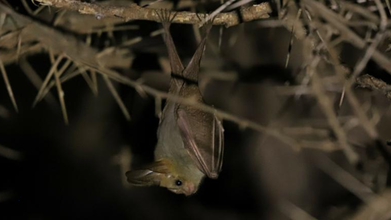
Their study, published in the journal Nature, targeted the spike proteins of coronaviruses carried by heart-nosed bats in Kenya.
The team, including those from the universities of Cambridge and York, along with those from the National Museums of Kenya, found that a coronavirus, dubbed CcCoV-KY43, has evolved a new way of binding to human cells. It is different from the mechanism used by SARS-COV-2, the coronavirus responsible for the COVID-19 pandemic.
The virus - Cardioderma cor coronavirus (CcCoV) KY43, or CcCoV-KY43 - can bind to a receptor cell found in the human lung, but testing in Kenya suggests it has not spilled over into the local human population.
“Viral spike proteins are keys that fit into locks (host receptors) to open the door and enter a cell. So far, we have identified one alphaCov receptor. The challenge now is to find the others,” said Professor Stephen Graham in the Department of Pathology at the University of Cambridge, joint senior author of the paper.
CcCoV-KY43 is found in heart-nosed bats, Cardioderma cor, an ecologically important species found mainly in eastern Africa, including in eastern Sudan and northern Tanzania.
The researchers say the zoonotic (animal-to-human) and pandemic potential of alphaCoVs has remained relatively uncharted - to date, only two cellular receptors have been characterized for alphaCoVs.
Read: US CDC Study Showcasing COVID Vaccine Benefits Blocked From Publication
How Did The Researchers Identify The New Mechanism
Rather than work on ‘live’ viruses, the scientists used a public database of known genetic sequences, Genbank, to select and synthesise alphacoronavirus ‘spike’ proteins, including 27 viruses originally isolated in bats, and screened these against a library of coronavirus receptors found in human cells.
Spike proteins protrude from the surface of coronaviruses, including SARS-CoV-2, and bind to specific receptors on human cells, triggering infection.
They showed that CcCoV-KY43 binds to the human glycoprotein CEACAM6.
“Before our study, it was assumed all alphacoronaviruses used just one of two possible receptors to enter their host, and the only difference was which species they could enter. We now know alphaCovs might use a whole variety of different receptors to open cells,” said Dr Dalan Bailey, Group Leader at the Pirbright Institute and joint senior author of the paper.
“Not only did we find the new coronavirus receptor in human cells ahead of any virus spillover into the human population, but the study was performed using just a piece of the virus (the spike) rather than the whole pathogen, negating the need to import a live virus into the UK," added Dr Giulia Gallo, lead author of the paper.
Also read: Bangladesh Measles Outbreak: Meghalaya, Tripura To Ramp Up Vaccination, Boost Surveillance
The study stressed the need for further study in East Africa to better understand the risk from the family of viruses that can use this receptor to enter human cells.
This will help scientists to be better prepared for any spillover of the virus into humans in the future, and potentially begin to develop human vaccines and antivirals.
“We hope our findings will help better understand the risk from the family of viruses we identified that can use the human receptor: for example, by mapping the prevalence of the virus in bats and looking to see if it has already spilled over in at-risk populations,” Graham said.
Robert F. Kennedy Jr. Denies Link To Measles Outbreak At Senate Hearing
Credit: Instagram
With the rising measles cases, the US is most likely to lose its measles elimination status, acquired in the year 2000. The reason is in plain sight: the lack of vaccination.
The US recorded 2,288 measles cases last year – the highest number since the disease was declared eliminated in the country 25 years ago. Another 1,748 cases have already been reported this year, so far, raising concerns among experts that the US could lose its elimination status.
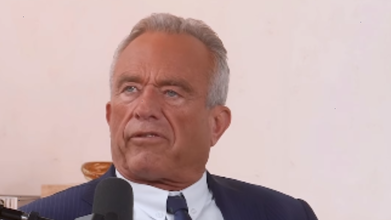
However, US Health Secretary Robert F Kennedy Jr, long known as a vaccine skeptic, who faced intense questioning from several US senators, denied his role. He instead attributed the surge in measles cases in the country to global outbreaks.
Measles Outbreak in US: "I Have Nothing To Do With It", Says Kennedy
According to public health specialists, Kennedy failed to strongly promote vaccination and instead highlighted unproven treatments such as steroids while the virus spread across state lines.
In his opening remarks to the Senate Finance Committee, Senator Ron Wyden criticized Kennedy’s messaging on vaccines, saying: “When it comes to vaccines, Robert Kennedy has used this once-in-a-lifetime platform to make parents doubt themselves and doubt their doctors.”
“The secretary has ducked, bobbed, and weaved without taking the responsibility of saying what needs to be said: vaccines save lives in America,” he added.
However, he replied: “I have not visited Mexico or Europe. I have nothing to do with the measles outbreak. A lot of nations have lost their elimination status; (the) outbreak has nothing to do with me". "The whole world had their worst measles year,” he added.
Noting that he “promoted the measles vaccine”, Kennedy explained that most unvaccinated Americans who contracted measles last year were over the age of 5 years, meaning their parents decided not to vaccinate well before he assumed his role at HHS.
But David L. Hill, a spokesperson for the American Academy of Pediatrics, said the issue is nuanced.
“When 95 per cent of the population is vaccinated, sporadic cases from outside the country don’t spread as they are doing now, where rates in many communities have fallen below that level,” Hill told CIDRAP News. “So, anyone who is spreading misinformation about the safety or effectiveness of the measles vaccine shares in the responsibility for these outbreaks, especially if they have the ear of the public.
“All of our public health professionals have an obligation now to speak out clearly and forcefully in favor of universal measles vaccination, which we know saves lives.”
Also read: Surging Measles Cases In US Prompting Antivaxxers To Quietly Embrace MMR Vaccine: Report
Senators Probe Kennedy's Role In Childhood Flu Deaths
Further, the senators also questioned Kennedy about his role in childhood flu deaths. As of April 2026, the 2025-26 US flu season has seen 143 pediatric deaths, as per CDC data.
Senator Michael Bennet questioned Kennedy about changes to vaccine recommendations, pointing out that 2025 saw the highest number of childhood flu deaths — 280 pediatric deaths — in modern American history.
“I assume you no longer believe that the flu vaccine is destroying children’s brains, that there’s zero evidence that the flu vaccine prevents any hospitalizations or any deaths, because today, you’re here agreeing that the vast majority of kids that died from the flu were people without vaccines,” Bennet said.
Kennedy replied: “We’re making sure that we follow the science.”
Senator Ben Ray Luján also accused Kennedy of “pushing vaccine misinformation” that predated his tenure and pressed him to explain how he would reduce the number of measles cases and improve the MMR vaccination rate.
“We promote the MMR. We advise every child to get the MMR,” Kennedy said.
Read: US CDC Study Showcasing COVID Vaccine Benefits Blocked From Publication
What Is Measles?
Measles is a highly contagious virus that spreads through direct contact or through the air when an infected person coughs or sneezes. It is a vaccine-preventable disease that can cause devastating complications, including blindness, pneumonia, encephalitis, and long-term immune dysfunction.
Symptoms typically appear seven to 14 days after exposure and may include:
- high fever,
- cough,
- runny nose,
- red eyes,
- rashes across the body.
How To Stay Safe
To safeguard against measles, individuals should
- ensure timely vaccination, especially for children.
- Maintaining good hygiene, such as frequent handwashing and covering the mouth while coughing or sneezing, helps reduce transmission.
- Avoiding close contact with infected individuals and ensuring proper nutrition to boost immunity are also important.
The Cost Of Social Media Addiction: Study Says It Can Give Kids Eating Disorders

The negative effects of social media addiction are more evident in girls. (Photo credit: iStock)
Eating disorders in children might sound like a rare occurrence, but evidence suggests that this is no longer a once-in-a-while case. According to new research, social media is a powerful influence affecting eating disorder risks in children. A study by Turkish researchers showed that heavy social media use among teenagers could be linked to poor eating attitudes, orthorexia nervosa, poor body image, and an unhealthy obsession with eating ‘clean’. For this, a team of researchers comprising Semiha Ozcakal, Gamze Yurtdas Depboylu, and Gulsah Kaner surveyed 1,200 high school students and found that the more addicted they were to social media, the more likely they were to follow poor eating patterns and struggle with body dissatisfaction.
How does social media addiction fuel eating disorders in teens?
Researchers found that girls were most affected by social media addiction. They were more likely to develop an unhealthy relationship with social media use and consequently were also more dissatisfied with their bodies. This could be fuelled by constant exposure to idealised fitness and beauty standards. They start to compare themselves to thin people, and eventually that comparison can turn into restriction, difficult food rules, and even shame.
Researchers noted that the most striking finding of the study involved nutrition content. Teens who followed diet and food posts from celebrities, influencers, or even wellness experts were six times more likely to show symptoms of eating disorders. Many were also likely to develop orthorexic tendencies and may cut down on foods that they believed were unhealthy in order to achieve an unrealistic goal.
Social media addiction and an obsession with thinness
A study from Italy added to the concerns - researchers examined 232 girls aged 9–10 years and found that those who showed symptoms of Instagram addiction were more driven to become thinner and were unhappier with their bodies too. They also scored higher on social withdrawal and emotional instability. The warning clearly stated that social media can shape self-image far earlier than most adults realise. Even before adolescence, children absorb harmful messages about beauty, worth, and weight.
Is there a solution?
According to experts, the answer is not banning screens, especially when digital media is an important part of daily life. Children should instead be given guidance at home and at school—parents and teachers must promote healthy social media habits and sustainable goals. Teachers and parents must discourage unrealistic goals, especially with respect to extreme dieting and an obsession with becoming thin.
What are the symptoms of eating disorders?
Eating disorders are often characterised by poor eating habi—thisis can be either overeating or undereating or complete starvation. People dealing with eating disorders are likely to show the following symptoms:
- Avoid certain foods or food groups
- Restrictive eating habits
- Eating too much in a small window of time
- Forced vomiting after eating
- Laxative misuse
- Frequent trips to the bathroom after eating
- Withdrawing from social activities or friends
- Compulsive exercising after meals
- Follow Us :


© 2024 Bennett, Coleman & Company Limited