
- Health Conditions A-Z
- Health & Wellness
- Nutrition
- Fitness
- Health News
- Ayurveda
- Videos
- Medicine A-Z
- Parenting
World Spine Day 2025: Theme, Significance, And Origin
Credits: Canva
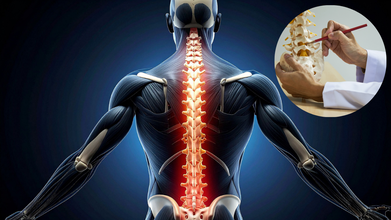
Every year on October 16, World Spine Day is observed. The spine is the backbone of a human, and takes care of a lot of things including movement, posture, and overall well-being. However, spinal conditions are often ignored, and with the rise of sedentary lifestyle, spinal posture is severely affected. To address these issues, World Spine Day was introduced.
World Spine Day 2025 Theme
The theme for World Spine Day 2025 is 'Invest in Your Spine'. This highlights the need to prioritize spinal health through preventive care, rehabilitation, and supportive workplace and lifestyle practices.
Also Read: 6 Warning Signs In Your Mouth That May Point To Heart Problems
This day also encourages individuals to take simple steps, but stay consistent in maintaining proper posture, exercising regularly, and following ergonomic habits at work.
The theme also calls for policy makers to strengthen access to rehabilitation and education programmes, and ensure that spine care becomes an integral part of the public health sphere.
World Spine Day Origin
World Spine Day was originated in 2012. This is when the World Federation of Chiropractic (WFC) launched the day to raise awareness about spinal health and disorder. The first theme was 'Straighten Up and Move'.
This initiative also evolved into a global event with participation from health organizations and communities worldwide to promote spine health and prevent back pain. As even doctors note that most of the spinal injuries are preventable.
Significance of World Spine Day
This day aims at raising awareness about common spine problems, including back pain, scoliosis, and slipped discs. It may come as a surprise to many but in 2020, low back pain (LBP) affected 619 million people globally. LBP is also the single leading cause of disability worldwide, and the same condition that can be prevented or people may benefit form rehabilitation.
Most spinal injuries and issues could be experienced at any age, thanks to the sedentary lifestyle and bad posture. However, the age prevalence increases among the people up to 80, with the mean age at 50-55. LBP is also said to be more common in women.
What Are The Common Spinal Problems That Affect People?
Low Back Pain
Low back pain remains one of the most common reasons for missed work and a decline in daily comfort. Long hours of sitting, poor posture, and improper lifting can strain the spine and its supporting muscles, leading to stiffness, fatigue, and persistent discomfort.
Scoliosis and Other Spinal Deformities
Scoliosis refers to an abnormal sideways curvature of the spine, often developing during childhood or teenage years. While mild cases may cause little to no symptoms, severe curvature can interfere with posture, lung function, and movement, making early diagnosis and treatment essential.
Herniated or Slip Disc
A herniated or “slipped” disc happens when the soft, gel-like center of a spinal disc pushes through a tear in its tougher outer layer. This pressure on surrounding nerves can lead to intense pain, tingling, or muscle weakness, particularly in the lower back, buttocks, and legs.
James Van Der Beek: What Kind Of Cancer Has The Actor Been Diagnosed With?

Credits: Canva
More than a year after Dawson’s Creek star James Van Der Beek revealed that he had been diagnosed with stage 3 colorectal cancer, the actor has shared a new update on how the illness has changed his outlook on life in unexpected ways. Speaking to host Craig Melvin on the December 19 episode of Today, James reflected on the moment he first heard the diagnosis.
“As soon as I found out, I remember thinking, ‘This might end up being the best thing that ever happened to me,’” he said. “There was this quiet voice in my head telling me that this diagnosis would push me to make changes I would never have made otherwise.”
As James Van Der Beek opens up about his health journey, many are asking: what kind of cancer was he diagnosed with?
James Van Der Beek Cancer: What Kind Of Cancer Has He Been Diagnosed With?
James Van Der Beek was diagnosed with stage 3 colorectal cancer after he began noticing changes in his bowel habits in the summer of 2023. At first, he brushed off the symptoms, assuming they were linked to his coffee intake. However, when the changes did not go away, he decided to consult a doctor.
A colonoscopy later confirmed the cancer diagnosis. The news came as a shock, especially since Van Der Beek had no known family history of colorectal cancer and believed he was in excellent health due to his active lifestyle and balanced diet.
What Is Colorectal Cancer?
Colorectal cancer develops in the colon or rectum and often begins as small, non-cancerous growths known as polyps. Over time, some of these polyps can become cancerous, interfering with digestion and the body’s ability to process waste.
It is one of the more common forms of cancer and can be difficult to detect early because symptoms may not appear right away. When they do, they often include blood in the stool, persistent changes in bowel habits, abdominal discomfort, and unexplained weight loss. According to the Mayo Clinic, early screening plays a critical role in detecting the disease when it is most treatable, and lifestyle choices can significantly influence risk and outcomes.
James Van Der Beek Cancer: Regular Screenings and Colonoscopies
As colorectal cancer often shows no symptoms in its early stages, routine screening is essential. Colonoscopies allow doctors to spot and remove precancerous polyps and detect cancer before it spreads. Early intervention has been shown to lower both the number of cases and deaths associated with the disease.
Data from the CDC highlights the importance of early detection, with survival rates varying widely by stage. While stage I colorectal cancer has a five-year survival rate of about 91 percent, that number drops sharply to around 14 percent for stage IV cases, according to the American Cancer Society. Health experts recommend beginning regular screening at age 45, or earlier for people with higher risk factors. Colonoscopy remains the most effective screening tool, as it examines the entire colon and allows for immediate removal of suspicious growths.
James Van Der Beek Cancer: What Was The Prognosis?
James Van Der Beek’s outlook following his stage 3 colorectal cancer diagnosis has been described as cautiously hopeful. His cancer was identified while still localized, a category associated with a significantly higher survival rate. According to the American Cancer Society, localized colorectal cancer has a five-year survival rate of approximately 91 percent.
James Van Der Beek Cancer: What Treatments Did James Undergo?
James Van Der Beek has chosen not to share detailed information about the specific treatments he has received for his stage 3 colorectal cancer. In general, treatment for this stage of the disease typically involves surgery followed by chemotherapy, and in some cases, radiation therapy.
Nutritional support also plays an important role, particularly because colorectal cancer and its treatments can affect digestion. While Van Der Beek has kept the details private, he has emphasized that he is actively addressing his diagnosis and prioritizing his overall health as part of his recovery.
Trump Administration Reclassifies Marijuana As A Schedule 3 Drug, Moving It Closer To Prescription Painkillers

Credits: Canva
President Donald Trump on Thursday signed an executive order aimed at speeding up the reclassification of cannabis, a move that would allow the Food and Drug Administration to more closely examine its potential medical uses. The order states that the administration’s policy is to expand research on medical marijuana and CBD so patients and doctors have clearer, evidence-based guidance.
It also stresses the need to narrow the gap between widespread use and limited scientific understanding of possible benefits and risks, according to NBC News. Under the proposed change, cannabis would be moved to Schedule III, placing it in the same category as certain commonly prescribed pain medicines, including Tylenol with codeine.
Trump Signs Order to Ease Restrictions on Marijuana
President Donald Trump has signed an executive order that marks one of the most notable shifts in U.S. marijuana policy in decades. On December 18, he instructed federal agencies to stop treating marijuana as a Schedule I substance, a category reserved for drugs considered highly dangerous, such as heroin, LSD, and ecstasy.
The Drug Enforcement Administration defines Schedule I drugs as having no accepted medical use and a high likelihood of abuse. Trump directed that marijuana instead be placed under Schedule III, which the DEA describes as substances with recognized medical uses and a moderate to low risk of physical or psychological dependence. If implemented, this change would move marijuana away from the same legal framework as heroin and LSD and align it more closely with medicines that have established therapeutic value, such as certain acetaminophen and codeine combinations.
What Is A Schedule 3 Drug?
Schedule III drugs are regulated substances that are permitted for specific medical purposes under federal law. While their manufacture, distribution, and use are tightly controlled, they can be prescribed by licensed healthcare professionals. These rules also spell out penalties for illegal trafficking. Examples of Schedule III drugs include ketamine, anabolic steroids, and some acetaminophen-codeine medications.
Marijuana has long been listed as a Schedule I drug, a classification that assumes it is highly dangerous, addictive, and lacking medical value. Reclassifying it would shift cannabis into a category that allows lawful medical prescribing.
Marijuana has remained a Schedule I substance since the passage of the Controlled Substances Act in 1970, according to CBS News.
What All Medicines Are Included In Schedule 3 Drug?
In the United States, Schedule III drugs are recognized for medical use and are considered less likely to be abused than Schedule I or II substances, though they may still cause moderate physical or high psychological dependence. This group includes anabolic steroids, ketamine, certain opioid combinations containing codeine or hydrocodone, such as Tylenol with Codeine, and barbiturates like pentobarbital. These medications are subject to strict rules around prescribing, dispensing, and storage to balance their medical benefits with the risk of misuse.
FDA To Study Marijuana's Medicinal Properties
Once the reclassification is finalized, it is expected to make research easier by reducing funding and regulatory barriers for clinical trials. Pharmaceutical companies would also find it simpler to seek FDA approval for cannabis-based medicines. Because marijuana has been listed as Schedule I, many drug makers have avoided pursuing trials due to heavy bureaucracy and high costs. Moving it to Schedule III would lower these hurdles and allow the FDA to properly study its medical potential. This could eventually expand access to cannabis-based treatments for groups such as seniors and veterans, regardless of differing state laws.
Although the change would not legalize marijuana outright, it could bring meaningful practical effects, including clearer medical access and fewer legal uncertainties for consumers and businesses. Trump also made clear that he does not support recreational legalization. He warned that using powerful controlled substances for non-medical reasons is unsafe and said that unless a doctor recommends a drug for medical purposes, people should avoid using it, according to NBC News.
Life-Saving Blood Transfusions for Thalassemia Leave Four Children HIV-Positive in Madhya Pradesh
Credits: iStock
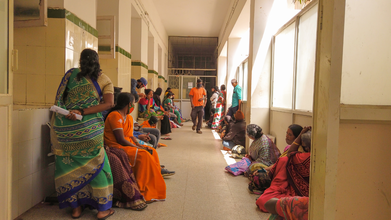
Life saving blood transfusion for thalassemia left four children HIV-positive, in India's Madhya Pradesh. The children are now confronted with lifetime illness, social stigma, and uncertainty.
How Did Four Children In Madhya Pradesh Get HIV?
The children had thalassemia, which is a genetic blood disorder that requires regular transfusion to manage severe anemia and sustain life. The authorities of central state of Madhya Pradesh, on Wednesday, said that five children with thalassemia, aged three to 15 have tested positive for HIV. Out of the five children, one of them had both of their parents were HIV positive. This has prompted concerns over blood transfusion practices and a committee has now been set up to investigate these cases.
Read: How Widespread Is Thalassemia In India—And What Can Be Done?
The families of the patients come from Satna district While the infections had been detected during a routine checkup between January and May 2025, the media attention came only earlier this week, after local media reports were released on the same.
This is not the first time this has happened. Similar case was seen from the eastern state of Jharkhand. This is where five children, all under the age of eight were also found to have contracted HIV after blood transfusions. All of them had thalassemia, and received blood transfusion at a state-run hospital.
Earlier, in 2011, Gujarat authorities launched an investigation after 23 children with thalassemia tested HIV positive following regular blood transfusions at a public hospital.
What Is HIV?
HIV or human immunodeficiency virus spreads to unprotected sex, unsafe medical practices, including infected blood transfusion, using used needles for tattooing, or from mother to child during pregnancy, childbirth, and breastfeeding. While the disease is not fatal, it does requires lifetime management. In India, more than 2.5 million people have HIV and 66,400 new infections have come up each year. As per the government data, 1.6 million people are on lifelong treatment at antiretroviral therapy (ART) centers.
What Happened To The Five Children In Jharkhand?
Satna district collector Satish Kumar S said the five children had received blood transfusions at different centres, involving multiple donors, reported BBC. Health officials confirmed that the transfusions took place at both government hospitals and private clinics, and said all the children are currently undergoing treatment.
In one case, both parents of a three-year-old child were found to be HIV positive. In the remaining cases, the parents tested negative, ruling out mother-to-child transmission.
Satna’s chief medical and health officer, Manoj Shukla, said children who require repeated blood transfusions are treated as a high-risk group and are routinely screened for HIV. “Once the infection was detected, treatment was started immediately and is continuing. At present, the children are stable,” he said.
Dr Shukla added that every unit of blood issued by the district hospital’s blood bank is tested according to government protocols and released only after a negative report. However, he noted that in rare instances, donors in the very early stage of HIV infection may not be detected during initial screening but may test positive later.
Last week, thalassemia patients urged Parliament to pass the National Blood Transfusion Bill 2025, saying it would strengthen oversight of blood collection, testing and transfusion practices. Campaigners, including patients who contracted HIV through unsafe transfusions, described the proposed law as a long-overdue step towards ensuring safe and quality-assured blood for those who depend on frequent transfusions.
- Follow Us :


© 2024 Bennett, Coleman & Company Limited