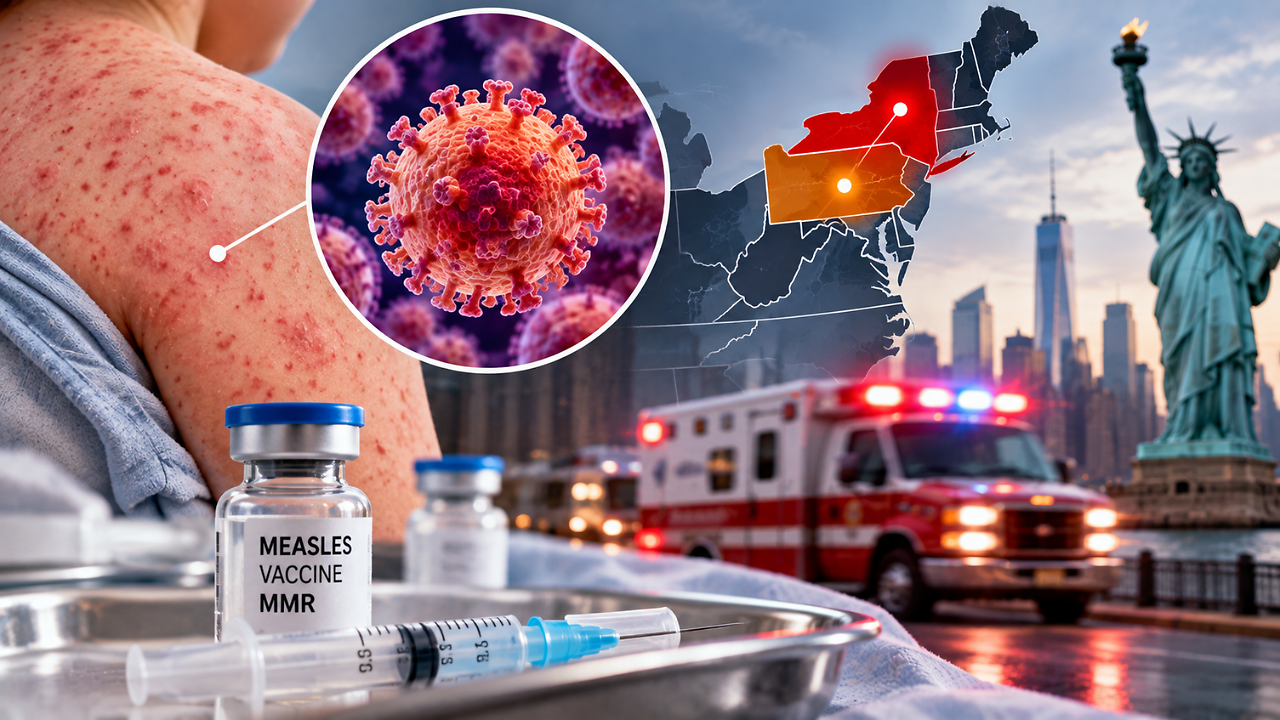
The United States is in the middle of its worst measles outbreak in more than three decades as Pennsylvania has recorded more than 1,000 cases. New York also declared a disaster emergency across the state recently as the highly contagious infection continues to spread.Pennsylvania health department reported 1,004 measles cases as of October 5, that includes 198 hospitalisations and five deaths. Lancaster County, the hardest-hit area, has reported 391 cases alone. All five people who died in the state this year were unvaccinated, according to Reuters.The outbreak is the worst recorded in the US since the major measles resurgence between 1989 and 1991. The CDC reported 3,887 confirmed measles cases in the country as of October 1, 2026. Measles Has Resurfaced In The USMeasles was eliminated in the US in 2000. It means that there was no continuous spread of the virus within the country. However, elimination does not always mean that the virus has disappeared globally. Imported infections can still trigger outbreaks when they infiltrate communities where vaccination coverage is insufficient.The measles, mumps and rubella (MMR) vaccine provides about 97% protection against measles after two doses. But protection at the community level depends on high vaccination coverage as measles is extremely contagious. The CDC says more than 95% of people in a community need to be vaccinated to maintain herd immunity.Vaccination coverage has fallen in several parts of the country, leaving several parts of communities more vulnerable to transmission.Also read: Measles Cases Are Rising in US—Who Should Get A Booster Shot?New York Declares A Disaster EmergencyOn Monday, New York Governor Kathy Hochul declared a statewide disaster emergency after the state recorded 108 measles cases through October 3. Among these, 92 cases were reported since July 15 across 18 counties, especially in under-immunised rural communities.The emergency, which remains in effect till November 4, authorises other group of healthcare professionals like nurses and pharmacists who can administer MMR vaccines. The state has also increased testing and vaccination efforts in affected areas.“No one should get seriously ill or die from a vaccine-preventable disease,” Hochul said. More than 1,000 MMR doses have already been administered in rural areas since July 15.Also read: Pennsylvania Reports Fifth Measles-Related Death As Outbreak Continues To SpreadWho May Need a Measles Booster?The first measles vaccine was introduced in the US in 1963, but the formulation used between 1963 and 1967 was less effective than current versions. Adults vaccinated during that period may need another dose if they have not received a later measles vaccine.People born before 1957 are generally considered to have presumptive evidence of immunity because measles circulated widely before routine vaccination, and most people in this age group were naturally infected.Some people may need individualized vaccination guidance rather than standard recommendations, including:People with uncertain vaccination status or no vaccination recordsPeople who received an inactivated measles vaccine between 1963 and 1967People with a weakened immune systemPregnant peopleAlso read: Rabies Day Exclusive: ‘We Need To Target The Source’ For A Rabies-Free India By 2030, Says Veterinary EpidemiologistDeath Toll According To CDC & Pennsylvania The CDC has reported 13 measles deaths in the US so far in 2026. The deaths have occurred among people who were not fully vaccinated or whose vaccination status was unknown. There is a striking discrepancy in the reported death toll. Pennsylvania health officials say five residents have died after getting infected with measles this year, but the CDC’s national tally lists only two measles-related deaths across the US. The CDC has shifted to relying on death-certificate data reviewed by the National Center for Health Statistics, while Pennsylvania uses the state definition that considers factors including a positive measles test, symptoms and the timing of death. The CDC has said it is working with state epidemiologists on a standard definition and that its count could change after reviews.Measles is a highly contagious viral infection that spreads through respiratory droplets and can remain in the air after an infected person leaves an area. It commonly causes high fever, cough, runny nose and a characteristic rash, but complications can get serious. These can include pneumonia, swelling of the brain and, in extreme cases, death.Young children, pregnant women and people with weak immunity systems are more prone to develop serious complications of measles.