
- Health Conditions A-Z
- Health & Wellness
- Nutrition
- Fitness
- Health News
- Ayurveda
- Videos
- Medicine A-Z
- Parenting
American Heart Association Says Psychological Distress After Heart Attack Can Increase The Risk Of Another Cardiac Event

(Credit-Canva)
As per American Heart Association second heart attack is said to increase the mortality risk of people, and doctors try their level best to ensure that it doesn’t happen. However, a new study reveals that the state of your mental health can greatly affect your risk of another cardiac event.
Being the leading cause of death, one person dies every 34 second from heart diseases (the Center of Disease Control and Prevention). In 2023, stats show that 919,032 people died due to the same reason, which means that 1 in 3 deaths in the US were due to cardiac reasons.
While heart attacks in itself are difficult to recover from, suffering a second one makes recovery even more intense. Doctors try their best to ensure that a second heart attack does not happen, further complicating the treatment, but a new study has revealed a factor that can increase its risk?
How Your Mental Health Affects The Heart?
According to the American Heart Association study, experiencing PMPD, which is Postmyocardial Psychological Distress (PMPD) which many people experience after a major medical event like a heart attack can be physically and emotionally taxing can affect your risk of another heart attack.
PMPD isn't just an emotional issue; it's a medical one. It's linked to an increased risk of future heart problems, especially a recurrent heart attack. Some studies even suggest it contributes to a higher risk of suicide after an myocardial infarction (MI).
The link between your mind and heart is a two-way street. A heart attack can cause inflammation in your body, which leads to chemical changes that can trigger depression and anxiety. At the same time, chronic stress can activate your body's "fight-or-flight" response, raising your blood pressure and causing inflammation, making your heart condition worse. The numbers are clear:
- 1 in 3 heart attack survivors develop depression, which is much higher than in the general population.
- Up to half of heart attack survivors feel anxiety or stress while in the hospital, and for 20% to 30%, these feelings last for months.
- Depression and PTSD after a heart attack are each linked to double the risk of having another heart event or even death.
- People with anxiety are 1.3 times more likely to have another heart attack or die.
Emotional distress can also lead to unhealthy behaviors that harm your heart:
Poor lifestyle habits: Depression often leads to a lack of sleep, poor diet, and not being physically active.
Avoiding care: People with psychological distress may skip taking their medications, avoid social activities, or drop out of crucial cardiac rehabilitation programs.
Can Treating Mental Health Heal The Heart As Well?
Because of this strong connection, it's crucial to address emotional distress. Doctors are encouraged to ask about a patient's emotional state, even without a formal screening. Simply acknowledging their feelings and offering support can make a huge difference.
Therapy
Cognitive Behavioral Therapy (CBT), mindfulness exercises, and other forms of counseling can help people manage their emotions.
Medication
A class of antidepressants called SSRIs has been found to be safe and effective for people with heart disease.
Lifestyle Changes
Simple things like getting regular exercise and improving sleep can significantly boost your mood.
Cardiac Rehabilitation
This is a key resource that is often underused. In addition to physical exercise, these programs typically offer mental health support and stress management education, which has been shown to improve both mental and physical outcomes.
Two Year Old Girl Diagnosed With Childhood Dementia

Credits: GoFundMe
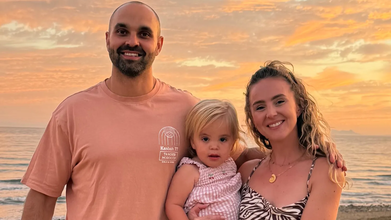
For most parents, the toddler years are filled with first words, wobbly steps and dreams of the future. For Gus and Emily Forrester, those moments are now overshadowed by a diagnosis they describe as “every parent’s worst nightmare.”
Their two-year-old daughter, Leni, has been diagnosed with Sanfilippo Syndrome Type B, a rare genetic condition often referred to as childhood dementia. The disorder, formally known as Mucopolysaccharidosis type III, gradually robs children of their physical and cognitive abilities.
In an interview with ITV News, Leni’s parents spoke about the devastating reality of the condition, which has no approved cure or widely available treatment.
“All your dreams for your child's future are taken away,” her mother, Emily, said. “To be told that she has this condition, and there is no treatment and no cure and no support… it’s completely earth-shattering.”
What Is Childhood Dementia?
Sanfilippo Syndrome is a neurodegenerative disorder caused by the body’s inability to break down certain complex sugars. Over time, these substances build up in the brain, leading to progressive damage.
According to Cure Sanfilippo Foundation, symptoms usually begin appearing between the ages of one and six. Children may initially show mild developmental delays, but the disease gradually worsens, affecting speech, mobility and behaviour.
As the condition advances, many children lose the ability to talk, walk and recognise loved ones. Life expectancy is often limited to the early teenage years.
Emily explained the process in stark terms. Without treatment, she said, Leni’s body will slowly be overwhelmed by “toxic waste,” causing irreversible damage.
The Urgency of Early Treatment
For families like the Forresters, time is not just precious, it is critical.
“Early treatment is key for these children,” Emily said. “If she has to wait six months, that could mean she can no longer talk. If she waits 12 months, that could mean she loses the ability to walk.”
Although experimental therapies, including gene-based approaches, are being developed, access remains a major hurdle. Some clinical trials are expected to take place in the United States later this year, but Leni is not currently eligible.
Her parents are now campaigning for UK patients to be included in these trials, arguing that promising science already exists but remains out of reach for many families.
A Family's Fight For Hope
In response to the diagnosis, the Forresters have launched a fundraiser to support Leni’s care and potential treatment options. They have also pledged to donate part of the funds to Great Ormond Street Hospital, where Leni is receiving care, and to the Cure Sanfilippo Foundation, which supports affected families.
So far, donations have crossed $250,000, reflecting the growing awareness and concern around rare childhood conditions.
Leni’s father, Gus, said the emotional toll of the diagnosis is hard to put into words. “As parents, your role is to protect your children and provide every opportunity you can. Without any treatment, her future and her reality is very, very dark.”
Beyond fundraising, the couple is also raising awareness about childhood dementia and advocating for newborn screening programmes that could help detect such conditions earlier.
Experts working on experimental therapies say greater government investment is urgently needed. Without it, many children may never benefit from treatments that could slow or alter the course of the disease.
For now, Leni remains a cheerful two-year-old, full of life and affection. But for her parents, every passing day is a reminder of how quickly that could change, and how urgently answers are needed.
Is Cough Really Necessary For TB? 80% Of Patients Don't Have It, Says Study
Every year, March 24 is observed as World Tuberculosis Day to spread awareness about the infectious disease. In India, it remains one of the most pressing infectious diseases. Dr Arup Halder, Consultant Pomologist at CK Birla Hospitals, CMRI says that India still accounts for roughly a quarter to over a quarter of world's tuberculosis or TB cases. "In 2023–2024, India reported around 25–26 lakh TB patients out of an estimated 27 lakh cases, reflecting improved detection but also highlighting a persistently high burden," he points out.
Also Read: Harish Rana Taken Off Food And Water Support For Over 10 Days; Waiting For Passive Euthanasia
While TB incidence has fallen by about 20 per cent since 2015 and mortality has also declined to roughly 21 deaths per lakh population, it still remains well above national elimination targets for 2025.
TB Could Happen Even Without A Persistent Cough
What makes TB so difficult to eliminate? While many associate TB with persistent coughing, studies show that 80 per cent of patients do not show the symptoms of cough that is "presumed" to be a common symptom. This is why, TB could go ignored until it is too late.
A research led by Amsterdam UMC and the Amsterdam Institute for Global Health and Development analyzed data on more than 600,000 individuals in Africa and Asia and found that around 82.8 per cent of those with TB had no persistent cough. The study also found that 62.5 per cent had no cough at all. The findings were published in the Lancet Infectious Diseases.
Also Read: Perez Hilton Spent 21 Days In Hospital After Taking Medication on an Empty Stomach
The study in fact noted that this could be the "probable reason why, despite huge efforts to diagnose and treat the disease, the tb burden across Africa and Asia is hardly declining". Frank Cobelens, Professor of Global Health at Amsterdam UMC and Senior Fellow at the AIGHD says, "A persistent cough is often the entry point for a diagnosis, but if 80 per cent of those with TB do not have one, then it means that a diagnosis will happen later, possibly after the infection has already been transmitted to many others, or not at all."
Another 2019 study published in Elsevier notes: "Coughing does not appear to be a necessary prerequisite for TB transmission." The study further mentions, "Frequency of cough is associated with infectivity but this does not imply mechanistic causality for TB transmission."
Does It Mean Coughing Is Harmless?
The simple answer to this is: No. Coughing does not mean harmless, especially when it is a persistent one. The study only shows that TB does not always mean persistent coughing, however, if one experiences this symptom, they should always get a test done and should not ignore the symptoms.
Researchers from The University of Texas at Dallas' Center for Advanced Pain Studies working with colleagues from UT Southwestern Medical Center note that TB coughing could cause pain. This is one of the way one can distinguish the symptoms. The findings published in journal Cell notes that before this study, "no one had even shown that TB produces an irritant that acts directly on the sensory innervation of the lungs".
Corresponding author Dr Michael Shiloh, associate professor of internal medicine and microbiology at UT Southwestern said, "People with active tuberculosis can cough for months and spread disease even when they are receiving appropriate treatment."
Read: World Tuberculosis Day 2026: Theme, Origin, And Significance
What Is India Doing To Control TB Cases?
On World TB Day, President Droupadi Murmu stressed that TB continues to pose a significant public health challenge and has affected millions of lives across the world. She urged all stakeholders to work together with collective resolve to end TB once for all.
To act on it, Union Health Minister Jagat Prakash Nadda will launch a series of initiatives, including 'TB Mukt Bharat Abhiyaan - 100 Days Campaign', the TB Mukt Bharat App, and the TB Mukt Urban Ward Initiative. These measures are designed to strengthen the case detection, improve treatment adherence, and enhance last-mile delivery of TB services, especially in high-burden areas. The initiatives have also been aligned with the objectives of the National Tuberculosis Elimination Programme.
Bacterial Meningitis May Cause Long-term Fatigue, Vision Problems, Raise Suicide Risk: Study
Credit: Canva
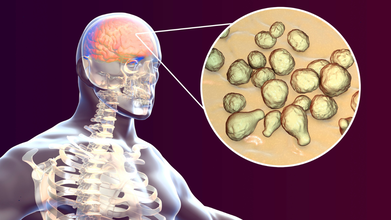
From physical problems like fatigue and vision problems, people who survive the deadly bacterial meningitis are likely to live with long-term fatigue and vision problems, as well as be at high risk of suicide, according to a new study.
The study comes as the UK is experiencing an outbreak of meningitis in Kent, that began among students who visited Club Chemistry in Canterbury between March 5 and 7.
Although bacterial meningitis is treatable, it requires prompt, often immediate treatment for better recovery. Yet patients are likely to face the risk of fatal or long-term complications -- from physical, psychological, and social impacts, said researchers from the University of Otago, The Conversation reported.
The new findings, based on 16 cases from New Zealand, who reportedly suffered the fatal disease, showed that multiple chronic after-effects is permanent in some, while in others, it dragged on for years. The effects include:
- fatigue,
- difficulties with concentration,
- memory and emotional regulation,
- persistent headaches,
- issues with mobility, vision, and hearing.
- anxiety,
- depression
- suicidality.
"Our findings demonstrate that bacterial meningitis is much more than a life-threatening infection. It is an acute disease with serious, chronic after-effects which are poorly understood and often go unrecognised," the researchers said.
Kent Meningitis Outbreak
According to the latest update from the UK Health Security Agency (HSA), 20 laboratory cases of meningitis are confirmed, and 9 notifications remain under investigation, bringing the total to 29 in the country.The bug that causes the infection has been identified as the known strain of meningitis B, and MenB vaccines will be offered to 5,000 students living in the University of Kent halls of residence in Canterbury.
Meanwhile, the UKHSA chief executive, Susan Hopkins, said the outbreak "looks like a super-spreader" event with "ongoing spread" through universities' halls of residence.
"There will have been some parties, particularly around this, so there will have been lots of social mixing. I can't yet say where the initial infection came from, how it's got into this cohort, and why it's created such an explosive amount of infections," she added.
As per Trish Mannes, UKHSA Regional Deputy Director for the South East, even after two doses, the MenB vaccine “does not protect against all strains of meningococcal disease, nor against all infections that can cause meningitis. It also does not prevent the bacteria from being carried and spread in the community”.
The UKHSA thus warned people to be aware of the signs and symptoms of invasive meningococcal disease, and to seek immediate medical attention if they or anyone they know develops these signs and symptoms.
Common symptoms include:
- rash
- sudden onset of high fever
- severe and worsening headache
- vomiting and diarrhea
- joint and muscle pain
- seizures.
- Follow Us :


© 2024 Bennett, Coleman & Company Limited