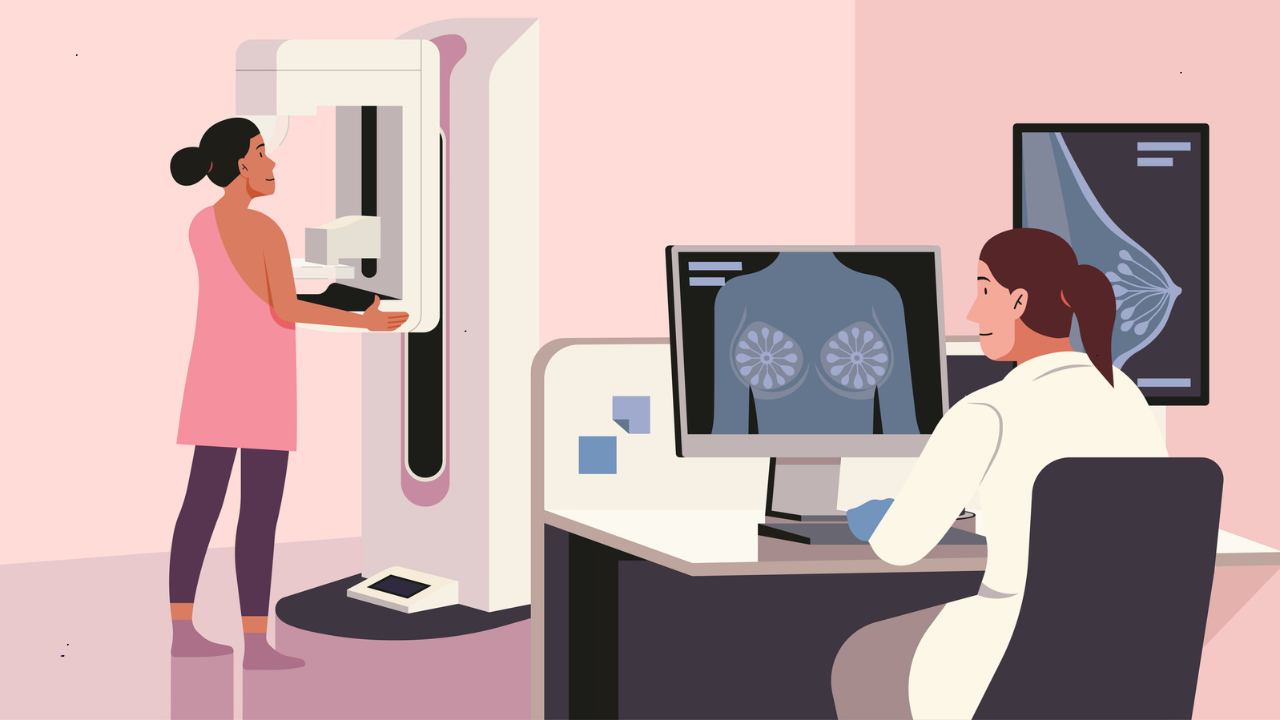
Breast cancer remains one of the most common and fatal cancers among women worldwide, and early detection is proven to play a crucial role in improving outcomes. While mammography remains the most effective screening tool, knowing when to start and how often to get screened can be confusing. The changing medical guidelines, as with the new screening guidelines from the American College of Physicians (ACP), can also leave women confused about when to start mammograms and how often to repeat them. HealthandMe spoke to experts to understand the correct timing. So, What Do The ACP Guidelines Say? The new guidance statement developed by ACP's Clinical Guidelines Committee urged mammography screening once every two years in asymptomatic, average-risk adult females, instead of the annual recommendation. The ACP guidelines further state that all average-risk females ages 50 to 74 must undergo biennial mammography. It added that women aged 75 years or older with asymptomatic and average-risk can also discuss stopping routine screening with their doctor. In sharp contrast, the United States Preventive Services Task Force (USPSTF) urges starting annual screening at age 40 to save lives. What You Should Follow “Some cancer societies like the American Cancer Society say biennial, while NCCN says annually. We prefer annually starting at age 40 till the woman is in good health, as biennial screening may delay early diagnosis in some cases,” Dr. Ashwani Kumar Sharma, Vice Chairman - Manipal Comprehensive Cancer Centre and Onco Robotic Surgeries, Manipal Hospitals, Gurugram, told HealthandMe. NCCN, or the National Comprehensive Cancer Network, is an alliance of 34 cancer centers in the US. Dr. Sharma added that a practical and balanced approach would be to do biennial mammography from 40 to 50 years of age and annual mammography after 50 years of age for maximum benefit. What Are Mammograms? A mammogram is a low-dose X-ray that captures detailed images of breast tissue, capable of identifying cancers before any physical symptoms appear. In women with a BRCA1 or BRCA2 gene mutation who are referred to as "high risk" or with a history of radiation to the chest between ages 10 and 30, screening may start as early as age 30 and include annual breast MRIs alongside mammograms. Mammograms: What Do India’s Guidelines Say?Breast cancer in India is usually diagnosed at an advanced stage due to poor health awareness. But of late, there has been an increase in awareness, and more and more women are reporting in their earlier stages with a breast lump. “Sometimes even this is too late. Breast cancer screening would help us diagnose this disease at an even earlier stage to help increase the chances of a cure from this deadly but treatable disease with the help of simple tests,” Dr Abhijit Kotabagi, Senior Consultant, Department of Surgical Oncology, Yatharth Hospital, Noida, told HealthandMe. “I would endorse screening and women’s health awareness in our Indian population for women above 40 years after discussion of the pros and cons of screening with a clinician,” he added. The Indian Council of Medical Research (ICMR) and other health organizations recommend the following guidelines: 1. Women Aged 30-40 Years Clinical Breast Examination (CBE) every 1-3 years by a doctor. Self-Breast Examination (SBE) every month to check for lumps or changes. 2. Women Aged 40-50 Years Annual Clinical Breast Examination (CBE). Mammogram (X-ray of the breast) every 2 years if advised by a doctor. 3. Women Above 50 Years Mammogram every 2 years (or as recommended by a doctor). Continue monthly self-exams and yearly clinical exams.