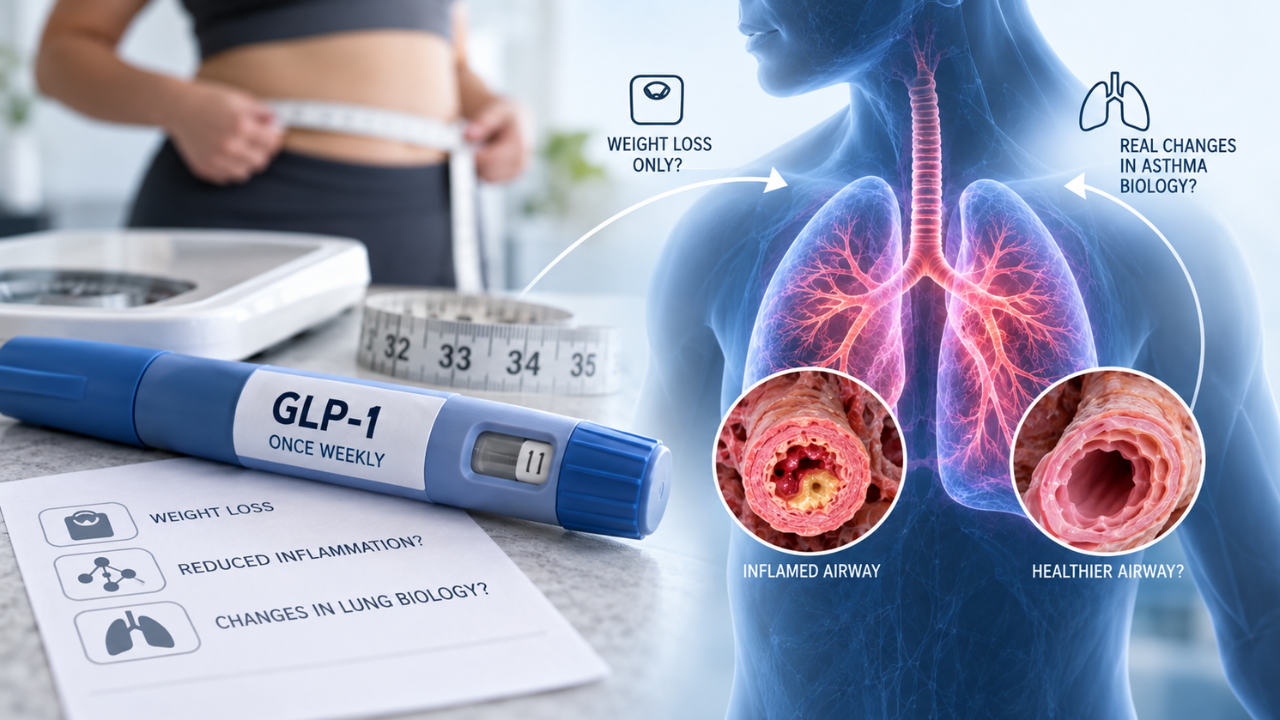
GLP-1 drugs have been become increasingly popular for obesity and type 2 diabetes. But it may also have a beneficial effect on your lungs. New research presented at the European Respiratory Society (ERS) Congress in Barcelona suggests that people with asthma who were prescribed GLP-1 receptor agonists, particularly semaglutide, experienced significantly fewer asthma attacks. But the important question is - are these drugs directly affecting asthma biology, or are people simply getting their asthma in control because they lose weight? The study does not provide that answer. In fact, researchers and independent experts say clinical trials are needed before GLP-1 drugs can be considered a treatment for asthma. GLP-1 Drugs May Help With Control Asthma Researchers led by Professor Chloe Bloom of Imperial College London’s National Heart & Lung Institute analysed UK electronic health records in four parallel studies. Each study included around 20,000 to 22,000 people who had started a GLP-1 receptor agonist or a different type of diabetes medicine called a sulfonylurea. The researchers looked at people with asthma and COPD and compared the frequency of acute respiratory attacks after treatment. The strongest result was seen with semaglutide. Among people with asthma, semaglutide use was linked with nearly 40% fewer asthma attacks, while among people with COPD, it was linked with about a 20% reduction in flare-ups. The effect appeared stronger among people with more pronounced asthma. Professor Bloom said, “The effect was strongest with semaglutide especially in people with asthma, where use of semaglutide appears to be associated with nearly 40% reduction in asthma attacks. Semaglutide also led to a 20% reduction in COPD flare ups.”Also read: Ozempic Hair: GLP-1 Drug Use Linked To 7% Higher Baldness Risk In MenAsthma And Obesity Obesity itself is strongly associated with asthma. Excess body fat can affect lungs, increase inflammation and as well as immune response. Dr. Shehla Shaikh, Consultant Endocrinologist, Saifee Hospital, Mumbai told HealthandMe, “People who are obese have a higher risk of developing asthma and often have asthma that is more frequent or more severe. When people lose weight the pressure, on the lungs decreases breathing becomes easier. Inflammation goes down. That may be why some people who use GLP-1 medicines say they have asthma attacks. However new research suggests that the story may not end with weight loss.” So, if someone with obesity and asthma takes semaglutide, loses weight and subsequently has fewer attacks, the improvement may simply be a consequence of the weight loss. Dr Vimal J. Pahuja, Associate Director, Dept of Medicine, Metabolic Physician & Diabetologist, Dr L H Hiranandani Hospital, spoke to HealthandMe, to explain more factors that could influence asthma flare-ups: “Obesity itself can make asthma worse. Extra weight around the chest and abdomen can reduce lung expansion and increase the effort needed to breathe. Obesity is also linked with acid reflux, sleep apnoea and a background state of inflammation, all of which can worsen asthma. Therefore, when a person loses meaningful weight on a GLP-1 drug, it is quite reasonable to expect fewer symptoms and possibly fewer attacks.”Also read: Wegovy & Zepbound Are Not Approved By US FDA For Children Under 12: So Why Are Prescriptions Rising? Even though research has not reached there yet, could there be a possibility GLP-1 drugs could have a beneficial impact on asthma? If yes, this could spark hope for the possibility that the drugs could have effects on airway inflammation that are partly independent of weight loss. Dr. Pahuja explained, “GLP-1 receptors are also found in the lungs. Laboratory studies suggest that activating these receptors may calm inflammatory signals, reduce excess mucus and make the airways less reactive. Animal studies have shown reductions in several immune pathways involved in asthma, including signals that normally attract inflammatory cells into the lungs.” He continued, “This is scientifically exciting because obesity-related asthma often behaves differently from the typical allergic asthma seen in younger patients. Early human studies are also encouraging. People with both diabetes and asthma who started GLP-1 medicines appeared to have fewer asthma flare-ups than those taking some other diabetes treatments. Importantly, some of this benefit remained even after researchers accounted for weight and blood-sugar changes. However, this does not mean GLP-1 drugs are asthma medicines. They should not replace inhalers or standard asthma treatment.” The research was observational and based on medical records, rather than a randomised clinical trial. That means researchers observed what happened to people who received different medicines but did not randomly assign the treatments.Also read: Exclusive: GLP-1 Drugs Are The ‘New Statins’, Says University Hospital Birmingham Professor Could GLP-1 Drugs Become Asthma Treatments? Professor Bloom herself cautioned: “The findings from this study are encouraging, but they should not change treatment decisions on their own. People with asthma or COPD should not start GLP-1 receptor agonists specifically for their lung condition outside current prescribing guidance.” Experts caution that despite promising outcomes of GLP-1 drugs, more research and clinical trials would be needed to prove that weight loss medicines have effects that transcend weight loss and diabetes management. Dr. Shaikh concluded, “GLP-1 receptors are part of biological pathways that are linked to inflammation and metabolism. Scientists are studying whether GLP-1 drugs could directly affect inflammation in the airways or reactions that help cause asthma. The evidence is still growing, and it is too early to say that GLP-1 drugs really change the underlying biology of asthma.”