
- Health Conditions A-Z
- Health & Wellness
- Nutrition
- Fitness
- Health News
- Ayurveda
- Videos
- Medicine A-Z
- Parenting
Are You Losing Weight Or Muscle Mass? What Does Healthy Weight Loss Look Like?

(Credit-Canva)
For many people the word ‘weight loss’ only means seeing the number on the scale go down. Whether they work out for that weight to go down or eat unhealthy amounts of foods not enough to sustain them, or exercise more than their body can handle. But what many fail to understand is that this kind of weight loss is not sustainable, you may shed a few pounds, but you will gain them back as quickly as you lost them? So what is the difference between a healthy weight loss and a quick and unsustainable weight loss?
Many times, when you are not eating well and exercising in hopes of losing weight you are tapping into the reservoir your body creates for emergencies. Doing this causes ‘Weight loss’ which means you have lost fat, as well as muscle and water. On the other hand, fat loss is when you only lose excessive fat tissues. It's like comparing losing things from your house to specifically getting rid of clutter. Fat loss is a better goal because it helps you look and feel healthier. Losing fat improves your body's shape and reduces the risk of health problems. It's about getting rid of the extra fat that can cause issues, rather than just seeing a lower number on the scale.
What Is The Difference Between Fat & Muscle Loss?
It’s tricky to know if you're losing fat or muscle just by looking at the scale. Regular scales only tell you your total weight, not what that weight is made of. Imagine trying to figure out what's in a bag without looking inside. You need special tools to see if you're losing fat or muscle. Losing muscle can make you feel weaker and less energetic. It's important to know what kind of weight you're losing so you can make sure you're getting healthier, not just lighter. Knowing the difference helps you make better choices for your body.
According to Weight Loss Strategies and the Risk of Skeletal Muscle Mass Loss 2021 study published in the Nutrients journal, people often lose muscle instead of fat, especially older adults, women after menopause, people with health conditions, and athletes. To prevent this, studies show that doing both strength training and cardio exercises, along with eating more protein than the usual recommended amount, can help keep muscle while losing fat. Older adults, in particular, seem to benefit greatly from this approach. So, eating more protein than the standard recommendation and doing the right types of exercise is important for healthy weight loss, especially for older individuals.
Why Losing Muscle Mass Is A Bad Idea
To understand the importance of muscle mass a 2018 study published in Author Manuscript Effects of Weight Loss on Lean Mass, Strength, Bone, and Aerobic Capacity looked at how exercise helps people keep muscle, strength, bone density, and aerobic fitness while losing weight. Overweight adults were divided into groups: those who cut calories, those who exercised, and those who did both. All groups lost about 7% of their weight. The group that only cut calories lost muscle and saw a drop in fitness. However, the groups that exercised, especially the one that did both exercise and calorie cutting, kept their muscle and even improved their fitness. This shows that while cutting calories alone can lead to muscle loss and reduced fitness, adding exercise protects against these losses and improves overall physical function during weight loss. Therefore, exercise is a crucial part of any weight loss plan.
How To Track Fat Loss?
To really know if you're losing fat, you need more than a regular scale. A body fat scale is a good tool, it sends a small electrical signal through your body to estimate how much fat you have. According to Science Direct, Skinfold calipers measure the thickness of your skin folds at certain spots, which gives an idea of your fat percentage. Measuring your waist and hips with a tape measure can show if you're losing fat around your middle. Also, pay attention to how your clothes fit. If they feel looser, it's a good sign you're losing fat. These methods give you a more accurate picture than just your weight.
How Does Your DNA Affect Your Daily Food Intake?
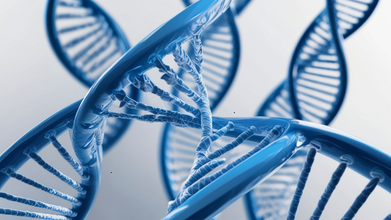
Credit: Canva
Your DNA, or more specifically your genes, have fascinating interactions with your diet. These interactions are often bidirectional and form the basis of personalized nutrition through genomic biohacks.
This has impressive applications in solving some of the most stubborn health related challenges, including undesirable weight gain and obesity.
Here are the five ways by which your DNA could positively shape your diet:
Nutrigenomics
Nutrigenomics is the mechanism by which your diet affects your genes, and not the other way round. The process has massive implications for your health, and especially over how you can use specific dietary components to protect yourself against serious killer diseases like cancers and issues like faster aging.
Deficiency in key nutrients like Vitamin B9 or folate, Vitamin B12, choline & methionine can cause genomic instability and increased cancer risk.
In contrast, specific foods like curcumin, resveratrol, green tea, broccoli, Brussels sprouts etc can help with genomic stability and help fight inflammation, oxidative stress and cancers.
Nutrigenetics
These are the processes by which your genes affect your diet or consumed food and hence central to our theme here. At times, nutrigenetics is referred to by the wider umbrella term nutrigenomics.
Your gene variants determine how you process specific nutrients, which explains why the same diet works differently for different people. Genetic tests like Eplimo can easily find this out.
For instance, presence of certain variants of the SGK1 gene make those individuals more prone to high blood pressure from salt intake.
Similarly, variants in the FTO gene are strongly linked to obesity risk. Other very common examples are variants in the CYP1A2 gene that determine how fast you metabolize caffeine and mutations in the LCT gene that determines whether you are at risk of lactose intolerance.
Hunger & Satiety Hormones
Ghrelin, the hunger hormone, is produced mainly in the stomach and stimulates appetite, increases food intake as well as promotes fat storage.
The production of ghrelin hormone is governed by the GHRL gene, and a common variant in this gene called RS696217 is associated with unnecessary hunger and higher obesity risk.
Similarly, leptin is a hormone produced by the body’s fat tissues and regulates satiety or the feeling of fullness with regard to food.
Production of leptin is governed by the LEP gene, while its utilization is controlled by the LEPR (leptin receptor) gene. Variants in either, especially LEP, can cause severe, early-onset obesity.
Metabolic Pace
Genes play a significant role in determining your metabolic pace. Studies show that genes account for up to 60 percent of the variations seen in the Resting Metabolic Rate between individuals.
RMR is basically a measure of how much calories are burnt while you are sitting or doing light activities.
It is different from Basal Metabolic Rate (BMR) that requires fasting and bed rest. Hundreds of genetic variants work together to set your RMR.
These include variants in the UCP1 gene governing thermogenesis or heat production, the MC4R gene that influences how the body burns nutrients for energy, and genes governing mitochondrial efficiency.
Building more muscles is a proven way to counter the negative impact of such variants and boost RMR.
Gut Microbiome
Does your gut microbiome impact your genes more, or does your genes impact your gut microbes more? Definitely, it is the former, which is also a better known mechanism due to that greater impact.
But that doesn’t mean that the reverse impact, from your DNA to your microbiome which accounts for around 10 percent of its composition, is insignificant in any way.
For instance, your specific gene variants determine which bacteria thrive by influencing immune responses, metabolism, and food preferences.
Specific genes, such as the LCT gene, directly correlate with the abundance of beneficial bacteria like Bifidobacterium. Genetics also influence how you digest food and your dietary preferences, which in turn feeds specific bacterial species.
Other genetic factors too have been identified as having strong links to microbial diversity, which is a great marker for not only gut health, but overall health, performance and longevity.
World Happiness Report 2026 Flags Social Media Harms On Adolescents' Mental Well-being

Credit: iStock
The impact of social media on adolescents’ well-being is significant, said the World Happiness Report 2026 today, warning that the scale of harm is significant enough to affect entire populations.
The annual report, published by the Wellbeing Research Centre at the University of Oxford, points to overwhelming evidence of both direct and indirect harm.
Direct harms include exposing them to videos of graphic pornography and real-life violence, facilitating cyberbullying and deepfakes, promoting dangerous “challenges”, connecting them with sexual predators, and facilitating the purchase of illegal drugs.
The indirect harms involve rising levels of depression, anxiety, and reduced life satisfaction.
“The harms and risks to individual users are so diverse and vast in scope that they justify the view that social media is causing harm at a population level,” the report said.
The harmful "experiences are so common that they should also count as ordinary use,” it added.
Notably, the report called the major social media platforms such as Facebook, Instagram, Snapchat, TikTok, and X, "dangerous consumer products that harm adolescents at a massive scale”.
“The evidence of harm – both direct and indirect – is so strong and comes from so many sources in so many countries that we believe policymakers around the world now have enough evidence to justify action to protect children and adolescents,” the report said.
In line with this, countries such as Australia and Indonesia recently introduced legislative restrictions on social media use among young people. In India, states including Karnataka and Andhra Pradesh have announced bans, while Bihar is considering similar measures.
The report pointed out that social media is causing direct harms to millions of people globally. This includes:
- Addiction and problematic use
- Sleep deprivation
- Sextortion
- Sexual harassment
Impact on Youth Well-being
Research cited in the report shows a clear link between heavy social media use and lower life satisfaction among adolescents. Youth and teens who spent more time on social platforms reported poorer mental well-being compared to those who used less.
Overall, internet use was linked with negative effects, particularly among girls and in countries such as the UK and Ireland. Yet, among those who used the internet for communication, learning, news consumption, and content creation, higher life satisfaction was reported.
The report noted that negative emotions are becoming more common across all regions. Worry increased among young people, while the frequency of anger declined across both younger and older populations.
Despite these trends, positive emotions still occur about twice as often as negative ones globally.
Global Happiness Rankings
Finland has been ranked the world’s happiest country for the ninth consecutive year, followed by Iceland, Denmark, and Costa Rica. Other countries in the top 10 include Sweden, Norway, the Netherlands, Israel, Luxembourg, and Switzerland.
In contrast, when measuring changes in happiness among people under 25, countries in the NANZ region -- the United States, Canada, Australia, and New Zealand -- rank much lower, placing between 122 and 133 out of 136 countries.
Menopause Can Raise Alzheimer Risk In Women, Neurologist Warns

Hormonal changes during menopause can significantly increase Alzheimer's disease (AD) risk in women, according to Dr Lisa Mosconi, a neuroscientist and women’s brain health specialist.
In a new The Journal of Clinical Investigation review, the renowned AD expert noted that menopause can change brain biology and metabolism and may contribute to amyloid plaques and tau tangles, which are key biological markers of AD.
Alzheimer disease is the most common cause of dementia, affecting over 55 million individuals worldwide, with projections exceeding 150 million by 2050 . Out of the reported cases, nearly two-third are made up of women, with the majority being postmenopausal women
Estrogen protects the brain by lowering inflammation, increasing neuronal survivals supporting non-amyloidogenic processing, and reducing amyloid-beta-related neurotoxicity, all of which are factors contributing to the development of AD.
However, when estrogen levels drop during menopause and follicle-stimulating hormone (FSH) and luteinizing hormone (LH) rise, the brain becomes more likely to develop AD-related damage.
Previous research has also shown that early menopause, especially before age 45, is linked with increased risk of dementia and the removing the ovaries before natural menopause could increase long-term dementia risk, with the greatest excess risk seen at younger ages, especially before 45.
READ MORE: Simple Blood Test Can Predict Dementia Risk in Women 25 Years Before Symptoms
What Is Alzheimer’s Disease?
Alzheimer's disease is one of the most common forms of dementia and mostly affects adults over the age of 65.
About 8.8 million Indians aged 60 and above are estimated to be living with Alzheimer's disease. Over seven million people in the US 65 and older live with the condition and over 100,00 die from it annually.
Alzheimer's disease is believed to be caused by the development of toxic amyloid and beta proteins in the brain, which can accumulate in the brain and damage cells responsible for memory.
Amyloid protein molecules stick together in brain cells, forming clumps called plaques. At the same time, tau proteins twist together in fiber-like strands called tangles. The plaques and tangles block the brain's neurons from sending electrical and chemical signals back and forth.
Over time, this disruption causes permanent damage in the brain that leads to Alzheimer's disease and dementia, causing patients to lose their ability to speak, care for themselves or even respond to the world around them.
While there is no clear cause of Alzheimer's disease, experts believe it can develop due to genetic mutations and lifestyle choices, such as physical inactivity, unhealthy diet and social isolation.
Early symptoms of Alzheimer's disease include forgetting recent events or conversations. Over time, Alzheimer's disease leads to serious memory loss and affects a person's ability to do everyday tasks.
There is no cure for this progressive brain disorder and in advanced stages, loss of brain function can cause dehydration, poor nutrition or infection. These complications can result in death.
Can You Detect Alzheimer's Early On?
The US Food and Drug Administration has approved the use of a blood test which can help diagnose Alzheimer’s disease in adults aged 55 and above.
The blood test, known as Lumipulse, can detect amyloid plaques associated with Alzheimer’s disease and has proven to be a “less invasive option” that “reduces reliance on PET scans and increases diagnosis accessibility.”
FDA Commissioner Martin A. Makary said of the landmark decision, "Alzheimer’s disease impacts too many people, more than breast cancer and prostate cancer combined.
"Knowing that 10 percent of people aged 65 and older have Alzheimer's, and that by 2050 that number is expected to double, I am hopeful that new medical products such as this one will help patients."
It remains unclear when this test will be available for commercial use across the world.
- Follow Us :


© 2024 Bennett, Coleman & Company Limited