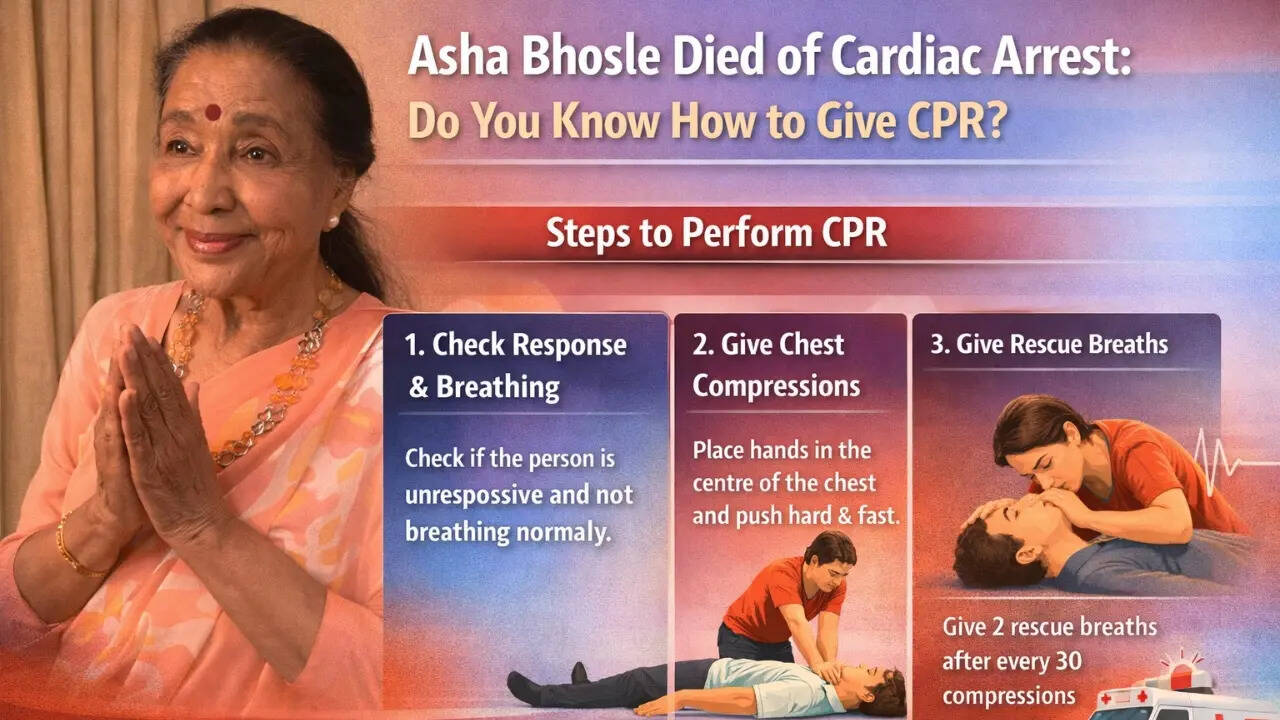
Asha Bhosle, India's veteran singer, died of cardiac arrest on Sunday. On Saturday evening, the 92-year-old was admitted to Mumbai's Breach Candy Hospital. Initially, she was admitted due to a chest infection but was later moved to the ICU the same night. The news of her hospitalisation was confirmed by her singer granddaughter Zanai Bhosle, citing 'extreme exhaustion and chest infection'."My grandmother, Asha Bhosle, due to extreme exhaustion and suffering a chest infection, has been admitted to hospital and we request you to value our privacy. Treatment is ongoing and hopefully everything will be well and we shall update you positively," Zanai wrote.What is cardiac arrest?A cardiac arrest is a medical emergency that requires immediate attention. It is characterised by a sudden halt in heart function – it stops beating and blood circulation to the brain and organs is consequently cut off. It is characterised by unresponsiveness, sudden collapse, and lack of breathing. As opposed to a heart attack, a cardiac arrest is an electrical failure caused by conditions like arrhythmia. The symptoms can include palpitations, dizziness, shortness of breath, and sudden collapse. For treatment, or as a life-saving measure, CPR must be performed.What is CPR?Cardiopulmonary Resuscitation (CPR) is an emergency procedure for patients who suffer a cardiac arrest. It combines chest compressions and rescue breathing to ensure oxygen flow to the organs. It is an effort to resuscitate a patient, and performing it immediately can double or even triple the chances of survival.How to perform CPR?To perform CPR on an adult, follow the given steps:Begin by checking if the collapsed patient is responsiveCheck if the patient is breathing or not, even if he or she is only gaspingLay the patient on the ground with their back on a firm, flat surfacePlace the heel of one of your hands on the centre of the chest and place the other hand on top of itStart delivering chest compressions – hard and fastPush at a rate of 100 to 120 compressions per minute and allow the chest to return to normalYou may combine 30 compressions with two rescue breaths until an ambulance arrives, or till the patient wakes upSimply performing this can double the odds of survival, which is why CPR training is a must for all. However, doctors say that if not trained in CPR, then only perform compressions.