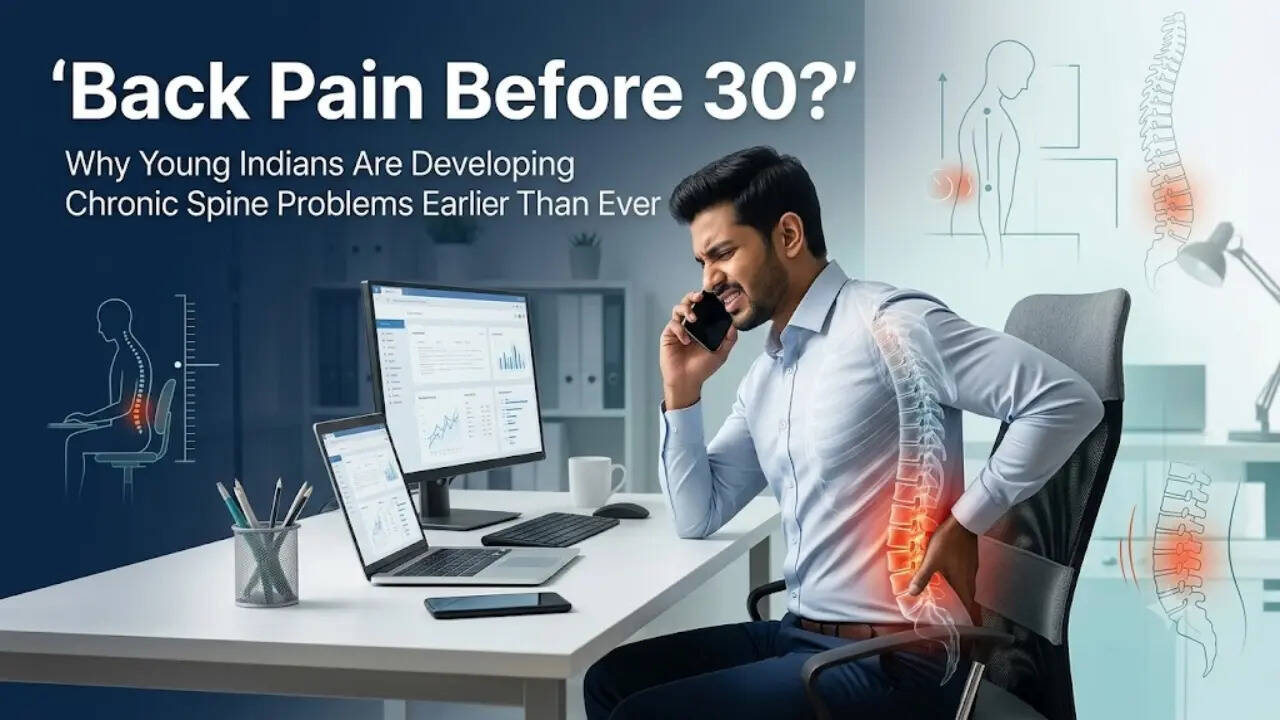
Back pain was once considered a problem of ageing, heavy labour, or injury. Today, it is increasingly common among people in their 20s and early 30s. Many young Indians now walk into clinics with persistent lower back pain, neck stiffness, shooting pain down the leg, or recurrent muscle spasms—symptoms that were earlier seen more often in older adults.Why are spine problems becoming more common?The reasons are closely linked to the way modern life has changed. Long hours at desks, laptop use from beds or sofas, prolonged mobile phone scrolling, reduced physical activity, irregular sleep, stress, and weight gain are all placing unusual strain on the spine at a younger age.Dr Satish Satyanarayana, Neurosurgeon, Apollo Hospitals, Bengaluru, said, "The spine is designed for movement. It depends on strong muscles, flexible joints, healthy discs, and good posture to function well. When a person sits for eight to ten hours a day, often slouched over a screen, the muscles supporting the spine become weak and tight. The discs between the vertebrae also experience uneven pressure. Over time, this can lead to chronic pain, early disc degeneration, nerve irritation, and, in some cases, slipped disc symptoms."Posture problems among working professionalsOne of the biggest contributors is poor sitting posture. Many young professionals work with rounded shoulders, forward-bent necks, and unsupported lower backs. This posture increases the load on the neck and lumbar spine. Similarly, “tech neck," caused by looking down at phones for long periods, can trigger neck pain, headaches, shoulder stiffness, and upper back discomfort.Work-from-home habits have made the problem worse. Dining chairs, couches, beds, and low tables are not designed for long working hours. A person may feel comfortable initially, but the spine quietly absorbs the stress. By the time pain becomes persistent, the underlying muscle imbalance may already be significant.Can lack of exercise make you prone to spine problems?Lack of exercise is another major factor. Many young adults focus on work but neglect strength and mobility. Walking alone may not be enough if the core, hip, back, and gluteal muscles are weak. These muscle groups act like a natural brace for the spine. When they are weak, even simple activities such as bending, lifting a bag, climbing stairs, or sitting for long periods can trigger pain.Stress also plays a role. Mental stress increases muscle tension, especially around the neck, shoulders, and lower back. Poor sleep reduces tissue recovery and increases pain sensitivity. In some people, repeated stress and inadequate rest can turn occasional discomfort into chronic pain.Is back pain the same as posture pain?Back pain should not always be dismissed as “posture pain." Medical evaluation is important if pain lasts more than two to three weeks, keeps returning, travels down the leg, causes numbness or weakness, worsens at night, follows an injury, or is associated with fever, unexplained weight loss, or bladder and bowel problems. These symptoms may suggest nerve compression, infection, inflammatory disease, or other serious spine conditions.Can exercise help? The good news is that most early spine problems are preventable and manageable. Young adults should take movement breaks every 30 to 45 minutes, set up an ergonomic workstation, keep screens at eye level, use a chair with lower back support, and avoid working from bed. Regular strengthening exercises, stretching, weight control, hydration, and good sleep are equally important.It is better to exercise caution while undertaking heavy weightlifting, and it is certainly not advisable to do so without professional trainer supervision. It is also important to lift correctly, avoid sudden heavy gym workouts without supervision, and treat early pain seriously rather than relying repeatedly on painkillers. Pain medicines may provide temporary relief, but they do not correct the cause.Back pain is often the body’s warning that the spine is under more stress than it can handle. The earlier young people correct their posture, improve their strength, and seek proper medical advice, the better their chances of avoiding long-term spine problems.