
- Health Conditions A-Z
- Health & Wellness
- Nutrition
- Fitness
- Health News
- Ayurveda
- Videos
- Medicine A-Z
- Parenting
Beyond Looks: How Technology Is Revealing the Health Traits You Inherit
(Credit-Canva)
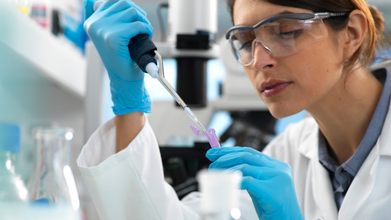
Genes not just shape our looks but also hold our health clues. Today, technology powered by genomics and data analytics is decoding these hidden health patterns, translating family history into actionable foresight. This shift has marked the rise of predictive, personalized healthcare, where prevention is the main goal and treatment has become truly tailored. This marks a quiet but strategic revolution in healthcare!
For India, a hotspot for lifestyle diseases, this transformative shift would be immensely helpful. As per the Indian Council of Medical Research, 1 in 4 may develop any of the lifestyle diseases, like hypertension or diabetes, in their lifetime. Here, genomic insights would help to identify individuals who are at higher risk, thus enabling targeted interventions even before the disease sets in. Moreover, powered by artificial intelligence and big data, genome sequencing is now capable of reading the entire genetic code of a person faster than ever before. Considering the advantage of predictive healthcare and the indispensable role of genome sequencing, the government-backed Genome India Project was launched in 2020. Additionally, many Indian start-ups have joined the field and are leading the revolution.
Various biotechnology firms and diagnostic labs are offering full-spectrum testing from whole-exome sequencing and whole-genome sequencing to targeted gene panels. These are powered by proprietary algorithms and significantly vast variant databases. The outcome is tremendous as it can identify disease causing mutations, inherited risk factors with remarkable accuracy, and even drug response markers.
Not just individual genes but thousands of genetic variants can be analysed simultaneously to predict the rise of polygenic risk scores. This model has already been applied across various diagnostic labs for predicting complex diseases such as certain cancers, heart disease, and even diabetes. It is expected that by 2030, the PRS market will exceed $3 million, signalling the mainstreaming of precision health tools.
Clinical Value and Real-World Impact
Across multiple specialties, genomic insights are now driving tangible benefits:
Cardiology: Predispositions to conditions like arrhythmia, familiar hypercholesterolemia can be identified long before the symptoms appears through genetic testing. This would allow offering preventive interventions to those high-risk individuals.
Oncology: The Role of genes in cancer development is well studied and documented. Therefore, hereditary cancer testing that covers BRCA1/2 and other multi-gene panels will support risk stratification and the development of informed surveillance strategies. Cascade testing, which includes screening family members of affected patients, not just aids in earlier diagnoses, but also in improved survival outcomes.
Pharmacogenomics: Another interesting impact of genetic variations is that it also influences how patients metabolize medications. If a clinician has this information, then they would be able to prescribe a personalized prescription, reducing the adverse drug reactions, a problem that costs the U.S. healthcare system nearly $30 billion annually.
Neurology and Psychiatry: Genetic profiling in the treatment of depression and APOE genotyping for Alzheimer’s risk are leading the way for early interventions and customised care.
In fact, the cumulative effect is profound: targeted therapy, fewer side effects, and more informed decisions across the continuum of care.
Navigating Risks, Ethics, and Regulation
As genetic data is becoming valuable and genomic testing is becoming mainstream to combat diseases, healthcare organizations must take the responsibility to protect the privacy of the data while following the ethical principles deliberately. Compliance frameworks like the Genetic Information Non-discrimination Act (GINA) in the U.S. and HIPAA privacy standards set the platform for responsible use of data. Digital Personal Data Protection Act (2023) in India is available, but a specific gene data safeguarding policy is yet evolving.
Other aspects to consider include informed consent and genetic counselling for responsible implementation. Patients must be aware of the test being done, how it would benefit them, and their family members. Further, genetic databases are key targets for cyberattacks. Thus, enterprise-grade encryption and data governance are significantly essential. In turn, it will ensure that the benefits of genomic medicine also reach the underserved and diverse populations.
The Road Ahead
The 21st-century medicine is driven by the fusion of biotechnology and big data, which has positioned genomics at the core. Owing to the advancements in the field of artificial intelligence and machine learning, it has been possible to coordinate AI models with genetic profiles, common lifestyle data, environmental factors, and electronic health records. Cumulatively, all these are delivering holistic risk predictions. It won’t be surprising if, in the future, the health records include more than blood test and X-ray data.
This development would be really a book for a country like India with diverse genes meet diverse lifestyles. Predictive healthcare would not only help to reduce the burden of chronic diseases but could also pave the pathway to improve healthy lifespans while making wellness truly proactive. Thus, the genomic revolution has made the invisible visible. Organisations embracing this transformation will play a vital role in patient outcomes. They would also lead and define the next era of healthcare- predictive, preventive, and personalised.
Prenatal Vitamins vs Multivitamins: Experts Reveal What Women Need

Credit: Canva
While you may have seen multiple women, who are not pregnant, taking prenatal vitamins to improve their skin, hair and nail quality, experts say you should steer clear and only stick to multivitamins to ensure your body stays healthy all-year round.
Prenatal vitamins are daily supplements for women who are pregnant or trying to get pregnant. These supplements contain the vitamins and minerals you need to support healthy fetal development, according to the Cleveland Clinic.
Dr Rohan Palshetkar, Consultant IVF Specialist, Bloom IVF tells Healthandme: ""Prenatal vitamin should be taken three months at least prior to the pregnancy or basically whenever you begin to start planning the pregnancy, ensure that all your micro nutrients as well as your folic acid levels are up to the normal mark so as to ensure that your baby has a healthy growth"
But when your body doesn't need it, taking supplements could put you at risk over time.
Which Vitamins And Minerals Are Prenatal Vitamins Rich In?
As per the American College of Obstetricians and Gynecologists (ACOG), here are the most important nutrients prenatal vitamins are packed with:
Folic Acid: One of the most important prenatal nutrients, this B vitamin is important as it creates your baby's neural tube. This is the structure that eventually forms brain. As per the US Preventive Services Task Force, folic acid supplements significantly increase the growth of healthy neural tube. The American Academy of Pediatrics also notes that it helps the neural tube to protect from defects by 50 percent.
Iron: It supplies blood and oxygen to the fetus and also helps build the placenta. It also gives the mother extra blood volume that you need throughout pregnancy. Pregnant people are prone to anemia, this is why iron supplementation is a must.
Calcium: The most time spend in uterus for a baby is invested in building their bones and teeth, this is a Herculean task, and requires the mother to have plenty of calcium. If you don't have enough calcium, then your baby will utilise the calcium from your body, which could lead to temporary bone loss.
Certain prenatal supplements also contain other additives such as omega-3 fatty acids.
Why Is It Dangerous To Take Prenatal Vitamins
The main difference between a prenatal vitamin and a multivitamin is the concentration of folic acid and iron.
Ingesting enough folate from food or folic acid from supplements at the start of a pregnancy lowers the risk of certain birth defects. Along with this, iron supplements help the body make the extra blood cells needed during pregnancy.
The amount of folic acid suggested for people who are planning a pregnancy is 400 to 800 micrograms (mcg) a day. The amount of iron needed in pregnancy is 27 milligrams (mg) a day.
The typical amount of folic acid for an non-pregnant adult is 400 mcg a day. For iron, the typical daily amount is 8 mg for males and 18 mg for females.
Taking iron and folic acid at levels higher than the suggested amounts may bump people closer to the upper limit for these nutrients which can raise the risk of health problems.
Taking too much folic acid, especially over 1,000 mcg daily without a doctor's advice, can mask a vitamin B12 deficiency, potentially causing irreversible nerve damage and may lead to side effects such as bitter taste, nausea or sleep problems, with potential links to increased risks in pregnancy like autism or insulin resistance.
Eating too much iron, especially from supplements, can cause acute iron poisoning, leading to severe nausea, vomiting, abdominal pain, diarrhea and bloody stools. Long-term excessive intake causes iron to deposit in tissues, causing iron overload (hemochromatosis) that damages the liver (cirrhosis), heart (failure), and pancreas (diabetes) and may cause a bronze skin color.
How The Buajau Sea Nomads Evolved Beyond Human Limits

Credits: Wikimedia Commons
Bajau Sea Nomads have evolved beyond human limits. But how is that even possible? Remember Charles Darwin's theory of natural selection? The survival of the fittest? This is what kept the Bajau Sea Noamds going, and evolving.
The Bajau people are sea nomads who survive by collecting shellfish from the sea floor. They come from South-East Asia, and study shows that they have developed bigger spleen for diving. They are known as 'Sea Gypsies' and are known to hold their breath for over five minutes, whereas highly trained professionals can hardly hold their breath for three to four minutes. Bajau divers spend hours underwater for fishing. They are also the world's only community of self-sufficient sea nomads, reported The Guardian.
How The Bajau Sea Nomads Evolved: What Does The Study Say?

A study published in the academic journal Cell notes that the effect of their underwater lifestyle reflected on their biology. Their spleens were larger than those of other people from the region.
How The Bajau Sea Nomads Evolved: How Does A Spleen Work?
Tucked just beside the stomach, the spleen is roughly the size of a fist and usually flies under the radar. Its everyday job is to filter old red blood cells from the blood. But under the right conditions, it can also act like a built-in oxygen reserve.
This hidden ability is especially important for the Bajau people, often called “sea nomads,” who live across parts of the southern Philippines, Indonesia and Malaysia. Numbering roughly a million, the Bajau have relied almost entirely on the ocean for generations.
“For possibly thousands of years, they have been living on houseboats, travelling from place to place in the waters of South-East Asia and visiting land only occasionally,” said Melissa Ilardo from the University of Copenhagen, speaking to the BBC’s Inside Science. “Everything they need, they get from the sea.”
Read: A Genetic Disorder Caused This Indonesian Tribe To Have Sparkling Blue Eyes
How The Bajau Sea Nomads Have Evolved?
The Bajau are known for their extraordinary free-diving abilities. When diving in the traditional way, they spend up to eight hours a day at sea, with around 60 percent of that time underwater. Individual dives can last anywhere from 30 seconds to several minutes, often reaching depths of more than 70 metres.
What makes this even more remarkable is the equipment. Many Bajau divers use little more than a wooden mask or simple goggles and a weight belt. No oxygen tanks, no wetsuits, no modern diving aids.
This lifestyle prompted researchers to ask whether the Bajau body has adapted over time to support such extreme breath-hold diving.
According to Dr Ilardo, the spleen was an obvious place to look. Humans, like many marine mammals, have a natural “dive response” that kicks in when we hold our breath and submerge ourselves in water, especially cold water.
“When this response is triggered, your heart rate slows down,” she explained. “Blood vessels in your arms and legs constrict to preserve oxygen-rich blood for vital organs like the brain and heart.”
The final part of this response involves the spleen.
How The Bajau Sea Nomads Evolved: An enlarged Spleen Boosts Oxygen

The spleen acts as a reservoir for oxygenated red blood cells. When it contracts during a dive, it releases these cells into the bloodstream, giving the body a temporary oxygen boost.
“It’s like a biological scuba tank,” Dr Ilardo said.
For people like the Bajau, who dive repeatedly every day, this spleen contraction can make a crucial difference, helping them stay underwater longer and recover faster between dives.
In short, what seems like an ordinary organ plays an extraordinary role, revealing how the human body can adapt in remarkable ways to extreme environments.
A Child Dies Every Nine Minutes in India From Drug Resistance, Data Shows

Credit: Canva
One child in India dies every nine minutes from an infection caused by antibiotic-resistant bacteria, as it becomes one of the top 10 global public health threats, experts warn.
Dr HB Veena Kumari of the Department of Neuromicrobiology, National Institute of Mental Health and Neurosciences, claims: "The Covid-19 pandemic has significantly contributed to rising antimicrobial resistance. The World Health Organisation projects that 10 million deaths will occur annually by 2025."
According to the National Foundation for Infectious Diseases, antibiotic resistance occurs when bacteria in the body learns to withstand and remain unaffected by the medicines (antibiotics) meant to kill them.
In such cases, doctors have to switch to different antibiotics, but these backup medicines might not work as well or might cause more side effects. Additionally, infections may also worsen over time as bacteria can become resistant to all available drugs.
Alarmingly is that these tough, drug-resistant bacteria can spread from one person to another, both in hospitals and at home.
According to Dr TS Balganesh, Gangagen Biotechnologies, nearly 36 percent of haemodialysis patients die from fatal infections, which is second only to cardiovascular diseases as a cause of death.
He tells Deccan Herald: "The risk for infective endocarditis in haemodialysis patients is approximately 18 times higher than in the general population and up to 58 percent of these episodes are caused by a bacteria named 'S aureus', with an in-hospital mortality of more than 50 percent."
What Does WHO Say?
One out of every six serious infections confirmed in labs worldwide last year could not be killed by the antibiotics meant to treat them.
Between 2018 and 2023, the problem of antibiotics failing (called resistance) got much worse. For many common types of germs, resistance went up by 5% to 15% every year. The growing inability of these essential medicines to work is a huge threat to people everywhere.
Which Antibiotics Are People Becoming Resistant To?
The WHO's latest report is the most detailed look yet at this issue. It reports on how much resistance exists across 22 different antibiotics, which include common drugs used to treat everyday illnesses. The report focused on eight common types of bacteria that cause things like:
- Urinary tract infections (UTIs)
- Stomach and intestinal infections
- Dangerous blood infections
- Gonorrhoea
Additionally, Dr Obaidur Rahman of Dr Ram Manohar Lohia Hospital has also warned that the country’s casual use of Azithromycin, sold under brand names such as Zithromax, Azee and Zmax, has worsened its effectiveness and pushed India closer to a major public health challenge.
A drug often prescribed for sore throats and upper respiratory tract infections, Dr Rahman noted that Azithromycin was once effective against Mycoplasma Pneumonia, a bacterium responsible for pneumonia in adults and children.
READ MORE: India’s New Antibiotic in 30 Years Offers Hope Against Antibacterial-Resistant Infections
However, this is no longer the case as India now shows an alarming 80 to 90 percent resistance to the drug when treating infections caused by this bacterium. A medicine that once addressed a wide range of respiratory problems is no longer reliable for many patients.
The surgeon has since urged people to avoid taking antibiotics without proper medical advice. Most seasonal respiratory infections resolve on their own, and unnecessary drugs only add to the resistance problem.
- Follow Us :


© 2024 Bennett, Coleman & Company Limited