
- Health Conditions A-Z
- Health & Wellness
- Nutrition
- Fitness
- Health News
- Ayurveda
- Videos
- Medicine A-Z
- Parenting
Calf Muscles Are Our Second Heart: Here's How You Can Activate Them

Calf Muscles (Credit: Canva)
Your heart has a colossal task: to pump blood 24/7, 365 days a year, from your first breath to your last. However, this muscle, which weighs between 250 and 350 grams in an average human, needs support. Enter the calf muscles—your "second heart." They assist the heart by working against gravity, pushing blood upwards from the lower part of the body to the heart.
What Are Calf Muscles?
They are a group of muscles located in the back of the lower leg. The calf muscles are primarily responsible for helping a person walk, run, jump, and stand on their toes. However, they are pivotal to the cardiovascular system as well. They help squeeze the veins in the lower legs, aiding the upward return of blood toward the chest. Notably, this "second heart" only activates when you move your legs, which poses a problem for individuals who sit or stand for extended periods during their workday.
Dr Teresa Wu, a vascular medicine physician, explained to Time.com, "The blood flow back to the heart has to fight the force of gravity, which keeps everything down. Without a natural pumping mechanism, blood struggles to return to the heart."
How Do Your Calf Muscles Pump Your Blood?
Every time your calf muscles contract, they open one-way valves inside the leg veins, pushing blood upwards toward the heart. When the calf relaxes, these valves close, preventing blood from flowing back into the legs. This is how they ensure regular movement of blood in the body. However, if a person spends too much time sitting or standing, it can lead to increased pressure in the veins. This may damage these valves over time, making them "leaky" and causing blood to pool in the legs.The loss of calf muscle pump function can result in symptoms of chronic vein disease, such as swelling, leg fatigue, and varicose veins. In rare cases, it can even lead to blood clots, particularly when individuals remain seated for long durations, such as during lengthy flights.
Sedentary Behavior Obstructs This Process
An inactive "second heart" contributes to what researchers refer to as "sitting disease." Various studies have proven that prolonged sedentary behaviour has long-term impact on your heart health. Recnetly, the American Heart Association (AHA) warned that excessive sitting can raise the risk of heart disease. Conversely, standing for long periods without movement can also be detrimental. Dr Sharonne Hayes, a cardiologist at the Mayo Clinic, notes that the standing desk trend has inadvertently increased rates of venous issues, as people tend to stand still rather than move.
One Step Process To Activate Your Second Heart
The simplest way to activate your second heart is to walk. Movement of the legs and calf muscles promotes circulation. Experts encourage individuals with desk or standing jobs to walk as often as possible. For those unable to get up, such as during long flights or while at work, toe raises—flexing the foot up and down—can mimic walking, helping to keep blood flowing.Moreover, elevating the legs for 15 to 30 minutes each night can also alleviate swelling, especially for those with chronic vein disease. Wearing compression socks can provide support for individuals who spend significant time sitting or standing. So, the next time you think about ensuring proper blood flow in your body, don’t forget to do your leg raises.
Ben Sasse Health Announcement: Is His Cancer Terminal?

Credits: Wikimedia Commons
Ben Sasse, former Senator, on Tuesday shared that he has been diagnosed with pancreatic cancer. His diagnosis came at Stage 4.
Is Ben Sasse's Cancer Terminal?
The former two-term senator, 53, revealed this in a social media or X, message: “This is a hard note to write, but since many of you have already sensed something, I’ll get straight to it: Last week I was diagnosed with metastasized, stage-four pancreatic cancer, and I am going to die.”
Stage 4 cancers are terminal and his terminal diagnosis was "hard for someone wired to work and build, but harder still as a husband and a dad," he said.
Stage 4 cancers are terminal because the cancer has metastasized, which means it has spread from its original site or the primary tumor to distant organs and tissues. This makes it extremely difficult to cure with localized treatments like surgery or radiation.
However, the American Oncology Institute does note that stage 4 cancer always does not have to be terminal, especially with breakthrough treatment options like targeted therapy, immunotherapy, or precision medicine. There are now also advanced surgical techniques that use minimal invasion procedures.
Also Read: Ben Sasse Diagnosed With Stage 4 Pancreatic Cancer: What We Know About His Diagnosis
What Is The Chance Of Survival In Stage 4 Cancer?
According to the American Cancer Society, pancreatic cancer makes up about 3 percent of all cancers in the United States but accounts for roughly 8 percent of cancer-related deaths. Most patients are diagnosed at Stage 4, and the disease is widely regarded as largely incurable. Prostate cancer, by contrast, is the second most common cancer among men, and the majority of those diagnosed do not die from it. The five-year relative survival rate for non-metastasized prostate cancer is 97.9 percent, dropping to about 38 percent once it spreads. These figures highlight how early detection and effective treatment options make prostate cancer far more survivable than pancreatic cancer.
What Are The Treatment Options For Ben Sasse At Stage 4 Cancer?
While treatments including chemotherapy, radiation, and in rare situations surgery are available, stage-four pancreatic cancer is still considered largely incurable. The absence of effective early screening contributes to delayed diagnosis, and although a small number of patients, such as Ruth Bader Ginsburg, have lived longer following surgery, these cases are rare. Well-known individuals including Alex Trebek and Aretha Franklin also battled the disease, which remains one of the deadliest cancers in the United States.
Former senator and former University of Florida president Ben Sasse announced on Tuesday, Dec. 23, that he has been diagnosed with terminal stage 4 cancer, as per CNN News.
In the deeply personal message, the former Republican lawmaker from Nebraska described the diagnosis as a “death sentence,” while expressing appreciation for the steady support of his family and close friends.
“I’m fortunate to have incredible siblings and half a dozen friends who are truly like brothers to me. As one of them said, ‘Yes, you’re on the clock, but all of us are.’ Death is a cruel thief, and none of us escape it,” he added.
Can Increasing Testosterone Help You Conceive? Doctors Explain
Credits: Canva
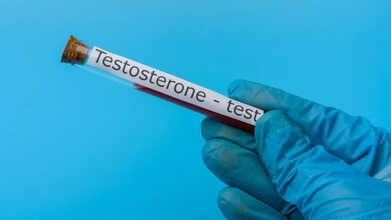
For many men trying to conceive, testosterone sounds like an obvious answer. It is often linked with strength, vitality, and male health, so the assumption is that higher levels must also support fertility. In reality, the opposite is often true. Medical experts caution that using testosterone, especially without supervision, can interfere with sperm production and quietly lower the chances of becoming a father.
To know more about the same, we got in touch with Dr. Ambavarapu Divya Reddy, Fertility Specialist, Nova IVF Fertility, LB Nagar, Hyderabad.
Can Increasing Testosterone Help You Conceive?
Dr. Ambavarapu Divya Reddy said, the short answer is no. Testosterone is a male sex hormone, but it does not support fertility in the way many people assume. In fact, taking testosterone can work directly against sperm production. For men who want children, using testosterone without expert guidance can quietly reduce fertility rather than improve it. Here is what doctors want patients to understand.
Why Testosterone Does Not Boost Fertility?
Testosterone is fundamentally opposed to male fertility when taken from outside the body. Using testosterone injections, gels, patches, or pellets suppresses the natural communication between the brain and the testicles that keeps sperm production going. Dr Reddy said, “When this system is switched off, sperm counts fall and in some cases drop to zero. Fertility declines instead of improving.”
This is why men who plan to have children should never begin testosterone therapy without speaking to a specialist.
How Does Sperm Production Work?
Sperm are produced in the testicles with the help of testosterone that is made inside the testicles themselves. This internal testosterone is tightly controlled by the brain through a hormone called luteinizing hormone, or LH.
Dr Reddy told us, when external testosterone is introduced into the body, the brain senses enough hormone is present and stops releasing LH. As a result, the testicles reduce their own testosterone production and sperm production slows or stops altogether.
In real-world practice, many men on testosterone therapy develop extremely low sperm counts or complete absence of sperm, known as azoospermia, often without any obvious symptoms. This is a well-recognised cause of male infertility and one that is largely preventable.
Low Testosterone And Fertility: What Doctors Do Instead
If a man truly has hypogonadism, meaning he has symptoms along with low testosterone levels on blood tests, treatment is still possible but must be handled carefully. Current guidelines from the AUA, ASRM, and endocrine societies strongly advise against starting standard testosterone replacement in men who want children in the near future.
Instead, specialists use treatments that can raise testosterone levels while allowing sperm production to continue. These include clomiphene, human chorionic gonadotropin or hCG, and other targeted therapies that stimulate the testicles rather than shutting them down. Updated guidance for 2024 and 2025 stresses identifying the cause of low testosterone and choosing options that protect fertility.
If you think you have low testosterone but want children
a) Do not self-prescribe testosterone.
b) Consult a reproductive urologist or endocrinologist.
c) Ask about fertility-preserving treatments such as clomiphene or hCG and consider sperm banking if timing matters.
d) If you have already used testosterone, request a semen analysis and hormone tests. Acting early can help guide recovery or fertility treatment.
Testosterone may seem like an easy solution, but external testosterone is a common and avoidable cause of male infertility. If having children is important to you, proper testing and specialist care matter. The treatment that relieves symptoms is not always the one that protects your ability to become a father.
Adenovirus: Is The Mystery Illness That’s Spreading Highly Contagious?
Credits: Canva
A little-known virus is spreading steadily across different parts of the world, prompting growing concern among health experts. Often described as “untreatable” because there is no targeted antiviral medicine available, adenovirus is drawing attention due to how tough it is and how quickly it can pass from person to person.
Eric Sachinwalla, medical director of infection prevention and control at Jefferson Health, has cautioned that while most healthy individuals develop only mild illness, people in high-risk groups may face more serious health problems. This raises an important question: just how contagious is this mystery illness that is spreading?
Adenovirus: How Contagious Is It?
Yes, adenovirus is highly contagious and spreads with ease in several ways. It can pass through respiratory droplets released during coughing or sneezing, close physical contact such as hugging or shaking hands, and contact with contaminated surfaces like toys and towels.
It can also spread through fecal matter, particularly during diaper changes, and in some cases through water. According to the CDC, the virus spreads quickly in crowded settings such as schools and daycare centres and can survive for long periods on surfaces, making good hygiene especially important for young children and people with weakened immune systems.
Who Do Adenoviruses Affect Most?
Adenoviruses can infect people of all age groups, but they are most commonly seen in children under the age of five. In babies and young children, the virus often spreads in daycare environments where close contact is common. Children are also more likely to put shared objects in their mouths and may not wash their hands as regularly.
Among adults, adenoviruses tend to spread in crowded living conditions. People staying in dormitories or military housing may have a higher risk of infection. The virus is also known to circulate in hospitals and nursing homes, as per CDC.
Those with weakened immune systems are more likely to become seriously ill from an adenovirus infection. This includes people who have undergone organ or stem cell transplants, as well as those living with cancer or HIV/AIDS. Individuals with existing heart or lung conditions may also face a higher risk of severe illness.
Adenovirus: What Are The Symptoms Of An Adenovirus Infection?
The symptoms of an adenovirus infection depend on the part of the body affected. Most commonly, the virus targets the respiratory system. When it infects the airways, it can cause symptoms similar to a cold or the flu. These may include:
- Cough.
- Fever.
- Runny nose.
- Sore throat (pharyngitis).
- Pink eye (conjunctivitis).
- Ear infection (otitis media).
- Swollen lymph nodes.
- Chest cold (bronchitis).
- Pneumonia.
Adenoviruses can also infect the digestive system. When this happens, diarrhea may occur, along with gastroenteritis. Gastroenteritis is inflammation of the stomach or intestines and can lead to stomach pain, diarrhea, nausea, and vomiting.
In rarer cases, adenoviruses can affect the bladder or the nervous system. Infection of the bladder may result in urinary tract infections. When the nervous system is involved, it can lead to serious conditions affecting the brain, including encephalitis and meningitis.
- Follow Us :


© 2024 Bennett, Coleman & Company Limited