
- Health Conditions A-Z
- Health & Wellness
- Nutrition
- Fitness
- Health News
- Ayurveda
- Videos
- Medicine A-Z
- Parenting
Can Damaged Sperm Lead To Pregnancy Complications? Study Highlights Uncommon Issues

Can Damaged Sperm Lead To Pregnancy Complications?
Pregnancy is usually a time of happiness and hope, but it also brings in the unexpected. While there is much talk placed on the health of the expectant mother, the quality sperm coming from the father could dramatically change the outcome of pregnancy. The latest study suggests the risks of sperm DNA damage, even increasing the risks of complications preeclampsia and birth prematurity.
In a groundbreaking research study conducted by scientists from Lund University in Sweden, scientists discovered that DNA damage in sperm increases the risk almost up to double that of preeclampsia, this is a dangerous condition that may arise during pregnancies characterized by high blood pressure. In addition, DNA anomalies also increase the risk of premature births, and this further entails increased related adverse health outcomes for infants born through such conditions.
The next step would be to find out which group of men respond best to methods to prevent and treat sperm DNA damage, and to test these methods to prevent pregnancy complications," said Dr. Amelie Stenqvist, a lecturer at Lund University. According to this study, a significant message is put forward that paternal health assumes an important role in a successful pregnancy.
It focused its research on men, specifically whose sperm contained high levels of DNA fragmentation. For instance, some 20% to 30% of babies born via in vitro fertilization have fathers whose sperm contains damaged DNA. The DNA fragmentation index, an indicator to assess the percentage of DNA damage in sperm, indicated that when the percentage of sperm with a DFI above 30% was observed, they had almost no chance of resulting in natural conception. Even a DFI greater than 20% showed that the chances of getting pregnant are highly risky as the risk factor for pregnancy complications like preeclampsia is much high.
Uncommon Complications during Pregnancy
The most alarming complication during pregnancy is preeclampsia. It affects approximately 5% to 8% of pregnancies worldwide, which can cause fatal conditions for both the mother and the baby. The new findings now point out that sperm DNA damage may contribute to this condition, especially if it is due to assisted reproductive techniques such as IVF pregnancies. The research found that a DFI above 20% doubled the risk of preeclampsia from a mere 5% to almost 11% per.
Apart from causing preeclampsia, DNA fragmentation in sperm is also known to increase the risk for prematurity. Most premature babies experience respiratory, neurological, and developmental complications. Therefore, some degree of early intervention might be important for prospective parents.
Some of the rarer, though serious complications include placental abruption, which is the separation of the placenta from the uterine wall and intrauterine growth restriction, a condition by which the baby does not grow normally in the womb. These conditions though rare are potentially catastrophic both to the mother and the child. Results from this study may help in establishing the contribution of the father in such pregnancies.
Further study into sperm DNA damage is of urgent interest with regard to its consequences for pregnancy outcomes. According to Professor Aleksander Giwercman of Lund University in the field of Reproductive Medicine, "the analysis of DFI should be introduced as routine test in all fertility clinics.". "It could give answers to couples who are having difficulties with infertility, but our latest result also shows that DFI analysis can be a method to identify high-risk pregnancies, explained Giwercman.
For many, DNA fragmentation in sperm is often treatable. Common causes are oxidative stress, age, smoking, being obese, and infections. Addressing these elements will likely reduce DNA damage in sperm for men, raising the chances for a healthy pregnancy and baby.
Overall, the study importance should take into consideration paternal as well as maternal health towards reaching for a healthy pregnancy. Though DNA fragmentation in the sperm is supposed to increase the risk factors for complications in pregnancies, the advances into novel treatment approaches and tests are likely to alleviate complications in many families. Thus the findings of this study offer optimism and pave a pathway to more holistic fertility treatments in the future.
Living In Cities Can Decrease Your Stroke Risk, Study Shows

Credit: Canva
Living in more intensely developed neighborhoods may actually protect you against a stroke, a new University of Michigan study suggests.
Researchers tracked more than 25,000 adults across the US for over a decade and have now found that residents in areas with higher levels of development with more buildings, sidewalks and infrastructure, had a 2.5 percent lower risk of suffering a first-time stroke compared to residents in less developed areas.
Cathy Antonakos, research specialist senior in the U-M School of Kinesiology and first author explained: ""High-intensity development typically includes greater housing density and more commercial/retail outlets.
"These areas are more likely to feature compact land uses with access to health care, food stores, public transport and physical activity infrastructure like sidewalks, bike facilities and parks."
However, the study did not examine these environmental features, but there are some practical applications, Antonakos noted.
"For physicians, the study suggests that neighborhood-level factors may influence first-time stroke risk, in addition to individual-level factors," she said. "For planners, the findings suggest that enhancing environments with features that support cardiovascular health and physical activity may help lower the risk of first-time stroke."
Strokes: A Rising Crisis In India
Heart strokes are also one of the leading global health burdens, causing significant deaths and disability worldwide, including in India. Compared to Western countries, stroke also tends to occur at a younger age and is associated with a higher case fatality rate in the country.
One in seven stroke patients in India are young adults aged below 45 years, with hypertension leading as the major risk factor, according to a study by the Indian Council of Medical Research (ICMR).
The Global Burden of Disease Study 2021 identified hypertension, air pollution, tobacco smoking, high cholesterol, increased salt intake, and diabetes as the leading risk factors of stroke.
Incidence of stroke is increasing significantly in low- and middle-income countries (LMICs), especially in India, due to population growth, aging, and greater exposure to risk factors.
Wine Reduces Your Risk Of Strokes
A new global study suggests that moderately drinking wine can decrease your risk dying from cardiovascular disease by 21 percent.
A group of Chinese researchers who analyzed 340,924 adults in the UK between 2006 and 2022 classified a 12-ounce beer, a 5-ounce glass of wine or a 1.5-ounce shot of liquor each contains about 14 grams of pure alcohol.
Those who consumed less than 20 grams per week, about 1.5 standard drinks, were classified as never or occasional drinkers. The low alcohol consumption group included men who drank more than 20 grams per week but no more than 20 grams per day, and women who drank between 10 grams per day and 20 grams per week.
They found those with high alcohol consumption were 24 percent more likely to die from any cause, 36 percent more likely to die from cancer and 14 percent more likely to die from heart disease.
Additionally, even low intake of spirits such as beer or cider was associated with a nine percent higher risk of dying from cardiovascular disease compared with drinking never or occasionally.
Scientists Create A Fake Drug Detector With 90% Accuracy For Counterfeit Pills
Credit: Canva
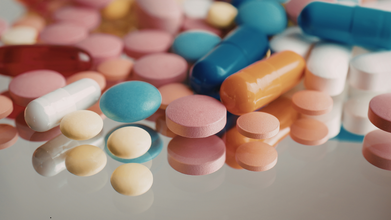
Researchers at the University of California Riverside have developed a low-cost fake drug detector that can detect fake medicines by studying how pills dissolve in water.
Tested on 30+ medicines, the detector identified drugs with about 90 percent accuracy and could even distinguish between brand-name and generic versions.
William Grover, associate bioengineering professor at the University of California, Riverside explained: "Watered-down or illicit versions of drugs like Botox or popular GLP-1 inhibitors have caused serious injuries or death.
"The theory here is that if it's a legitimate medicine, the manufacturer made every pill identical enough that they'll all behave roughly the same way when they dissolve.
"So if you test a suspect pill, and it dissolves at a different rate than the real thing, this suggests the suspect pill is counterfeit."
Talking about the success of the device, Grover said: "We took Bayer aspirin pills and drug-store-brand aspirin - these are basically identical medicines with the same active ingredient and very similar inactive ingredients but when ran through our tests, we could easily tell the difference between the two products."
Costing as little as $5–$30, the device could help tackle the global issue of fake medicines, which the World Health Organization estimates affect 1 in 10 drugs worldwide.
How Does It Work?
The fake drug detector is essentially a low-cost infrared sensor made for use in toy robots able to follow lines drawn on paper. The researchers repurposed the sensors to instead track the rate at which pills dissolve in water.
All pills of a given drug dissolve or ideally should dissolve at roughly the same rate. Legitimate medications don't necessarily dissolve any faster or slower than counterfeit ones however since, the are made by different people at different facilities and with different ingredients, each drug's dissolution rates form a "fingerprint" that makes them identifiable and different from that of a fake drug.
What Else Can The Fake Drug Detector Be Used For?
Grover notes that he would like to use this method to detect fake antimalarial drugs as they are a major cause of death in many tropical regions. Malaria is treatable with the right medications.
"Unfortunately, bad actors know they can make money preying on the need for antimalarials. They sell pills that have the same packaging as authentic antimalarials, but don't contain the active ingredients. If someone gives these pills to their child, they won't cure their infection."
The expert also hopes to get his tool into the hands of those who can use it to fight fake antimalarials and other fake drugs.
"I can't imagine a more despicable person than someone who would sell fake medicine to a child. I hope our work makes those criminals' lives a little harder."
How These Habits Could Be Hurting Your Kidneys, Experts Explain
Credit: Canva
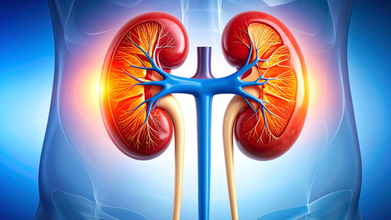
While multiple studies and experts sound the alarm over the dangers of bad lifestyle habits on heart and brain health, doctors are also warning against these secret habits that may be causing serious damage to your kidneys.
Dr Sridhar Shetty, MBBS, MS (General Surgery), DNB (Urology), MNAMS (Urology), FRTS, FIMS, Apollo Spectra Hospital, Bengaluru exclusively tells Healthandme: "Kidneys have many different functions including filtering out approximately 150-180 liters of blood each day in a healthy adult; removing waste from the body; balancing fluids; regulating blood pressure; and maintaining minerals including sodium, potassium, and calcium.
"Unfortunately, many people don't realize they have kidney issues until substantial damage has occurred. There is now a growing body of evidence that indicates many common habits put unnecessary strain on kidneys over time."
Dr Vikas Agarwal, Director & HOD, Robotic Urology, Aakash Healthcare also added: "Poorly managed high blood pressure and diabetes are among the largest causes of kidney damage and are strictly related to everyday lifestyle, including diet and physical activity, stress levels, the presence or absence of medication taking.
"Not every person is aware that seemingly insignificant lifestyle habits may dramatically predispose an individual to chronic kidney disease in the long-term."
Chronic Dehydration and Kidney Stress
According to Dr Shetty: "One of the biggest impacts on overall kidney health is dehydration due to not drinking enough water every day. Not getting enough fluid requires the kidneys to work much harder by producing concentrated urine to save water within the body; therefore, over time this may contribute to kidney stones or the inability of the kidneys to filter properly.
"Concentrated urine also causes more mineral crystallization which could be a greater risk for developing stones."
The US National Academies of Sciences, Engineering, and Medicine suggest about 3.7 liters (approx. 15.5 cups) for men and 2.7 liters (approx. 11.5 cups) for women daily.
However, if you exercise or live in a hot climate, you should increase your intake. The American College of Sports Medicine recommends adding 12 ounces of water for every 30 minutes of exercise.
Dr Agarwal recommends: "Regular medical check-ups, blood pressure, and blood sugar tests, and urine examination is hence very important in detection of early kidney stress. Early diagnosis enables timely interventions which can be used to slack down or avoid further deterioration."
Excessive Salt Consumption
Speaking about how consuming excessive salt can increase heart strain and end up affecting the kidneys, Dr Agarwal said: "Hypertension or high blood pressure is a condition that causes major damage in the kidney across the world. The kidneys have a system of small blood vessels known as glomeruli that removes wastes in the blood.
"In the event that blood pressure is always high then the pressure exerted on these fragile vessels may cause them to narrow, weaken or even to scar. With time, such damage impairs the effectiveness of the kidneys in the filtration process of blood, causing the gradual accumulation of poison and water in the body.
"Some of the daily habits like consuming too much salt, high processed foods, chronic stress, insufficient sleep and sedentary lifestyle may aggravate hypertension and hasten kidney damage. People who eat packed snacks, fast food, and salty food regularly are not aware that they are putting an extra burden on their kidneys."
As a result, Dr Shetty warns: "Processed foods, instant meals, packaged snacks, and entrees sold in restaurants are generally the primary sources of hidden sodium in most people's daily food intake."
Overuse of Painkillers
Dr Shetty explains: "The regular consumption of everyday pain relievers, like non-steroidal anti-inflammatory drugs (NSAIDs), can negatively impact the kidneys without any visible signs. NSAIDs inhibit the production of prostaglandins, which are chemicals required for proper blood flow in the kidneys.
"Therefore, excessive consumption can lead to a decrease in blood supply to the kidneys, resulting in analgesic nephropathy or damage to the kidneys."
To maintain kidney health, he recommends: "People can protect their kidneys through basic yet regular health practices which include
drinking enough water, eating less sodium, using their prescribed medications correctly, and doing regular tests to check their blood pressure and blood sugar and kidney health.
"Daily knowledge about these habits enables people to minimize their chances of experiencing permanent kidney damage."
Dr Agarwal added: "Eating a balanced diet with minimal amounts of excessive salt and refined sugars is useful in controlling the blood pressure and blood glucose levels. Exercise aids in normal metabolism and enhances the work of the heart, saving the kidneys. Kidney protection can also be achieved through proper hydration, stress avoidance, and healthy body weight maintenance.
"Moreover, patients with hypertension or diabetes are also required to take medications regularly and according to the recommendations of the doctors with references to changes in the diet and style of life."
- Follow Us :


© 2024 Bennett, Coleman & Company Limited