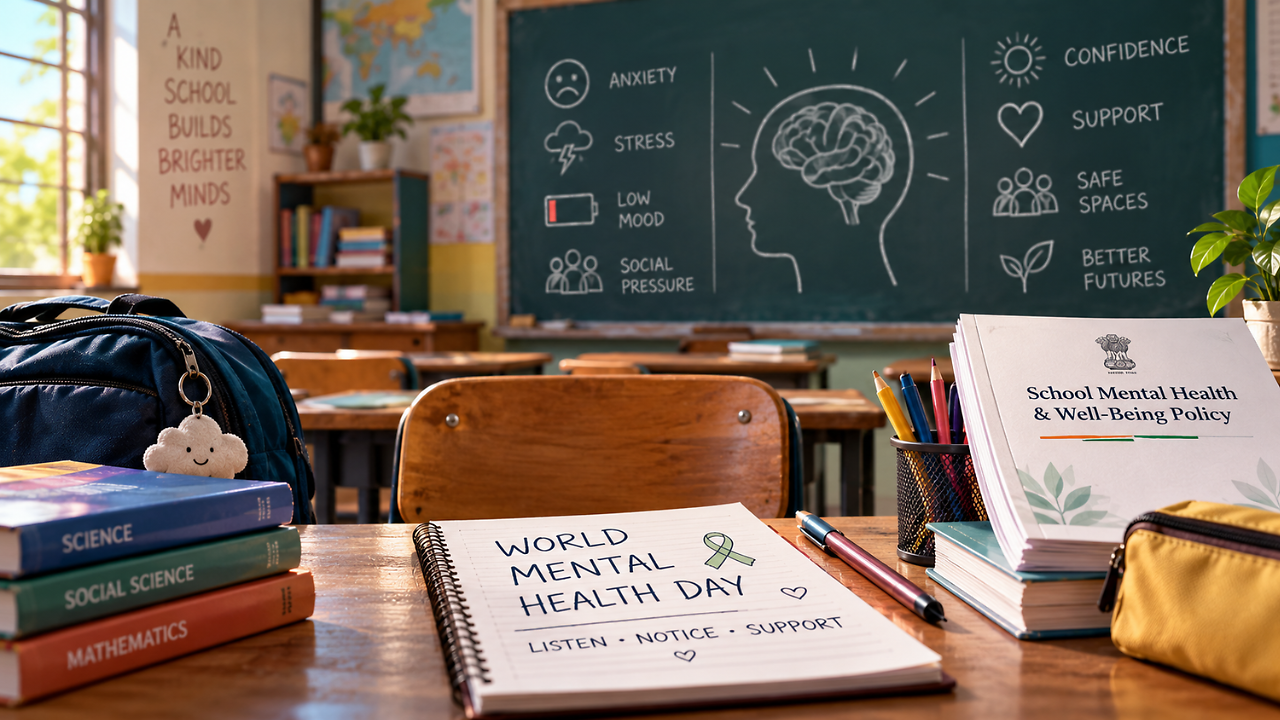
Mental health struggles among young children and teens are most likely to get overlooked due to many reasons. That is one of the glaring problems that prompted 16-year-old Imaan Zara Khan to write and direct Unspoken, a movie that follows four teenagers from different social, cultural, and economic backgrounds who navigate their mental health struggles. Imaan told HealthandMe, "We constantly tell young people to speak up, but what happens when they don’t have the words for what they’re feeling? And even when they do, there’s the fear of being judged, misunderstood or simply not taken seriously. The social visibility cost is simply too high. So, they choose silence instead. I wanted to explore that silence, because sometimes the biggest barrier to seeking help comes long before someone actually asks for it." The Ministry of Education, Government of India, recently reviewed the draft school mental health policy to foster students' mental wellbeing. The landmark move aims at ensuring adequate resources to protect students' mental well-being by strengthening school systems. Scaling up proven best practices to promote student mental health and psychosocial well-being is one of the primary objectives of the policy. On World Mental Health Day, we review the government's initiative to comprehend its importance and urgency amid expanding mental health crisis in India's young population. School Mental Health Policy Aims To Reshape Mental Care For Young Children Also read: Childhood Fitness Linked To Lower Risk Of Depression In Adulthood: 30-Year StudyThe policy entails several key measures to reshape mental healthcare in educational institutions. From identifying early signs of academic stress to proactive screening, it says that schools must routine mental wellness checkups into their academic calendars. Nandita Bhatla, Vice President and Country Director, WorldBeing India, an international non-profit that works towards integrating mental health wellbeing programs into education systems, told HealthandMe, "India has done well to break the silence. Yet the loss of young lives to suicide tells us that too many children still feel they have nowhere to turn, and that listening cannot wait for a crisis." She added, "The harder, more important work is making care a routine part of a school day, owned and led by governments, and not dependent on a single programme or a single champion. Schools are the lived reality of millions of our children. When they become spaces to build resilient, hopeful individuals and not mere academic achievers, we know we are on the right path." The draft also stresses upon building an inclusive and supportive school culture built on a strong foundation of empathy, care, and mutual trust. The policy also moves away from emergency crisis management. Instead, it aims to create robust, long-term support systems that could help children thrive and stay motivated towards building their future. Imaan said mental health problems should not be treated as emergencies. She said, "Just as we build physical health through everyday habits, schools should be building emotional resilience, coping skills and mental-health literacy from an early age. But equally important is having a clear, transparent, end-to-end framework that everyone, whether it’s a student, teacher or parent, can understand and navigate."Also read: Over 2 Hours of Daily Screen Time Linked to Depression, Obesity In Young People: Lancet Turning Teachers Into Mentors The policy also focuses on training teachers to be primary mentors for students who could interact with them every day and recognise early signs of conditions like stress, anxiety, and depression. According to the policy, teachers will be trained to identify changes in behaviours and academic burnout. This does not mean that teachers will replace professional counselors. Additionally, this effort also urges parents to monitor domestic environments. The policy also plans to channel traditional Indian Knowledge Systems to promote mental wellness among students. It urges schools to integrate mindfulness practices into everyday student activities. It promotes that these ancient practices can equip students to handle academic pressure, especially during stressful board examinations. The updated curriculum will now support both cognitive growth and development and psychological well-being.